A Well-Trained Wife: My Escape from Christian Patriarchy
by: Tia Levings
Tia Levings seems like the perfect, obedient wife inside a tightly controlled Quiverfull Christian community, where strict rules and isolation define every day. Her whole world is shaped by the belief that submission equates to holiness—until one shocking act of violence shatters her loyalty and cracks her faith in the system.
Suddenly, Tia realizes her family’s safety is on her shoulders alone. The pressure mounts as she faces escalating abuse, looming threats, and the terrifying risk that her children might inherit the same oppressive cycle.
With raw honesty and a voice that’s both harrowing and hopeful, Levings invites us inside a world where survival means breaking every rule you’ve ever known—will she dare to escape?
""Freedom begins the moment you trust your own voice over the rules meant to silence it.""
Let's Break This Down
The Author's Voice
Atmosphere
Raw, intense, and emotionally charged, the atmosphere throughout Tia Levings’ memoir is heavy with tension and vulnerability. She pulls readers straight into the claustrophobic confines of fundamentalist Christian patriarchy—there’s a persistent sense of fear, isolation, and quiet resistance. Levings doesn’t shy away from the darkness or pain, but also weaves in moments of hope and quiet resilience, keeping the reader alert and invested.
Prose Style
Direct and unflinching, Levings’ writing style is journalistic yet deeply personal. She balances vivid, sensory details with crisp clarity, avoiding purple prose or melodrama even as she describes harrowing experiences. Sentences are punchy and urgent when recounting trauma, then soften into lyrical, almost meditative reflection during moments of insight and self-realization. The voice feels authentic—honest, often raw, but always approachable and deeply human.
Pacing
The pacing is brisk but deliberate. Levings moves quickly through formative memories and pivotal moments, rarely lingering on the same beat for long. Flashbacks and present-day reflections are deftly woven together, keeping the narrative energetic but never rushed. Some passages escalate with thriller-like suspense during scenes of crisis, while quieter, introspective chapters offer necessary breathers and emotional recovery for the reader.
Mood & Feel
Expect to feel both the chilling weight of control and the slow-burning fire of personal empowerment. There’s a palpable sense of immediacy—page after page thrums with anxiety, bravery, and the desperate search for autonomy. You can almost hear the quiet ticking of time and sense the sharp edges of danger, but you’re always aware of the steadfast pulse of hope underneath.
Dialogue & Internal Monologue
Dialogue, when present, is stark and purposeful, often reflecting the codes and constraints of patriarchal language. Internal monologues are where Levings truly shines—her mental landscape is rich, conflicted, and utterly honest, drawing the reader into the painstaking process of self-discovery and survival.
Overall Literary Rhythm
Levings’ storytelling rhythm is rhythmic, staccato when tension flares, then slow and contemplative in moments of relief or realization. There’s a natural ebb and flow, mirroring the unpredictable tides of hope and despair. Readers should expect a gripping, emotionally gutting ride that feels both urgent and meticulously crafted.
Key Moments
- Stomach-churning church basement meetings where obedience is demanded at all costs
- Levings’ escape plan sketched out between whispered prayers and secret texts
- Gut-punch confessions: motherhood recast as a tool of control
- Purity rings, rebaptisms, and the chilling logic of “godly submission”
- Moment of defiance: one trembling phone call that shatters years of silence
- Raw, unfiltered prose—Levings’ pain and resilience practically leap off the page
- Side characters—husbands, elders, mothers—rendered with heartbreaking complexity
Plot Summary
A Well-Trained Wife: My Escape from Christian Patriarchy tells the harrowing yet hopeful journey of Tia Levings as she navigates life within and ultimately escapes the confines of fundamentalist Christian patriarchy. The story opens with Tia’s early attraction to a faith community that promises belonging and security, but quickly delves into her marriage, where she faces increasing control, abuse, and manipulation sanctioned by her church and husband. As the narrative unfolds, Tia experiences growing isolation and witnesses the tightening of rules around her appearance, friendships, finances, and even thought life, climaxing in a moment of intense personal crisis. The turning point comes when Tia confronts both the emotional and physical threats to herself and her children, deciding to risk everything for a chance at freedom. The memoir concludes with her courageous escape, the rebuilding of family and identity on her own terms, and an exploration of both the scars and resilience formed through her ordeal.
Character Analysis
Tia Levings shines as the central figure, portrayed with striking honesty and nuance—from a trusting young woman yearning for community to a self-aware survivor finding her voice. Her husband, emblematic of patriarchal authority, transforms from a seemingly devoted partner into a complex antagonist whose insecurity and need for dominance drive the couple’s descent into abuse. Key supporting figures, such as sympathetic friends and cruel church leaders, populate Tia’s world, illuminating both the machinery of oppression and the small acts of allyship that buoy her spirit. Over time, Tia’s motivations shift from submission and self-blame to empowerment and protection, and her arc is defined by a powerful reclamation of agency.
Major Themes
At its core, the book grapples with religious fundamentalism and the toxic impact of patriarchy, revealed through meticulous examples of everyday life—like how Tia’s self-worth is measured by obedience, or how even minor acts of defiance are punished. There’s a profound exploration of freedom versus control, seen in the constant policing of Tia’s choices and her growing realization that faith, as co-opted by her environment, can serve as a tool for subjugation rather than spiritual growth. The memoir also touches on identity and self-reclamation, especially as Tia processes trauma, redefines her beliefs, and learns to trust herself after years of gaslighting. Ultimately, resilience emerges as a beacon, inspiring readers to question inherited systems and seek their own truth.
Literary Techniques & Style
Levings crafts her memoir with vivid, emotionally charged prose sprinkled with powerful imagery—describing her heart “learning to shrink, beadlike and cold, for survival.” The narrative structure oscillates between current escape and flashbacks to earlier indoctrination, cleverly building tension and empathy. She uses symbolism—such as head coverings and wedding rings—to represent both internalized oppression and moments of rebellion. The author’s use of metaphor and dialogue breathes authenticity into scenes, making the psychological stakes tangible, while her candid, confessional tone pulls the reader directly into the heart of the experience.
Historical/Cultural Context
Set primarily in conservative evangelical communities in the American South during the late 20th and early 21st centuries, the memoir unfolds against a backdrop of purity culture, strict gender roles, and the rise of Christian Dominionism. The text vividly portrays how wider cultural trends—like the homeschooling movement, courtship culture, and the teachings of figures such as Bill Gothard—directly shape individual lives and family structures. Levings’ experience mirrors broader societal debates about women’s autonomy, church authority, and the intersection of faith and power.
Critical Significance & Impact
A Well-Trained Wife has resonated strongly with readers for its raw depiction of survival and its thoughtful critique of faith-based oppression, earning praise for lifting the veil on an often-hidden subculture. It has sparked vital conversations about abuse within religious settings and the complexity of leaving high-control environments. The memoir’s blend of personal narrative and cultural analysis ensures its place as a significant work in the landscape of feminist and survivor literature, offering validation and guidance to those navigating, or recovering from, similar worlds.

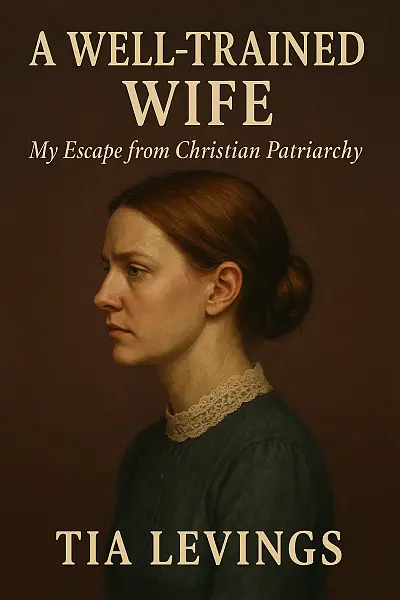
Breaking free from control—one woman’s journey beyond faith’s strict walls
What Readers Are Saying
Right for You If
Who’s Going to Absolutely Love This Book?
If you’re drawn to memoirs that are deeply personal and raw, especially ones that crack open tough subjects like religion, patriarchy, and survival, then A Well-Trained Wife is probably going to hit you right in the feels. This is one of those books that’ll resonate with anyone fascinated by true stories of breaking free from controlling systems—so if you loved Educated by Tara Westover or Unfollow by Megan Phelps-Roper, add this to your list ASAP.
- Fans of women’s empowerment journeys will really appreciate Tia Levings’s unfiltered honesty and courage.
- Anyone interested in cult dynamics, religious systems, or escape narratives gets a front-row seat to the reality behind the headlines.
- If you’re into books that peel back the layers on family, faith, and finding your own voice, this one will have a lot for you.
But Here’s Who Might Want to Pass…
If you’re not a fan of memoirs or you prefer your reads on the lighter side, this probably isn’t for you—it gets pretty heavy at times, and the themes can honestly be tough to process. Also, if you want an unbiased or super-neutral take on faith or dislike books that criticize religious institutions, it might not be the best match.
- Folks looking for straight-up self-help or inspirational reads without diving into the grit and trauma—just know, this book doesn’t shy away from the messy parts.
- If you’re hoping for a fast-paced, suspense-filled read, keep in mind this is more about reflection and inner journey than breakneck plot twists.
In short: If you love memoirs that are brave, insightful, and willing to challenge big structures, go for it. But if you want something light and breezy or strictly positive in tone, you might want to save it for another time.
What You're Getting Into
A Well-Trained Wife: My Escape from Christian Patriarchy by Tia Levings is a raw, compelling memoir that takes you deep inside the world of religious fundamentalism.
Through Tia’s eyes, you’ll witness the pressure to conform and the struggle to stay true to yourself as she navigates a marriage shaped by strict Christian patriarchy. The heart of the book revolves around her fight for independence and self-worth, all set against the backdrop of a world that demands obedience and silence.
If you’re drawn to courageous stories of breaking free, finding your voice, and questioning the rules you’ve always been told to follow, this intensely honest read will hook you from page one.
Characters You'll Meet
-
Tia Levings: Courageous and resilient narrator whose journey from subjugation to independence forms the heart of the memoir. Her evolving self-awareness and determination drive the emotional core of the story.
-
Tia’s Husband: Authoritative, controlling figure representing the oppressive patriarchal system Tia seeks to escape. His behavior and beliefs are central to the conflict and Tia’s struggle for autonomy.
-
Tia’s Children: Symbolic of hope and motivation for change, their well-being is a driving factor in Tia’s decisions. They serve as both sources of vulnerability and inspiration throughout her transformation.
-
Church Elders/Mentors: Enforcers of the strict religious doctrine that shapes and limits Tia’s world. Their influence highlights the external pressures and community complicity sustaining the patriarchal system.
-
Supportive Friend/Ally: A confidant who provides moments of clarity, encouragement, and perspective, helping Tia realize she is not alone and fueling her resolve to break free.
More Like This
If Educated by Tara Westover left you stirred with its journey from oppression to self-discovery, you’ll instantly be drawn to the raw honesty in A Well-Trained Wife. Both memoirs pull back the curtain on insular, rigid belief systems, yet where Westover explores the realm of survival through education, Tia Levings shines a light on the uniquely gendered constraints within Christian patriarchy, making her story feel at once familiar and refreshingly distinct.
Fans of The Handmaid’s Tale by Margaret Atwood will find chilling parallels in Levings’ memoir—the everyday reality of control dressed up as virtue, and the struggle to reclaim autonomy. While Atwood’s tale is speculative fiction, Levings’ experience is alarmingly real, offering a sobering reminder that dystopian themes often take root in lived experience.
Visually, the book conjures the tension and resilience seen in Hulu’s Unorthodox, where a woman leaves an ultra-conservative religious community in pursuit of freedom. Both works capture that electrifying mix of terror, strength, and hope, as protagonists wrestle with faith and identity on the road to self-liberation. The cinematic intensity of Levings’ prose makes every escape and revelation leap off the page, much like the unforgettable sequences from the show.
Critic's Corner
What is the true price of submission, and who profits when obedience is mistaken for goodness?
Tia Levings's A Well-Trained Wife: My Escape from Christian Patriarchy wrestles with these uneasy questions through a memoir that pulses with urgency and raw insight. Her narrative dares to expose not only the harrowing realities of living under the yoke of Christian fundamentalism but also the intimate, everyday negotiations that define the battered soul seeking freedom.
Levings’s writing is fiercely direct and deeply evocative. She weaves memory and reflection with tight, cinematic scenes, pulling readers into the claustrophobic bubble of Quiverfull culture. The prose buzzes with specificity—domestic details, chilling silences, and the coded language of spiritual authority. Instead of sensationalizing abuse, Levings employs restraint and precision; her voice remains clear-eyed and unsentimental. There’s a remarkable balance between vulnerability and narrative control; the humble candor of her confessions never slips into voyeurism, nor does she exploit trauma for melodrama. The pacing is tense, almost breathless at times, mirroring the protagonist’s mounting anxiety. While the tight focus amplifies suspense, it sometimes comes at the expense of deeper secondary character development. Supporting figures remain blurred, faces on the periphery—perhaps mirroring the book’s central motif of enforced isolation. Still, her internal evolution is meticulously charted, and dialogue throughout rings with authenticity.
At its core, A Well-Trained Wife interrogates how theological doctrine can become weaponized in a home—transforming scripture into shackles. Levings dissects not only patriarchal power but also complicity, guilt, and the perilous act of reclaiming one’s voice. In exploring the cyclical inheritance of trauma—how beliefs metastasize from parent to child—she lands on deeply relevant cultural terrain. The memoir doubles as a lens on American religious extremism, but what truly elevates it is Levings’s refusal to draw easy villains or saints. Her journey is riddled with ambiguity; love and fear, faith and survival constantly interlock. She never loses sight of the margins, unpacking the perverse logic that traps women in systems that masquerade as virtue. For contemporary readers living through conversations about gender roles, religious liberty, and bodily autonomy, these revelations land with devastating resonance.
Within the tradition of feminist memoir, Levings’s work is kin to Tara Westover’s Educated and Jeannette Walls’s The Glass Castle, yet it distinguishes itself by the fierce clarity with which it interrogates religious language. Where others might dwell in chaos or castigation, Levings’s lens is both analytical and intensely personal. She neither sensationalizes nor absolves, situating her story within a wider lineage of women who have survived and testified from the belly of patriarchal institutions.
Of course, A Well-Trained Wife isn’t perfect—at times, the narrative momentum flags under the weight of didacticism. A sharper delineation of peripheral characters would deepen its impact. Yet its strengths far surpass these drawbacks. Levings delivers an indelible, timely testament to the resilience of the female spirit—a memoir that unsettles, empowers, and, above all, refuses to be silenced.
Community Thoughts
I thought I'd skim a chapter before bed, but then I hit that scene in the kitchen where silence screamed louder than any argument. Couldn't sleep after. Levings made me question every "normal" I grew up with.
levings ripped apart my sense of safety with that late-night confession scene. i kept waiting for someone to swoop in and rescue her but instead felt my own heart race. why did that moment stick so hard? chills.
I couldn’t shake the chill from the scene where Tia hides evidence of her true thoughts. That tension! I kept replaying it in my head, wondering how she found the nerve to keep going. That moment shifted the whole book for me.
I could not stop rereading the moment Tia finally stood up for herself. My heart was pounding, I almost missed my bus. That shift from silent compliance to raw determination is burned into my brain. This book refuses to let you look away.
suddenly I was wide awake at 2am, brain buzzing, replaying the moment Tia realized her obedience wasn’t safety. sleep? not an option. her escape twisted through my dreams like a warning siren.
Leave Your Review
Local Take
Why It Matters
A Well-Trained Wife: My Escape from Christian Patriarchy by Tia Levings really strikes a chord in cultures where gender roles and religious authority are hotly debated—think about parallel movements like the women's liberation wave in the 1970s or recent pushes for church reform.
- Themes of personal autonomy and breaking free from oppressive traditions are immediately recognizable for anyone with a national history of challenging authority, whether in secular or religious contexts.
- In societies that prize conformity and traditional family structures, Levings' critique of patriarchal Christianity can clash with long-standing values, making her rebellion feel almost radical. But for cultures with a rising emphasis on individual rights and gender equality, her story can feel both validating and galvanizing.
The book echoes the confessional memoir trend, but where local literature often celebrates family and faith as bedrocks, Levings' brutally honest narrative challenges readers to question what those values mean when used as control. Some plot points—like the difficulty in leaving faith communities—hit harder in places where community identity is deeply tied to religion, making her journey both eerily familiar and provokingly uncomfortable.
Food for Thought
A Well-Trained Wife: My Escape from Christian Patriarchy by Tia Levings
Controversy Summary:
- This memoir has sparked passionate discussions about the portrayal of conservative Christian communities, with some critics arguing that it unfairly generalizes or sensationalizes certain religious groups. There’s also been debate around the authenticity of Levings’s experiences, with supporters praising her candor while detractors question the book’s perspective on faith and family.
Like what you see? Share it with other readers