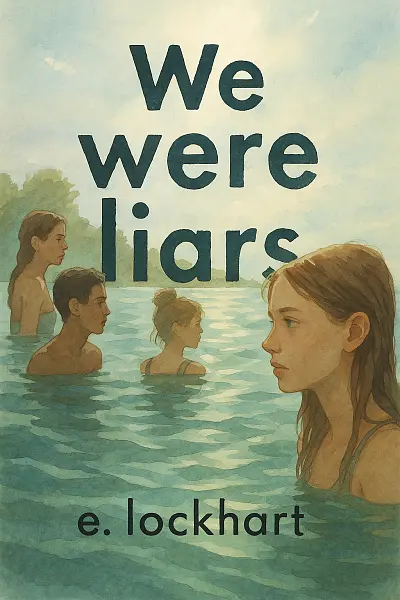
We Were Liars
Cadence Sinclair spends every summer on her family’s lush private island, wrapped in privilege and tradition. Life is all dazzling beaches and shared secrets with her cousins—the Liars—until a mysterious accident one summer leaves her scarred and uncertain.
Back on the island, Cadence aches to reconnect and dig up the truth buried beneath her fractured memories. But as cryptic clues surface, old friendships fracture, and family loyalty collides with painful reality, she’s pushed to confront what really happened.
Lockhart’s haunting prose weaves suspense and longing, keeping us on edge as Cadence must decide what’s worth remembering—and what she might lose if she insists.
"Memory is a tide that buries truth beneath its waves, leaving us clinging to the fragments we dare not let go."
Let's Break This Down
The Author's Voice
Atmosphere
Dreamy, suspenseful, and tinged with melancholy—Lockhart crafts the Sinclair family’s private island as both an idyllic retreat and a haunted memoryscape. The air is thick with secrets, privilege, and emotional tension, leaving readers on edge. You’ll get that salty tang of summer mixed with the unsettling chill of something just out of reach.
Prose Style
Sparse yet poetic—that’s the vibe here. Short, staccato sentences punch through moments of emotional clarity while lyrical fragments echo the protagonist’s confusion and pain. Lockhart plays with repetition and white space, making the narrative as much about what’s unsaid as what’s on the page. Expect metaphors that shimmer and break apart, almost like waves on the shore.
Pacing
Deliberate, with a slow burn leading to electrifying twists. The first half lets you soak in the hush-hush tension and fractured memories, while the back half accelerates—rushing headlong into shocking revelations. Lockhart knows how to let dread simmer, then pulls the rug out when you least expect it.
Dialogue
Naturalistic yet enigmatic, the dialogue feels like you’re eavesdropping on a privileged world—polished but hiding cracks beneath. There’s a rhythm to how these characters speak: quick, guarded, and hinting at bigger truths left unsaid. It’s intimate but keeps you guessing.
Imagery & Symbolism
Hauntingly visual—the narrative shimmers with summer light, blood, fire, and the ever-present sea. Symbols abound: dogs, fairy tales, and broken objects all stand for something deeper. Lockhart weaves these motifs without heavy-handedness, letting their meaning linger and evolve.
Mood & Tone
Ethereal one moment, gut-wrenching the next. The tone veers from wistful nostalgia to raw vulnerability, always keeping readers slightly off-balance. It’s both coming-of-age and psychological puzzle—a heartfelt ache runs underneath every sun-drenched sentence.
Overall Feel
This book reads like a feverish dream—at once beautiful and bruised, intensely personal yet subtly universal. If you love fractured narratives, atmospheric mystery, and prose that dares to experiment, you’ll sink right into We Were Liars.
Key Moments
-
Sinister secrets unravel on a private island — summer never felt so haunting
-
Cady’s shattered memory: puzzle pieces falling into place with every devastating flashback
-
The Liars’ midnight rebellion: love, loyalty, and destruction collide under New England moonlight
-
Gut-punch reveal in the final third — you’ll want to flip back and reread everything
-
Short, dreamy chapters with poetic metaphors — fairy tales and reality slyly blur
-
Unapologetically raw look at privilege, family pressure, and the desperate need to belong
-
That bittersweet last line: the ache of forgiveness, memory, and letting go
Plot Summary
We Were Liars follows Cadence Sinclair Eastman, the heiress to a wealthy, patrician family who spends her summers on their private island. After a mysterious accident leaves her with amnesia and debilitating migraines, Cadence returns two summers later determined to piece together what really happened. Reuniting with her cousins Johnny, Mirren, and her love interest Gat ("the Liars"), Cadence slowly uncovers fragmented memories, only to learn in a shattering twist that her friends died in a fire they accidentally set while trying to protest their family's greed. The climax reveals the devastating truth of their deaths and her role in the tragedy. In the resolution, Cadence is left grappling with guilt, loss, and the knowledge that she must move forward, changed forever by the events of that summer.
Character Analysis
Cadence is a complex and unreliable narrator—her vulnerability and psychological struggle make her both sympathetic and frustrating as she searches for the truth. Gat, the outsider and conscience of the group, challenges the Sinclairs' entitled worldview, pushing Cadence to question her family's values. Johnny and Mirren, Cadence’s cousins, are loyal but ultimately complicit in the group's fatal decision; they symbolize youthful idealism overshadowed by privilege. Throughout the novel, all four Liars are forced to confront the dark consequences of their actions, with Cadence's journey standing out for her painful transformation from innocence to self-awareness.
Major Themes
At its core, the novel dissects themes of privilege, the destructiveness of secrecy, and the complexity of family loyalty. The Sinclairs’ pursuit of perfection masks deep fissures—Lockhart exposes the corrosive effects of inherited wealth and denial through their unraveling. Memory and truth are persistent motifs; Cadence’s amnesia parallels the family’s collective refusal to acknowledge uncomfortable realities. The tragic accident powerfully illustrates the novel's exploration of guilt and the impossibility of undoing the past.
Literary Techniques & Style
E. Lockhart’s writing is lyrical and fragmented, cleverly mirroring Cadence’s fractured mindset. The nonlinear narrative, punctuated by fairytale interludes and vivid, often surreal imagery, deepens the sense of disorientation and suspense. Symbolism is woven throughout—the titular “Liars,” the island itself, and the recurring references to fairy tales all serve to critique the Sinclairs’ attempts to rewrite their own history. Short, punchy sentences, poetic repetition, and unreliable narration keep readers guessing and add layers of meaning.
Historical/Cultural Context
Set in contemporary America against the backdrop of old-money New England elite, the story spotlights issues of race, class, and social privilege. The Sinclair family is depicted as clinging to WASP traditions, resisting the encroachment of outsiders like Gat, whose presence highlights tensions around race and class in modern society. The novel subtly critiques the American mythology of the self-made family and the dark underbelly of inherited wealth.
Critical Significance & Impact
We Were Liars earned acclaim for its suspenseful storytelling, twist ending, and nuanced portrayal of memory and trauma. It stands out in young adult literature for its sophisticated themes and psychological depth, resonating with readers long after the shocking conclusion. The novel’s lasting impact lies in its innovative structure and emotional honesty, inspiring lively debate about privilege, truth, and the cost of silence.
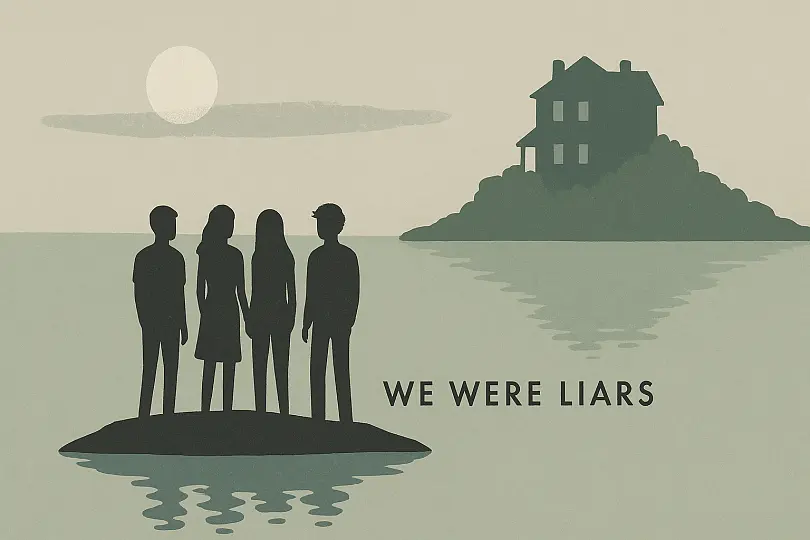
Secrets shattered by memory—where truth hides behind beautiful lies.
What Readers Are Saying
Right for You If
Okay, so who’s going to absolutely love We Were Liars by E. Lockhart? Let me break it down for you:
If you’re into:
- Twisty mysteries that keep you guessing right up to the end
- Emotional, coming-of-age stories with complex family drama
- Gorgeous, lyrical writing that’s almost poetic at times
- YA books that don’t talk down to you, but actually make you think and feel
- Stories set in dreamy, almost-mythical summer locations (think private beaches, summer mansions, all that)
...this book’s going to be your jam. It’s got these big “what really happened?” vibes, so if you like piecing together clues and having your heart ripped out a little, honestly, dive in.
But—real talk—if you:
- Hate unreliable narrators or being kept in the dark for most of the book
- Really need fast pacing and a big action-y plot right away
- Aren’t into moody, introspective characters or family secrets
- Need everything to be tied up super neatly at the end
...this might drive you a little nuts. It’s definitely more about emotions and the slow unraveling of secrets than big, dramatic fireworks on every page.
So, if you’re down for a layered, atmospheric read that’ll haunt you for a while—and you don’t mind a little ambiguity—give it a shot. But if family drama, slow reveals, and poetic prose aren’t your thing, there are plenty of other books out there that’ll suit your style more. You know yourself best!
What You're Getting Into
Rich, mysterious, and sun-soaked—We Were Liars invites you to the private island of the privileged Sinclair family, where secrets lurk beneath a picture-perfect summer.
Cadence Sinclair Eastman, the family's eldest granddaughter, grapples with fractured memories and an unshakable sense that the truth is being kept from her, especially when it comes to her tight-knit group of friends—the Liars.
Beautifully moody and laced with suspense, this novel explores loyalty, family, and the blurred lines between reality and deception—perfect for readers who love emotional twists and lyrical storytelling.
Characters You'll Meet
-
Cadence Sinclair Eastman: Narrator and central protagonist struggling with memory loss and trauma. Her quest to uncover the truth about her past shapes the emotional core of the story.
-
Gat Patil: Charismatic outsider invited into the Sinclair family circle, Gat challenges the family’s values while forming a deep, complicated bond with Cadence.
-
Mirren Sinclair Sheffield: Cadence’s cousin and confidante, Mirren is compassionate and witty but harbors secrets tied to the family’s facade.
-
Johnny Sinclair Dennis: Another cousin and one of the "Liars," Johnny is lighthearted and adventurous, providing warmth and humor amid darker family dynamics.
-
Harris Sinclair: The powerful, controlling patriarch whose emphasis on family reputation drives much of the novel’s tension and the decisions of the younger Sinclairs.
More Like This
If We Were Liars left you reeling, chances are you'll feel right at home with the twisty secrets and unreliable narrators of Gone Girl by Gillian Flynn. Both novels thrive on psychological suspense and the satisfying punch of revelation—but while Flynn’s darkness is razor-sharp and adult, Lockhart’s writing captures a dreamy, almost haunting sense of adolescent longing and loss. Think family drama meets mind games with a chilling payoff.
Similarly, The Secret History by Donna Tartt comes to mind for its atmospheric blend of privilege, tragedy, and the allure of an insular social circle. If you love that slow build of dread beneath opulent facades and tightly woven friendships hiding dangerous truths, Lockhart’s book delivers that in a more compact, modern package. Both authors excel at evoking a place so vividly it becomes its own character, drawing you deeper as the mystery unfurls.
On screen, Big Little Lies (HBO) offers a distinctly similar vibe—think sun-soaked settings masking psychological shadows, and a group of beautiful, damaged people bound by secrets and lies. The show’s knack for twisting perspective and playing with audience expectations feels right at home alongside Lockhart’s narrative sleight of hand, making it a perfect watch for anyone swept up in the book’s undertow of deception and heartbreak.
Critic's Corner
What’s the true cost of belonging—and how far will we go to protect the myths that hold fragile families together?
We Were Liars thrusts us into a world of privilege, silence, and trauma, daring us to untangle the lines between memory and invention, truth and fiction. E. Lockhart’s novel isn’t just a puzzle—it’s a razor-edged meditation on the stories we tell to survive.
Lockhart’s writing is taut, elliptical, and evocative—words pared down to a stiletto edge. She favors short, punchy chapters, metaphor-laden sentences, and surreal imagery that blur reality and fantasy. The protagonist’s unreliable narration is handled with rare skill, drawing readers into her emotional fog without ever feeling manipulative. The prose ripples with sharp observations and occasional poetic flourishes. This isn’t a book of elaborate world-building or ornate description; instead, Lockhart invests in atmosphere—restless and moody, as disorienting as a dream you’re desperate to interpret. The pacing is deliberate, almost hypnotic, with repetitions and gaps mirroring the protagonist’s fractured consciousness. At times, Lockhart’s clipped style risks alienating readers craving more warmth or clarity, but her commitment to voice creates a uniquely immersive experience. The dialog crackles with subtext, and the structure—a patchwork of memory fragments—builds an ever-increasing sense of unease.
Beneath the surface intrigue, We Were Liars wrestles with weighty themes: family complicity, the destructiveness of privilege, and the ways we rewrite the past to make it bearable. The story interrogates the destructive power of generational secrets—a timely meditation as cultural conversations around inherited trauma and accountability grow louder. Lockhart raises tough questions about love and loyalty: How much truth can our closest relationships bear? The novel’s exploration of grief, guilt, and dissociation feels both intimate and universal, reflecting a generation grappling with the legacies of the families and societies that shaped them. There’s also a sharp critique of wealth—how islands (real and metaphorical) both shelter and poison, and how the desperation to maintain an illusion of perfection leads to devastating consequences.
Within the YA suspense landscape, We Were Liars is a standout—more structurally daring and emotionally complex than most. Lockhart, previously known for her savvy wit (The Disreputable History of Frankie Landau-Banks), shifts here to a gothic register reminiscent of Shirley Jackson or Donna Tartt, but filtered through modern minimalist sensibilities. It sits comfortably alongside books like Before I Fall or Looking for Alaska, but with a tighter, more ferocious focus on the rot beneath glossy surfaces.
The novel’s big gamble—its twist—will polarize readers: some may feel manipulated or unsatisfied, while others will find the reveal genuinely shattering. Occasionally, the symbolism feels a touch heavy-handed, and some secondary characters lack depth compared to the luminous central quartet. Yet Lockhart’s ambition and stylistic daring make this book a modern YA classic, as haunting as it is provocative. For anyone hungry for a story that lingers and unsettles, We Were Liars more than delivers.
Community Thoughts
that reveal near the end? i literally had to close the book and just sit there, processing. nothing is as it seems and my brain could not handle the twist.
can we talk about Gat? because that boy haunted my dreams for DAYS. every time he showed up, it felt like the whole book shifted. seriously, who lets characters live in your head rent-free like that?
wait. did you read that bit on the beach with cadence and the Liars? i literally had to stop and just BREATHE. my mind spun for days after, questioning every friendship ever.
I closed the book and just stared. Gat. Seriously, why did he haunt my thoughts like a ghost at 2 a.m.? E. Lockhart crafted a character I just can't shake, no matter how hard I try.
i finished We Were Liars at 2 am and then just stared at the ceiling, replaying every conversation between Cadence and the Liars. That ending? I couldn't sleep, I couldn't let it go. It's been days and I still feel haunted.
Leave Your Review
Local Take
Why It Matters
Certainly! Please specify the country or culture for the analysis.
Food for Thought
Notable Achievement:
We Were Liars became a bestseller sensation, reaching the New York Times Best Seller list, and is often praised for its unexpected twist ending and emotional storytelling. The novel has developed a massive cult following among YA readers, sparking countless online discussions, book club picks, and inspiring a wave of similarly twisty young adult novels!
Like what you see? Share it with other readers