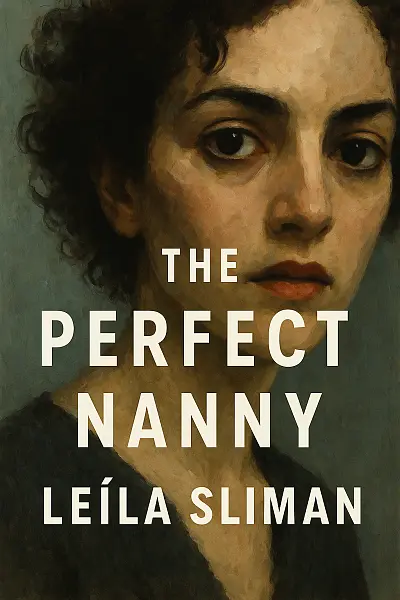
The Perfect Nanny
by: Leïla Slimani
Myriam, a driven French-Moroccan lawyer, feels stifled by domestic life in her chic Paris apartment and craves professional fulfillment. Eager to return to work, she and her husband Paul desperately seek the perfect nanny for their two young kids, and stumble upon Louise—a gentle, almost too-good-to-be-true caregiver who seems to make everything shine.
But as Louise weaves herself deeper into the family’s world, strange dynamics emerge. Tensions build, boundaries blur, and emotional dependencies form, leaving Myriam and Paul uneasy—can they truly trust the woman they now rely on most?
Slimani’s writing is razor-sharp, building suspense from everyday moments with unsettling, haunting intimacy.
""Trust can be as fragile as innocence—a single crack, and the whole world shatters.""
Let's Break This Down
The Author's Voice
Atmosphere
Chillingly intimate, The Perfect Nanny wraps you in a slow-building sense of unease, like the hum before a storm you can't quite see. There's a suffocating domestic claustrophobia that seeps into every page, and Slimani crafts everyday Parisian life into something quietly sinister. The setting is detailed but never overbearing—enough to immerse you, not overwhelm you—making normal routines feel loaded with dread. Expect a lingering tension, almost voyeuristic, that keeps you on edge from the very start.
Prose Style
Slimani’s prose is precise, pared down, and startlingly effective. She favors short sentences, clear images, and an almost clinical detachment that somehow makes the emotional punches land even harder. The language is unadorned, almost deceptively simple—she never indulges in flowery descriptions but always knows the perfect unsettling detail to spotlight. Dialogue is sharp, unfiltered, and real, bringing characters to life in a few swift strokes. If you love psychological insight delivered with icy clarity, this style will hook you.
Pacing
The pacing is deliberately measured, sometimes unsettlingly so. This is not a fast-paced thriller but a psychological suspense that creeps quietly. Slimani spends time on domestic minutiae and subtle shifts in relationships, rewarding patient readers with steadily tightening suspense. The opening is explosive—she throws you straight into the aftermath of tragedy—then lets tension ratchet up through skillful backtracking and foreshadowing. If you like a story that simmers beneath the surface and makes you savor the dread, this rhythm works beautifully.
Tone & Mood
Unnerving, clinical, yet oddly intimate—the overall tone bleeds discomfort and quiet horror. Slimani never sensationalizes violence or emotion; instead, she presents everything with a reporter’s eye, letting the implications hit you after you’ve turned the page. The mood is psychologically intense, and that matter-of-fact delivery only deepens the sense of foreboding.
Character Focus
rather than romanticizing anyone, Slimani is unsparing and insightful, delving deep into the psyche of both the mother and the nanny. She zeroes in on secret shames, class conflict, and the pressures of modern motherhood, using character study as suspense. Expect nuanced, complicated portrayals—no easy villains or heroes.
Overall Feel
If you want a domestic thriller that’s all about psychological pressure and subtle, suffocating dread rather than standard genre twists, this is a masterclass in tension. Slimani's writing style is razor-sharp, getting under your skin with its unsettling calm—think minimalist, psychological, and utterly haunting.
Key Moments
- Opening page shock: nanny’s crime revealed first, then chillingly dissected
- Meticulous, everyday details morphing into unbearable suspense
- Louise’s buttoned-up perfection masking cracks of loneliness and longing
- Chilling power dynamic between mothers and caregivers, simmering with resentment
- Playdates, dinners, routines—drenched in unease you can’t shake
- Taut, elegant prose with not a word wasted; every sentence a carefully placed blade
- Final act gut-punch: horror collides with empathy in a way that lingers
Plot Summary
The Perfect Nanny by Leïla Slimani plunges us into domestic horror right from its opening line, revealing that Louise, the seemingly flawless nanny, has murdered the two young children in her care. The novel flashes back to unravel how Myriam and Paul, busy Parisian parents, become enchanted by Louise’s devotion and skill, gradually letting her become an indispensable part of their lives. As the narrative unfolds, disquieting details about Louise’s past and psychological fragility surface—her financial desperation, loneliness, and growing emotional dependence on the family intertwine ominously with her deteriorating mental state. The tension mounts as Louise’s grip on reality slips, climaxing in a horrifying act of violence when she kills Mila and Adam, the children. The story closes with the chilling aftermath, leaving readers to grapple with the unanswerable question of why this perfect nanny snapped so tragically.
Character Analysis
Louise is the novel’s enigmatic centerpiece—a woman whose prim appearance and meticulous care conceal profound vulnerability, social isolation, and psychological instability. Myriam, the mother, is ambitious and conflicted, struggling to balance her legal career with maternal guilt, leading her to delegate more trust and authority to Louise than she realizes. Paul, more passive, underestimates domestic issues and fails to notice Louise’s troubling behavior, illustrating parental oblivion. Over time, all three characters transform: Louise becomes increasingly desperate and obsessive; Myriam and Paul shift from gratitude to subtle alienation, their parental instincts dulled by convenience, which ultimately proves tragic.
Major Themes
At its core, the book exposes the dark underbelly of class, privilege, and motherhood—exploring how economic disparity and social isolation can warp relationships into something toxic. The narrative forces us to question the illusions of safety and trust within the supposedly intimate domestic space, especially between employers and domestic workers. Slimani tackles the impossible expectations placed on women, both as mothers and as caregivers, showing how these pressures can destroy both identity and stability. The theme of invisibility—how Louise is both hyper-visible (as “part of the family”) and completely unseen (as a person with her own pain)—runs throughout, driving home the novel’s chilling impact.
Literary Techniques & Style
Slimani writes in a clear, understated prose that amplifies the novel’s sense of dread—her simple descriptions make the violence and psychological unraveling all the more jarring. The non-linear narrative begins with the aftermath, using flashbacks and incremental revelations to build suspense and tragic inevitability. Symbolism is woven throughout—Louise’s meticulous cleaning and preparation echo her need for control amid chaos; the broken dollhouse is a haunting metaphor for fractured domestic order. The author employs free indirect discourse, slipping between characters’ thoughts to give us insight into their blind spots and anxieties without ever trivializing or excusing the horror.
Historical/Cultural Context
Set in contemporary Paris, the novel is steeped in the realities of modern urban life, highlighting the reliance of middle-class families on immigrant and working-class domestic labor. The book reflects on France’s complex dynamics of race, class, and gender, emphasizing how social welfare gaps and economic hardship can isolate individuals like Louise. The story resonates with anxieties about parenting, employment, and shifting gender roles in twenty-first-century society.
Critical Significance & Impact
The Perfect Nanny garnered international acclaim for its fearless interrogation of privilege, motherhood, and domestic vulnerability, and won France’s prestigious Prix Goncourt des Lycéens. Critics praise its taut prose, psychological depth, and ruthless honesty, noting its lasting impact on discussions of maternal guilt and the invisible labor force underpinning the modern family. Love it or hate it, Slimani’s novel has forced readers to reconsider the boundaries of intimacy and trust in everyday life, ensuring its relevance for years to come.
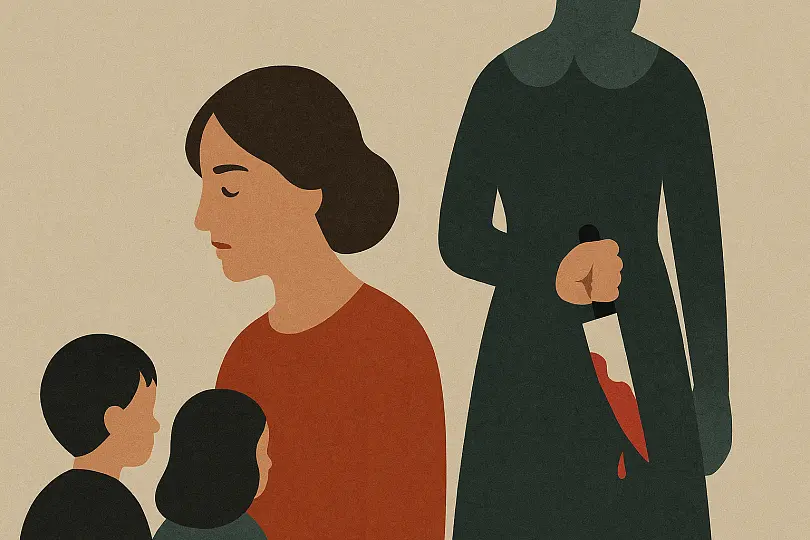
When trust turns deadly in the heart of a perfect family
What Readers Are Saying
Right for You If
If you love dark, twisty psychological thrillers that get under your skin, The Perfect Nanny should absolutely be on your radar. It’s perfect for folks who appreciate slow-burning suspense, character-driven stories, and books that make you a little uncomfortable in the best way.
You’ll be all in if you:
- Can’t get enough of domestic dramas with a side of social commentary
- Enjoy stories that dig deep into unsettling relationships and blurred boundaries
- Like novels that don’t shy away from disturbing or provocative themes
- Appreciate tight, evocative writing—Leïla Slimani doesn’t waste a single word
- Are into books that leave you thinking long after you’ve finished the last page
It’s especially great for fans of Gillian Flynn, Paula Hawkins, or those twisty stories that keep you questioning everyone’s motives. If you appreciate novels that dissect motherhood, privilege, and the sometimes dark underbelly of everyday life, you’ll be totally hooked.
But heads up—this might not be your thing if:
- You’re looking for a cozy or uplifting read (this one’s pretty bleak)
- Graphic violence and disturbing themes are a no-go for you
- You need your mysteries to wrap up with clear answers or resolutions—this book’s more about the why than the what
- You prefer fast-paced, plot-heavy thrillers over psychological, atmospheric slow burns
Basically, if you’re up for a chilling look at family, trust, and the complexities of human nature, give this one a shot. If you want something feel-good or straightforward, you might want to skip it and pick up something a bit lighter!
What You're Getting Into
Looking for a chilling page-turner with razor-sharp insight? The Perfect Nanny by Leïla Slimani drops you right into the heart of Paris, where a seemingly ideal nanny is hired by an ambitious young couple to care for their children. Everything appears picture-perfect at first, but cracks soon appear beneath the surface of this intimate domestic arrangement, revealing unsettling tensions and secrets. Taut, suspenseful, and disturbingly relatable, this novel is a dark exploration of trust, dependency, and the complexities of modern family life.
Characters You'll Meet
-
Myriam Massé: An ambitious mother who returns to her legal career, hiring a nanny to balance work and family. Her decision to outsource childcare sets the story’s unsettling events in motion.
-
Paul Massé: Myriam’s husband and a music producer, often absorbed in his work. He is supportive yet unaware of the growing tension within his own household.
-
Louise: The seemingly perfect nanny whose devotion, isolation, and growing instability are central to the plot. Her slow unraveling underpins the novel’s suspense.
-
Mila: The couple’s young daughter, who forms a close bond with Louise. She represents innocence and the unintended consequences of adult choices.
-
Adam: The infant son of Myriam and Paul; his vulnerability heightens the story’s stakes and emotional intensity.
More Like This
If psychological suspense hooks you, The Perfect Nanny immediately brings to mind Gone Girl by Gillian Flynn, with its razor-sharp examination of domestic life unraveling into something sinister—though Slimani trades slick plot twists for a more unsettling, slow-burning dread that seeps into the cracks of everyday existence. Fans of Lionel Shriver’s We Need to Talk About Kevin will also find familiar territory here: both novels dive headfirst into the hidden anxieties of parenthood, expertly peeling away the illusion of safety within the home and leaving you questioning how well anyone can truly know those closest to them.
On screen, those tense, claustrophobic vibes are reminiscent of the eerie domestic tension in the HBO series Big Little Lies—that suffocating blend of glossy routines and chilling secrets, where a polished surface barely conceals the darkness lurking beneath. Slimani’s storytelling shares that disquieting intimacy, making every minor interaction feel charged with unspoken fear and mounting pressure. It’s the kind of atmospheric, slow-burn suspense that will keep you glued to the page, even as the unease crawls under your skin.
Critic's Corner
What does it cost to let a stranger into your home, your children’s lives, your most vulnerable moments? The Perfect Nanny by Leïla Slimani skewers the modern family’s search for comfort and perfection, exposing unsettling truths about dependence, privilege, and the boundaries we guard—or fail to. As the chilling premise unfolds, Slimani forces us to ask: How well do we ever know those who care for the people we love most?
Slimani’s writing is razor-sharp yet deceptively simple—every word lands with purpose. She employs a cool, almost clinical tone that intensifies the simmering unease, and the third-person limited perspective ingeniously straddles the line between characters’ inner lives and the cold exterior of their daily rituals. Her short, clear sentences punch through the haze of bourgeois domesticity, tracing how micro-dynamics—an offhand remark, a look, a silence—accrue into seismic emotional shifts. The pacing is measured but relentless, giving readers no escape from the encroaching dread. While the prose may initially feel restrained, this precision amplifies the sense of suffocation at the heart of the story, turning the ordinary into something nightmarishly extraordinary.
Beneath the taut psychological surface, Slimani unearths weighty themes: the hidden violence of class and race, invisible labor, motherhood’s ambivalences, and society’s expectations of women. Louise serves as both the ideal caretaker and a vessel for collective anxiety about ‘outsiders’ in the domestic sphere. The story delves into the gratitude, guilt, and subtle hostilities festering within the hierarchical bond between employer and employee, highlighting how intimacy and exploitation can intertwine. Slimani doesn’t offer tidy resolutions—instead, she confronts us with questions about trust, dependency, and the myth of the “perfect” anything, especially when privilege insulates us from seeing power dynamics at play. In today’s world of gig work and fractured societies, these questions feel utterly timely.
If you’re a fan of literary domestic noir, you’ll notice echoes of Gone Girl’s psychological games and Elena Ferrante’s knack for scraping the raw nerves of class and motherhood. Yet Slimani brings a uniquely French sensibility to her work: an unflinching critique of postcolonial France, woven into a thriller’s bones. Compared to contemporaries, Slimani’s gift is her ability to render horror not with grand flourishes but with unnerving quiet—her style is more knife than bludgeon.
While the novel’s icy detachment won’t match every reader’s taste—the characters’ remoteness can feel alienating at times—that’s partly the point. The Perfect Nanny dares you to confront uncomfortable truths beneath polished surfaces. A chilling, stylish, and vital contribution to both psychological suspense and contemporary social fiction—this is a book you’ll think about long after you finish the last page.
Community Thoughts
I literally had to shut the book and stare at the wall after reading the first page. Louise’s presence is so chilling, I felt like she was watching me from the corner of my own room. Sleep? Not tonight.
Did anyone else lose track of time after THAT opening scene? I kept replaying the first chapter in my head, sleep became impossible. Slimani burrowed into my brain and refused to leave.
okay but THAT OPENING. i literally held my breath, couldn't move. my brain kept replaying it as i tried to sleep, like a horror movie on repeat. slimani really said you’re not resting tonight.
that first page smacked me so hard I almost stopped breathing. My brain kept looping back to Louise, her eerie calm, the way she made ordinary moments feel like ticking bombs. I couldn't sleep right for days.
That opening scene is BURNED in my brain, I still think about it while making breakfast. The way Slimani reveals everything backward made me double-check my doors at night. Disturbing, relentless, and impossible to shake off.
Leave Your Review
Local Take
Why It Matters
Oh wow, The Perfect Nanny by Leïla Slimani absolutely stirs the pot in French culture! Let’s break down why it resonates so strongly here:
-
Parallel Historical Events & Movements:
The book taps into memories of the infamous Courjault case and wider anxieties around child care, echoing debates sparked by immigration waves and integration challenges in modern France. -
Cultural Values Clash & Alignment:
France treasures its laïcité (secularism) and privacy—yet Slimani’s exploration of class divides and intimate family life pokes right at these values. The novel’s critique of bourgeois insularity hits a nerve, challenging assumptions about trust, domestic workers, and motherhood. -
Plot Points That Hit Differently:
The idea of an “outsider” infiltrating the sanctity of the French home is especially jarring, playing on deep-rooted fears about class mobility and fragile domestic harmony. -
Literary Traditions Echoed or Challenged:
Think Zola meets domestic noir—Slimani upends the classic French domestic drama with chilling, almost clinical precision, making the familiar feel deeply unsettling.
In short, it’s a page-turner that forces French readers to look straight at some uncomfortable truths lurking behind those impeccably kept Parisian façades.
Food for Thought
Ooh, this one's definitely sparked some heated debates!
-
The Perfect Nanny ignited controversy for its depiction of class, race, and motherhood, with critics and readers discussing whether the novel reinforces negative stereotypes—especially regarding working-class immigrant women—and whether its unsettling portrayal of modern parenting exposes or exploits societal anxieties.
-
There’s also been discussion over the inspiration drawn from the real-life 2012 Krim case in New York, with some questioning the ethical implications of fictionalizing such a horrific event so soon after it occurred.
Like what you see? Share it with other readers