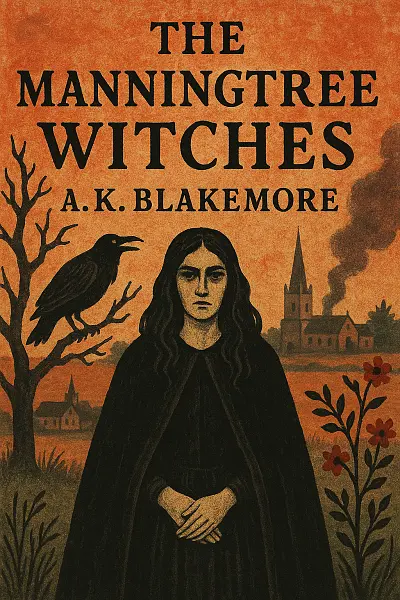
The Manningtree Witches
by: A.K. Blakemore
Rebecca West scrapes by in Manningtree, a small English town hollowed out by war and suspicion. Life is dull and endless—until the mysterious, all-black-clad Matthew Hopkins strides in, casting a shadow over every woman left behind. Suddenly, Rebecca and her companions face a horrifying new reality: whispers of witchcraft swirl, threating to consume them all.
With paranoia blooming and Hopkins’s scrutiny tightening, Rebecca must find her voice to protect herself and the women around her, even as danger creeps closer.
Blakemore writes with a vibrant, almost electric energy—every chapter thrumming with dread, dark humor, and that needle-sharp question: will Rebecca survive the witch hunt, or be its next victim?
""In a world eager for devils, it is the daring who are burned for daring to speak.""
Let's Break This Down
The Author's Voice
Atmosphere
Darkly immersive, thick with dread
- Expect a world saturated in superstition and suspicion—Blakemore crafts a palpable sense of threat that clings like fog.
- The feeling is claustrophobic and sticky, rendering 17th-century rural England in all its muddy, stifling, and occasionally nightmarish detail.
- Every scene oozes with a kind of gothic tension that pulses beneath even the most mundane interactions.
Prose Style
Lyrical yet razor-sharp
- This isn't your standard historical fiction—Blakemore's prose is poetic without being precious, bristling with bite and dry wit.
- She wields metaphor and sensory imagery like a blade, making the mundane feel electric and the horrific feel disturbingly close.
- Dialogue and description blur together with a kind of earthy poetry; at times prickly, at others lushly evocative, but always nail-on-the-head precise.
Pacing
Measured, deliberate, and steadily tightening
- The story doesn’t sprint—it unfurls, drawing you deep into the rhythms and slow-burn anxieties of small-village life.
- Moments of stillness and tension simmer through the first half, with a creeping momentum that steadily accelerates as suspicion mounts.
- While some may find the build-up slow, the payoff is intense—Blakemore uses restraint expertly, saving her emotional gut-punches for maximum impact.
Character Focus
Intimate, voice-driven, complex
- Blakemore plants you inside her protagonist’s head, using first-person narration that teems with personality, skepticism, and defiance.
- Secondary characters aren’t caricatures—they’re drawn with empathy and psychological depth, often tinged by the lens of gossip and fear.
- If you’re a fan of voice-rich storytelling, you’ll love the messy, contradictory humanity on full display.
Mood & Tone
Unsettling, sly, fiercely intelligent
- The mood is bleak, but never hopeless—there’s always a streak of sly black humor running beneath the suffering.
- Expect to feel discomfort, tension, and a kind of wry admiration for the narrator’s resilience.
- Overall: an atmosphere that gnaws at you—by turns chilling and wincingly funny, always deeply alive.
Expectations for Readers
- If you crave lush language and slow-building suspense, this is your jam.
- The book asks for patience, rewarding you with emotional gut-punches and insights into paranoia, power, and survival.
- Less action, more psychological unpeeling; perfect for readers who love to savor every sentence and get under the skin of history.
Key Moments
-
Witch trials stalk the village with claustrophobic dread and spit-flecked accusations
-
Rebecca West's sly, sharp-witted voice slices through Puritan paranoia
-
Blisteringly vivid language—mud, hunger, and suspicion seeping through every line
-
Matthew Hopkins enters: a "witchfinder" more sinister than any imagined devil
-
Mother-daughter bonds fray and tighten against the surging tide of hysteria
-
Moments of bleak, pitch-black humor beneath all the terror and suffering
-
The quiet, ruinous heartbreak of outsiders fighting to survive in a world rigged against them
Plot Summary
The Manningtree Witches by A.K. Blakemore plunges readers into 17th-century England, where the quiet village of Manningtree is upended by the arrival of Matthew Hopkins, the self-declared Witchfinder General. The story centers on Rebecca West, a young, sharp-tongued woman who lives with her mother and finds herself entangled in the growing hysteria as suspicions turn to accusations of witchcraft. Gradually, the village’s vulnerable women—including Rebecca, her mother, and other outcasts—are singled out, arrested, and brutally interrogated by Hopkins and his cronies. The tension climaxes as Rebecca, despite initially helping the Witchfinder to survive, becomes a main target herself; betrayed and isolated, she must decide between survival and loyalty to those she loves. In the end, the witch trials devastate the community, leaving Rebecca changed, permanently marked by trauma but also by her fierce resistance and empathy.
Character Analysis
Rebecca West, the protagonist, stands out for her intelligence and biting wit, yet she remains vulnerable due to her gender and poverty. At first, Rebecca seems resigned to her marginalized status, but as the witch hunts escalate, she’s forced to confront her sense of identity, loyalty, and survival instincts. Her mother, known as Mother, is bitter and cynical, shaped by years of hardship, but fiercely protective of Rebecca. Matthew Hopkins, the antagonist, is chillingly pious, using religion and fear as tools for personal power; his increasing obsession and cruelty fuel much of the novel’s tension. Throughout the story, characters struggle with trust, fear, and community, showing deep cracks in their relationships as hysteria grows.
Major Themes
Some of the novel’s biggest themes are misogyny and power, where the witch hunts serve as a bleak metaphor for how vulnerable women are scapegoated and controlled by social and patriarchal forces. Fear and hysteria ripple through the text, infecting even the most rational minds and exposing how quickly communities can unravel under suspicion. Isolation and belonging also loom large—Rebecca’s journey is shaped by her longing for acceptance, even as she’s forced to stand apart to preserve her integrity. The book asks, often heartbreakingly, what people are willing to sacrifice to survive when the rules are rigged against them.
Literary Techniques & Style
Blakemore’s prose is lush, vivid, and often poetic, capturing both the harshness of the setting and the inner lives of her characters. She uses a limited third-person perspective mostly focusing on Rebecca, which lets us see the world’s dangers and injustices up close. The diction is peppered with period detail, yet remains accessible and intimate. Metaphors of rot, decay, and fire recur throughout the narrative, symbolizing both the destruction unleashed by the witch hunts and the hope of something new arising from the ashes. Blakemore masterfully employs irony and dark humor, especially through Rebecca’s observations, which counterbalance the grim events.
Historical/Cultural Context
Set during the English Civil War in the 1640s, the story unfolds against a backdrop of social and political turbulence, religious zealotry, and widespread fear. The real-life witch trials in East Anglia inspire the plot, spotlighting a time when belief in witchcraft was weaponized for control. The crushing poverty and instability of the era make Manningtree’s inhabitants particularly susceptible to superstition and scapegoating.
Critical Significance & Impact
Blakemore’s debut has been widely praised for its lyrical prose, evocative setting, and unflinching look at power, gender, and community breakdown. The novel breathes new life into historical fiction, making its themes of prejudice and persecution feel sharp and urgent for modern readers. Thanks to its nuanced characters and immersive style, The Manningtree Witches stands out as a haunting, timely exploration of how fear distorts justice and corrodes humanity.
Female defiance ignites suspicion in a haunting, poetic witch-hunt era.
What Readers Are Saying
Right for You If
If you’re someone who adores historical fiction with a dark, atmospheric vibe, you’re in for a treat with The Manningtree Witches. This book totally nails that creepy, small-town paranoia of 17th-century England—so if you loved The Crucible, or you’re still daydreaming about The Essex Serpent, it’s definitely your jam.
- Fans of beautifully crafted, slightly poetic prose will swoon over A.K. Blakemore’s writing. Every sentence has a little bit of witchcraft in it (in the best way).
- Obsessed with feminist themes or stories about women banding together (and tearing each other apart)? Yep, you’ll find plenty to chew on here.
- If you’re a reader who’s into books that get under your skin and make you squirm, especially with a bit of historical horror or real-world eeriness, this will absolutely deliver.
- Also: anyone who loves a slow-burn, character-driven story that’s all about mood, tension, and that claustrophobic small-town feel—this is your vibe.
But, hey, if you’re looking for an action-packed plot or thriller-level pacing, fair warning—this one takes its sweet time. It’s deeply immersive and sometimes that means things move at a simmer rather than a boil.
- If you don’t really dig historical settings or get twitchy with ambiguous endings, you might find yourself a bit restless.
- Anyone who’s after pure escapism without any grim realism, or who’d rather not read about the kind of misogyny and suspicion that haunted accused “witches,” might want to choose something lighter.
Honestly, if you’re after gorgeous writing, unsettling atmosphere, and a fresh take on witch trial stories, you’ll be talking about this one for ages. If you need page-turning thrills every few chapters, maybe keep looking. Totally depends on your reading mood—but when you’re in it, it’s unforgettable.
What You're Getting Into
Step into 17th-century England in The Manningtree Witches by A.K. Blakemore, where unease and suspicion simmer in a village gripped by fear and superstition.
As strange rumors swirl and a mysterious outsider arrives, rebellious young Rebecca West finds herself entangled in a gripping struggle for survival and truth.
Expect dark, immersive historical drama with unforgettable characters, crackling tension, and a fiercely atmospheric vibe that pulls you deep into a world where even an accusation can be deadly.
Characters You'll Meet
-
Rebecca West: Resourceful and spirited narrator who struggles to assert her independence in a repressive Puritan society. Her journey captures the novel’s tension between conformity and individuality as she becomes entangled in the witch trials.
-
Elizabeth Clarke: Elderly, outspoken widow and social outcast, whose accusation of witchcraft by her neighbors triggers the town’s spiral into hysteria. She’s both vulnerable and defiant—a catalyst for the unfolding drama.
-
Matthew Hopkins: Charismatic but chillingly zealous “Witchfinder General” whose arrival in Manningtree drives the persecution forward. His manipulative fervor makes him a menacing instrument of state paranoia.
-
Alice Sparrow: Rebecca’s cautious but loyal mother, who tries to protect her daughter while navigating the dangerous shift in local attitudes. Her pragmatism stands in contrast to Rebecca’s rebelliousness.
-
Hester: One of the other women accused alongside Elizabeth Clarke, representing the many silenced and marginalized by the witch hunts. Her fate underscores the tragic consequences of mass panic and scapegoating.
More Like This
If you found yourself swept up by the dark, immersive atmosphere of The Essex Serpent by Sarah Perry, you'll immediately recognize the same fog-tinged tension and moody English landscape in The Manningtree Witches. Both novels excel at weaving historical detail with an undercurrent of dread, but Blakemore’s work takes an even sharper look at the consequences of suspicion and hysteria on a small community. For fans of The Crucible by Arthur Miller, there’s that familiar, visceral sensation of watching paranoia spiral out of control, but The Manningtree Witches offers a more intimate glimpse into the lives and vulnerabilities of the women caught in its grip, lending a fresh feminist perspective to the witch trials narrative.
On screen, the show Salem echoes Blakemore’s novel in the way it conjures an oppressive, claustrophobic world where whispers become evidence and no one is truly safe. The series’ blend of earthy realism and supernatural suspicion pairs nicely with the creeping fear and mounting tension that pulses through The Manningtree Witches. Whether you’re drawn to raw emotional stakes, haunting settings, or the perils of unchecked power, you’ll find some of the best elements of your favorite historical, literary, and television experiences within these pages.
Critic's Corner
What happens to a community when fear trumps reason, and who bears the cost when society, gripped by paranoia, decides that women’s bodies are sites of danger? The Manningtree Witches by A.K. Blakemore never relinquishes this central question, thrusting us headlong into the claustrophobic mania of 1640s England, where faith and suspicion entwine and the boundaries between survival and betrayal shift with the tides.
Blakemore’s language crackles with lyricism and menace—her sentences burst, bristle, and at times seduce. She crafts Manningtree with visceral specificity: the sweat of communal bread ovens, the brittle tension of half-shared witticisms in smoky inns, the seep of mud and shame. Her narrative technique is intimate yet slightly askew, echoing Mantel’s psychological closeness but with a tart, modern wit reminiscent of The Favourite. Dialogue comes alive, heavy with double meanings and unspoken grievances, while interiority is rendered in phrases both sly and cutting. This stylistic clarity never sacrifices historical verisimilitude for effect; rather, it heightens the reality, allowing seventeenth-century anxieties to feel fiercely immediate.
At its heart, the novel interrogates power and voicelessness: how male authority polices female existence, how communal need festers into suspicion, and—most strikingly—how women grasp at the thinnest straws of freedom in a world determined to cage them. Blakemore steers clear of easy villains; her witches are not mystical, just achingly and stubbornly human. The dread weaves through religious fervor, economic instability, and suppressed sexuality, echoing debates about misogyny and scapegoating that feel urgently relevant today. The cost of not being believed, of desire misread as danger, lands with contemporary sting. Yet, the narrative also savors small acts of resistance and desire, reveling in the wry, even bawdy resilience of women on the margins.
Within the literary tradition of historical fiction obsessed with power and gender—think Mantel’s Wolf Hall or Waters’ Fingersmith—Blakemore’s debut distinguishes itself with its dark humor and unfussy lyricism. It doesn’t merely conjure the past; it interrogates it, teasing out the lines between history and fable, power and myth. If The Favourite upended royal nostalgia with sly camp, The Manningtree Witches does the same for our vision of English village life riven by suspicion.
While the plot sometimes meanders and a few secondary characters risk blurring together amid the novel’s intensity, these are minor missteps in a book that is otherwise fresh, immersive, and necessary. Blakemore’s voice is both exultant and unsparing. For readers craving historical fiction that cuts and sings—and dares to ask whose stories get told, and why—this is a debut that absolutely matters now.
Community Thoughts
Is it weird that Matthew Hopkins still pops into my dreams? Blakemore made his paranoia crawl under my skin. I kept thinking the witchfinder would leap out from the shadows of my own hallway. Unnerving and unforgettable.
So that scene where Rebecca is pressed in the crowd, the air thick with suspicion and fear, just would not leave me. The tension was so vivid it felt like I was standing right there, heart pounding, wanting to run.
i still can't get rid of the chill from reading about Matthew Hopkins, the Witchfinder. the way he prowls through the pages, self-righteous and hungry, haunted my dreams for days. his presence is a creeping dread you can't shake.
that SCENE when Rebecca first hears the accusations in the market hit like a punch. the everyday world just twisted instantly and i felt the shift. chills.
Wasn’t ready for the way Rebecca West lingers in my mind. Her defiance and vulnerability got under my skin, kept me turning pages long after midnight. Every whispered accusation left me uneasy. This book really got in my head.
Leave Your Review
Local Take
Why It Matters
The Manningtree Witches by A.K. Blakemore taps right into deep-rooted fears and tensions that echo moments from this country’s own history—think of those waves of witch trials, moral panics, and the powerful grip of suspicion on small communities.
- Parallel moments? Absolutely! We’ve seen shades of community scapegoating and hysteria—from the witch hunts in Salem to the Red Scare, or even the social paranoia surrounding McCarthyism. All these eras share with Blakemore’s novel a dark fascination with how quickly logic gives way to fear.
- The book’s wild clashes between individuality and rigid authority are just so relatable here, especially with our ongoing conversations about distrust in institutions and the marginalization of outspoken women.
- Some plot points, like the public shaming rituals and the sense of being watched, might hit especially hard for readers used to social norms that prioritize conformity and community reputation over personal freedom.
- Stylistically, Manningtree Witches might feel like it’s nipping at the heels of classic local authors who tackled intolerance and social outcasting; yet, with its visceral, poetic prose, it boldly shakes up traditional narrative expectations, echoing and challenging our literary love for subversive, voice-driven historical fiction.
All in all, readers here don’t just observe the book—they feel its pulse, recognizing their own historical cracks in its haunting story.
Food for Thought
Notable Achievement for The Manningtree Witches by A.K. Blakemore:
This dazzling debut clinched the 2021 Desmond Elliott Prize, earning big praise for its lyrical, atmospheric reimagining of 17th-century witch trials and stirring up fresh interest in historical fiction centered on women's voices.
Like what you see? Share it with other readers