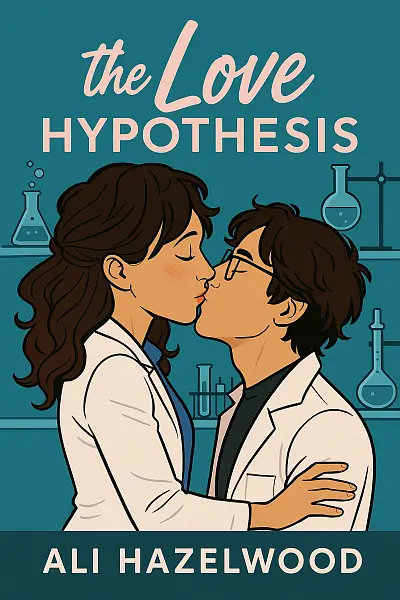
The Love Hypothesis
by: Ali Hazelwood
Olive Smith is a fiercely logical Ph.D. student at Stanford who doesn’t believe in love. Content in her routine, she’s suddenly thrown off course when she impulsively kisses Adam Carlsen, the notoriously prickly young professor, to convince her best friend she’s happily dating.
Now, stuck in a very public pretend relationship with the last guy she’d ever choose, Olive must navigate awkward encounters, academic politics, and her growing feelings—all while questioning her own assumptions about romance.
Hazelwood’s writing is breezy and witty, mixing nerdy banter with genuine emotion, and keeps you guessing: will they or won’t they take the leap?
"Sometimes the bravest kind of science is trusting your heart to prove what your mind can’t yet believe."
Let's Break This Down
The Author's Voice
Atmosphere
Fresh, flirty, and unabashedly modern — the world of The Love Hypothesis is bustling with academic energy, coffee shop warmth, and the delicious awkwardness of budding romance. The vibe is lighthearted with dashes of genuine vulnerability, so expect a setting that feels both comfortingly familiar and infused with the nervous excitement of new possibilities.
Prose Style
Hazelwood’s prose is breezy, witty, and delightfully self-aware. Dialogue sparkles with banter, inner monologues are filled with relatable neuroses, and scientific jargon gets sprinkled in just enough to make the Stanford lab setting feel authentic—but never overwhelming. The narrative voice is playful and intimate, often breaking the fourth wall just enough to let you in on the joke.
Pacing
The story moves at a snappy, addictive clip, with just the right balance of meet-cute moments, escalating romantic stakes, and comedic interludes. You won’t find much meandering—each scene feels purposeful, pushing the romance forward or deepening the characters. Occasional slower beats let the chemistry simmer, but for the most part, it’s a ride you’ll want to binge in big, satisfying gulps.
Character Development
Hazelwood absolutely leans into lovable awkwardness and nerdy charisma. The main characters are endearing and multidimensional, with quirks that feel lived-in rather than engineered for laughs. You’ll find real vulnerability beneath the sarcasm and embarrassment, and side characters are vibrant scene-stealers, even if their arcs aren’t as fleshed out as the leads.
Overall Mood & Feel
Imagine your favorite rom-com spliced with grad school chaos—a story pulsing with positivity, empowerment, and heart-fluttering scientific experiments. It’s the perfect pick-me-up for anyone who loves slow-burn romance, whip-smart humor, and genuinely sweet emotional payoffs. If you crave witty banter, academic drama, and an unapologetically hopeful vibe, you’ll feel right at home in Hazelwood’s world.
Key Moments
- **Fake-dating fiasco set in the cutthroat world of academia—nerdy banter included **
- Olive’s accidental kiss in the lab: the catalyst for a delightfully awkward romance
- Adam Carlsen: famously grumpy, secretly soft? Yes, please
- Swoony conference scene that crackles with unresolved tension and spilled secrets
- STEM heroines unite! Relatable grad school chaos and imposter syndrome, front and center
- Slow-burn chemistry that builds with every shared coffee—and every clashing opinion
- Consent, vulnerability, and self-worth explored with just the right mix of humor and heart
Plot Summary
The Love Hypothesis follows Olive Smith, a determined Ph.D. candidate at Stanford, who in a moment of panic kisses Dr. Adam Carlsen, a notorious young professor, to convince her best friend that she’s happily dating. Olive and Adam then agree to enter a fake dating relationship for mutual benefit—Olive to prove she's moved on, and Adam to boost his reputation with university administrators. As their pretend relationship deepens, awkward misunderstandings and genuine chemistry emerge, especially during a crucial science conference where they share open conversations and a steamy encounter. The story’s tension peaks when Olive’s academic future is jeopardized by a faculty member’s inappropriate behavior, forcing her to trust Adam and reveal the truth. Ultimately, Olive stands up for herself, exposes the misconduct, and she and Adam embark on a real, supportive romance, both personally and professionally fulfilled.
Character Analysis
Olive Smith starts out reserved, academically driven, and self-effacing, often putting others’ needs before her own. Over time, she learns to assert herself, confront injustice, and admit her feelings, growing into someone more confident and self-aware. Adam Carlsen is first portrayed as gruff and intimidating, but layers of gentleness, loyalty, and vulnerability are revealed, especially in his support of Olive. Their relationship evolves from awkward strangers to genuine partners, with each helping the other grow—Olive finds her voice, while Adam becomes more open and emotionally expressive.
Major Themes
One major theme is the balance between authenticity and self-preservation—Olive’s fake relationship highlights the risks and rewards of honesty in personal and professional spheres. Power dynamics in academia are explored, especially regarding gender, mentorship, and consent, as seen through Olive’s struggles with harassment and career advancement. The book also delves into imposter syndrome; Olive frequently questions her worth in scientific circles, mirroring broader anxieties experienced by young professionals. Friendship and support shine through secondary characters, emphasizing how chosen family can empower individuals to confront adversity.
Literary Techniques & Style
Ali Hazelwood’s writing is fresh, witty, and peppered with self-aware humor, told mainly through Olive’s first-person narration. The story’s fake relationship trope is used both for comedic effect and to explore deeper emotional truths, subverting romance genre expectations with relatable awkwardness. Hazelwood uses recurring science metaphors—like experimental “hypotheses” for love—and symbolic moments (the infamous conference scene) to blend STEM themes with personal discovery. Dialogue-driven and fast-paced, the prose captures the energy of academic life while injecting heart and warmth into every chapter.
Historical/Cultural Context
Set in the contemporary academic world, the story reflects real-life pressures facing early-career researchers, especially women in STEM fields. Hazelwood, herself a neuroscientist, draws upon current conversations around representation, sexual harassment, and work-life balance on university campuses. These cultural touchstones ground the romantic hijinks in relevant modern struggles, making the narrative approachable and timely.
Critical Significance & Impact
The Love Hypothesis became a breakout bestseller for its smart blend of rom-com conventions, science-savvy protagonists, and honest take on academic challenges. Its popularity within the BookTok and online romance communities has helped spotlight STEM heroines and workplace romances. Although some criticize its reliance on familiar tropes, its genuine humor and emotional intelligence have made it a beloved pick for readers craving both entertainment and deeper commentary on modern academia and relationships.

Fake dating for science—real feelings between lab partners rewrite the rules.
What Readers Are Saying
Right for You If
If you’re a rom-com lover, especially one who eats up fake dating tropes and slow-burn chemistry, you’ll have a blast with The Love Hypothesis. Honestly, it’s made for anyone who’s got a soft spot for awkward professors, nerdy banter, and STEM girl representation (seriously, if you’re craving women-in-science stories, this totally delivers).
Perfect for:
- Fans of contemporary romance with quirky, likable leads
- People obsessed with the enemies-to-lovers or fake relationship set-up
- Readers who appreciate lots of witty dialogue and nerd culture references
- Anyone who wants fluffy, feel-good reads that aren’t all about drama
- If you’ve finished every Christina Lauren or Helen Hoang book and still need more
On the flip side, if you’re not into romance novels at all or you can’t stand predictable plot formulas, this probably isn’t your thing. The book is VERY tropey and leans into the cuteness (some parts might make hardcore cynics roll their eyes). Also, if you prefer gritty, dark, or super-unique stories and need explosive plot twists over character-driven tension, you might struggle to stay interested here.
Bottom line:
If you want something adorably nerdy, lightly angsty, and just downright fun for a chill weekend, pick it up. But if swoony STEM romance isn’t your brand of escapism, you may want to keep browsing.
What You're Getting Into
If you love whip-smart banter and academic chaos, The Love Hypothesis absolutely delivers! The story follows Olive Smith, a determined Ph.D. student, who finds herself tangled in a fake-dating scheme with the notoriously grumpy (but devastatingly attractive) Professor Adam Carlsen. With laugh-out-loud moments, simmering chemistry, and plenty of lab-coat awkwardness, this rom-com is all about discovering unexpected connections—and maybe, just maybe, actual love—where you least expect it.
Characters You'll Meet
-
Olive Smith: 🧪 A determined PhD candidate who impulsively pretends to date a professor. Her journey centers on balancing her scientific ambitions with personal vulnerability.
-
Adam Carlsen: 🧑🔬 The notoriously strict and intimidating professor who agrees to the fake-dating scheme. Known for his dry wit and hidden warmth, he gradually reveals his softer side as the romance develops.
-
Ahn Pham: 🧑🎓 Olive’s loyal best friend and confidante who unknowingly sets the fake dating into motion. Always supportive, she provides comic relief and emotional support.
-
Malcolm: 🧑💼 Olive’s close friend and fellow grad student. He’s outspoken, fiercely protective, and lightens tense moments with his humor and honesty.
-
Tom Benton: 🧑🔬 A prominent scientist and former colleague of Adam’s, whose ambitions complicate both Olive’s career and personal life. Plays a key antagonist role in the later plot threads.
More Like This
If you're diving into The Love Hypothesis, there's a good chance you'll notice the witty banter and STEM-centric romance reminiscent of The Rosie Project by Graeme Simsion. Both novels center on intellectually brilliant but socially awkward protagonists navigating the unpredictability of love, making for endearing—and often hilarious—miscommunications. Likewise, Ali Hazelwood’s dynamic blend of academia and vulnerability brings to mind Jenny Han’s To All the Boys I’ve Loved Before, where heartfelt confessions, fake relationships, and the thrill of secret feelings create a captivating emotional ride.
On the screen, the chemistry and playfulness between Olive and Adam echo the irresistible slow-burn energy found in The Proposal starring Sandra Bullock and Ryan Reynolds. That faked romance trope? Hazelwood nails it with the same blend of sharp, sparky dialogue and electric tension, all while exploring the collision between career goals and personal boundaries. There’s a similar giddy anticipation as you watch two reluctant allies realize there might be more than just a deal between them.
Critic's Corner
What happens when the rigorous logic of science collides with the messy unpredictabilities of human emotion? The Love Hypothesis pushes readers to consider whether even the most rational minds can truly sidestep the chemistry of attraction, or if love is the ultimate variable immune to calculation. Ali Hazelwood crafts a story where equations and experiments take a backseat to vulnerable hope—daring us to measure what truly matters in matters of the heart.
Hazelwood’s energetic, witty writing instantly immerses readers in Olive’s interior world. The narrative voice—dryly humorous, self-deprecating, observant—feels authentically “STEM” without alienating non-scientist readers. Dialogue is a particular strength, often sparkling with banter and awkward charm, capturing anxiety, longing, and uncertainty with an honest touch. The plot navigates familiar tropes with a refreshing, self-aware cadence: forced proximity, fake dating, and academic rivalry all get a modern, knowing twist. Hazelwood’s pacing is generally sharp, especially in the early and climactic chapters, though a few mid-novel scenes feel slightly repetitive, risking reader fatigue. Nonetheless, careful scene construction and a keen understanding of dramatic tension keep pages turning. Physical attraction is rendered with sensitivity—never gratuitous, always grounded in knowing, character-driven moments.
Hazelwood dives beneath the surface antics to explore the pressures facing women in academia, the emotional armor needed to survive competitive environments, and the challenge of trusting others with one’s vulnerabilities. The book asks big questions: Is love a logical choice or an inexplicable force? What does true support between partners—and colleagues—look like? Olive and Adam’s relationship becomes a lens for confronting power dynamics, professional doubts, and the riskiness of hope. Importantly, Hazelwood challenges the myopic idea that “STEM people” are emotionally detached, instead revealing how intellectual women must constantly translate between sterile facts and swirling emotions. For millennial and Gen Z readers wrestling with work-life boundaries and self-doubt, the novel resonates as both wish fulfillment and gentle challenge.
Within contemporary romance, The Love Hypothesis finds its place among works like Helen Hoang’s The Kiss Quotient and Sally Thorne’s The Hating Game, but distinguishes itself with its unapologetic nerdiness and insider’s view of academia. In the new wave of STEM romance, Hazelwood’s debut feels authentic, infusing traditional rom-com beats with nuanced, realistic professional dilemmas. Compared with more formulaic entries in the genre, Hazelwood’s scientific lens and layered emotional stakes offer a spirited refresh.
Flaws do emerge: some secondary characters risk caricature, and the story’s slow burn occasionally lags beneath its own emotional weight. Yet The Love Hypothesis lands as a bracing, big-hearted experiment in vulnerability. For readers hungry for intelligent, chemistry-laden romance with substance, Hazelwood’s debut is both a charming hypothesis—and a convincing proof.
Community Thoughts
okay but ADAM CARLSEN LIVES RENT-FREE IN MY HEAD. i was just minding my business and suddenly i’m plotting fake relationships with every grumpy professor i see. this book is a science experiment gone absolutely wild.
I legit stayed up until 3 AM because I HAD to know if Olive and Adam would finally get their act together. This book completely destroyed my sleep schedule but honestly, it was worth every single bleary-eyed morning!
adam carlsen is living rent-free in my brain now, thank you very much. his grumpy professor energy had me up at 2am, questioning my standards and googling fake dating tropes. send help.
olive and her fake dating shenanigans completely wrecked my sleep schedule, I stayed up WAY too late needing to know if her science nerd heart would finally get a clue. 10/10, but I regret nothing except my tired eyes.
Okay, listen, Adam Carlsen totally lives rent free in my brain now. stoic, grumpy, secretly soft? how dare he. i was NOT prepared for the swoon levels and now i can’t focus on anything else. 10/10 would obsess again.
Leave Your Review
Local Take
Why It Matters
The Love Hypothesis totally strikes a chord with readers in the US, especially given its deep dive into academia, a setting so familiar and, let’s be honest, a little fraught for a lot of Americans.
-
The fake-dating trope matches up with the US's rom-com tradition, echoing the playful, witty banter of classic Nora Ephron films, while also gently poking fun at the sometimes rigid, performative aspects of American dating culture.
-
Themes of women in STEM resonate strongly post-#MeToo and amid ongoing pushes for gender equality in the workplace, mirroring real-life conversations about representation and women’s advocacy in academia.
-
The heroine’s awkwardness and imposter syndrome reflect a cultural anxiety around achievement, a very American preoccupation, especially in hyper-competitive environments.
-
Where some plot points—like the bold teacher-student romance—might feel taboo or controversial in other societies, US readers often interpret them through a lens of playful fantasy and consent, thanks to more liberal attitudes toward fiction.
It’s got that girl boss energy and nerd-chic charm that fits beautifully with current US values around empowerment, self-discovery, and breaking the mold, while still serving a hefty slice of escapist fun!
Food for Thought
The Love Hypothesis by Ali Hazelwood has sparked some controversy around its origins, as critics have pointed out that the novel began as Star Wars fan fiction, raising debates about originality and the ethics of transforming fan works into published fiction.
Additionally, some readers have discussed concerns over power dynamics between the leads, given their academic roles, fueling ongoing discussions about appropriate relationships in romance novels set in academia.
Like what you see? Share it with other readers