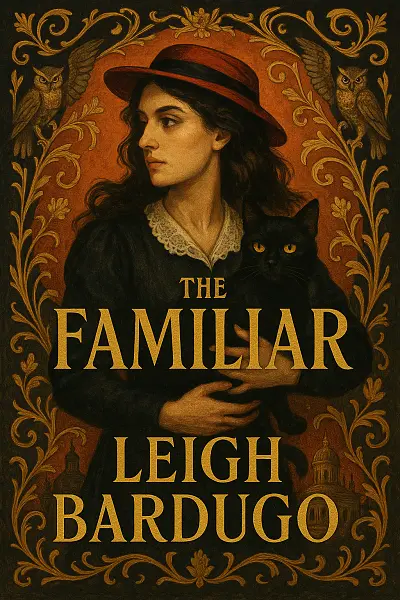
The Familiar
by: Leigh Bardugo
Luzia Cotado scrapes by in Madrid’s dusty kitchens, quietly weaving scraps of magic into her daily grind, dreaming of escape. Everything changes when her cunning mistress outs her gift, demanding Luzia parade her miracles to boost their crumbling fortunes.
Catapulted into the dangerous orbit of Spain’s royal court, Luzia is forced to perform for schemers who crave any edge in the wars of kings and faith. Her newfound fame is a double-edged sword—every trick puts her one step closer to both glittering opportunity and the deadly reach of the Inquisition.
Bardugo spins lush, suspenseful historical fantasy packed with aching hope and razor-sharp peril. Will Luzia risk everything for freedom?
""Power is a shadow we chase, but mercy is the hand that finds us in the dark.""
Let's Break This Down
The Author's Voice
Atmosphere
Rich, immersive, and irresistibly moody—Bardugo conjures 16th-century Spain with layers of haunting detail. Expect lantern-lit alleyways, secretive convents, and a sense of magic-in-shadow always trailing behind the characters. The setting buzzes with tension, superstition, and the palpable weight of history. Readers are pulled into a world where every corner might conceal a secret, and each hush feels thick with unspoken danger.
Prose Style
Lush and evocative, sometimes bordering on ornate. Bardugo’s sentences are embroidered with metaphor and sensory language, but she rarely tips into purple prose. Dialogues come alive with energy, and her descriptive passages are vivid without feeling overwrought. There’s a musicality to her writing—expect to be swept up in turns of phrase, but also to pause and savor the imagery she paints.
Pacing
Measured and deliberate, but not sluggish. The novel takes its time to build both its world and its characters, especially in the early chapters. There’s an undercurrent of suspense—think of it as a simmer rather than a boil. Action and revelations are spaced out with care; quieter moments abound, letting tension build until it breaks. This makes the payoff richer but might test readers wanting nonstop thrills.
Character Development
Deeply layered, morally complex, and emotionally resonant. Bardugo excels at crafting characters that feel human—flawed, yearning, and full of agency. Protagonists and side characters alike wrestle with big questions of faith, power, and survival. Expect gradual reveals of backstory and motive, unfolding alongside the plot rather than in big info dumps.
Dialogue
Sharp, authentic, and tinged with wit. The dialogue feels grounded in the time period but never stiff or archaic. Characters spar with cleverness and vulnerability—conversations are as likely to reveal emotional truths as they are to advance the plot.
Themes and Tone
Shadowy, thoughtful, and laced with hope and defiance. Magic and faith intertwine with questions of justice, identity, and resilience. Bardugo refuses easy answers, threading the narrative with ambiguity and rich historical resonance. The tone walks the knife-edge between darkness and possibility—you’ll feel the dread, but also those sparks of light that keep you turning pages.
Overall Rhythm
An atmospheric, deliberate journey—perfect for readers who love to sink into lush worlds and savor every detail. Bardugo’s writing rewards patience, offering emotional depth and narrative payoffs for those willing to linger in the shadows with her.
Key Moments
- Courtly intrigue meets dark magic in plague-shadowed Madrid
- Luzia’s whispered spells—hope and defiance flickering in every candlelit corner
- That scene in the ducal gardens: trust, betrayal, and supernatural bargains collide
- Wickedly atmospheric prose—like slipping into a velvet-draped nightmare
- A cunning Inquisitor whose soft words threaten pure terror
- Unexpected tenderness between rivals, sparking against a world hungry for power
- The final revelation: loyalty’s limits tested in a city clinging to superstition and survival
Plot Summary
The Familiar whisks us off to 16th-century Spain, where Luzia Cotado, a scullery maid hiding secret magical talents, gets drawn into a world of danger and intrigue when her mistress discovers her powers. She’s forced into service as a “miracle worker” at the court of the ruthless Don Antonio, becoming a pawn in his power play against the ruling nobility. As Luzia befriends Santángel—a mysterious, brooding familiar with magic of his own—she uncovers courtly plots, betrayals, and the horrifying price of power in the grip of the Spanish Inquisition. The story reaches its fever pitch when Luzia must decide whether to use her magic to save herself and Santángel or to sacrifice her chance at freedom. In the end, Luzia chooses self-acceptance, using her abilities to outwit her enemies and carve a new place for herself—though not without personal loss and bittersweet independence.
Character Analysis
Luzia Cotado goes from a timid, resourceful servant hiding her light to a bold, self-possessed young woman who finally embraces her gifts, even if it means standing alone. Santángel, initially enigmatic and seemingly heartless, is gradually revealed as a survivor struggling with his past and longing for belonging—his relationship with Luzia is both a source of strength and vulnerability. Don Antonio provides a chilling portrait of ambition unchecked by morality, while minor characters like Luzia's mistress and court rivals serve as foils, exposing the protagonist’s courage and growth. Through trial and heartbreak, Luzia and Santángel both change: learning the peril of secrecy, the cost of truth, and the power of forging one’s own fate.
Major Themes
This novel dives deeply into identity and self-acceptance, especially as Luzia wrestles with hiding versus revealing her magic in a world hostile to the different. Sacrifice and power are recurring motifs: nearly every major character must choose what they’re willing to give up—love, safety, even humanity—for ambition, survival, or loyalty. The perils of zealotry and oppression run throughout; the presence of the Inquisition and religious fervor heightens every conflict and forces questions about faith, autonomy, and justice. At its core, Bardugo explores how personal empowerment and connection can thrive even amid cruelty and fear, using rich historical tensions as a canvas.
Literary Techniques & Style
Leigh Bardugo blends lyrical prose with sharp dialogue, infusing each scene with lush sensory details that pull you straight into 16th-century Spain. The narrative follows Luzia closely, limited third-person, which builds intimacy while keeping suspense high through selective reveals. Symbolism is everywhere—Luzia’s embroidery reflects her constrained existence, while magical flourishes stand in for hope and rebellion. Metaphors, such as magic as a double-edged sword, reinforce how Luzia’s gifts are both curse and blessing. Bardugo’s knack for pacing keeps the court intrigue tight, while moments of introspection let the emotional stakes breathe.
Historical/Cultural Context
Set against the backdrop of the Spanish Inquisition, the story pulsates with the era’s anxiety over purity, suspicion of the “other,” and the ever-present threat of persecution. Bardugo weaves real history—religious orthodoxy, class hierarchies, and the danger of being labeled a heretic or converso—into the characters’ daily existence. The setting amplifies themes of secrecy, assimilation, and the costs of standing out in an oppressive society.
Critical Significance & Impact
The Familiar has been praised for its vivid historicity, compelling characters, and the way it spotlights seldom-seen cultural perspectives, especially women and marginalized peoples in Early Modern Europe. Critics highlight Bardugo’s blend of fantasy and history as both imaginative and grounded, making the book a standout in the genre. Its resonant themes of identity and resistance feel especially timely, cementing its relevance for today’s readers and its place in Leight Bardugo’s acclaimed body of work.
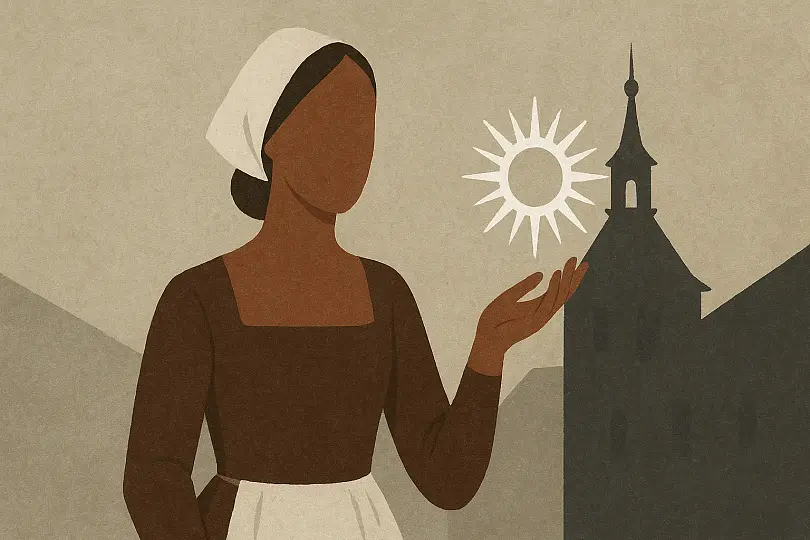
Forbidden magic entwines with dangerous desire in golden age Madrid
What Readers Are Saying
Right for You If
Who’s Going to Love The Familiar?
If you’re all about historical fantasy with a dose of real world grit, this one’s kind of a dream come true. Fans of Leigh Bardugo’s atmospheric world-building (think The Shadow and Bone vibes but in a very different setting) will feel right at home here.
- Obsessed with lush, magical settings? Mexico under the Inquisition comes alive, with just enough dark magic to keep you hooked.
- Like your main characters morally grey and a little sharp-tongued? You’ll vibe with Luzia, trust me.
- If you love novels that dig into themes like power, survival, faith, and resilience, this is your jam.
- Anyone who appreciates richly drawn cultures and stories that feel both epic and intimate will find a lot to savor here.
- Oh, and slow-burn plots that don’t rush? You’ll appreciate the deliberate, immersive pacing.
Who Might Want to Skip It?
- If you need fast action and explosive plot twists right from page one, this might test your patience — it's more slow simmer than instant fireworks.
- Readers who prefer clear-cut good vs. evil stories might find the moral murkiness a bit much.
- If heavy historical detail isn’t your thing, or you like your fantasy a little lighter and less intertwined with real-world pain, this book might feel a bit dense or even heavy.
- Also, if you’re hoping for a swoony romance front-and-center, you should know the relationships here are definitely on the subtle, simmering side.
Bottom line: The Familiar absolutely shines for anyone who loves thoughtfully crafted, character-driven fantasy with a strong sense of place. But if you’re after non-stop action or pure escapist fluff, you might want to reach for something else in your TBR pile.
What You're Getting Into
If you're craving a historical fantasy with a lush, magical edge, The Familiar by Leigh Bardugo is calling your name!
Set in the gritty, vibrant world of 16th-century Spain, this novel follows Luzia, a humble servant with secret mystical talents who suddenly finds herself drawn into the orbit of the powerful and dangerous. When a twist of fate exposes her abilities, Luzia is thrust into a world of cunning plots, superstition, and high-stakes intrigue, where every alliance feels risky and nothing is quite as it seems. Expect enchanting atmosphere, razor-sharp wit, and a heroine you'll root for as she navigates impossible odds—it's historical fantasy with teeth and heart!
Characters You'll Meet
-
Luzia Cotado: Resourceful and quick-thinking protagonist; a struggling servant whose secret magical abilities draw her into the dangerous intrigues of Inquisition-era Spain.
-
Santángel: Grim, conflicted investigator for the Spanish Inquisition; driven by duty but plagued by growing doubts about his mission and personal connections.
-
Guillén: Charismatic court magician with hidden motives; acts as both mentor and rival to Luzia, playing a critical role in her rise and the story’s escalating tension.
-
Valentina: Ambitious and cunning noblewoman; uses Luzia’s gifts for personal advancement, revealing both the power and peril of court life.
-
Marisol: Luzia’s loyal childhood friend; offers emotional grounding and support, representing the ties to Luzia’s past and simpler life.
More Like This
If you found yourself enchanted by The Night Circus by Erin Morgenstern, prepare to be utterly captivated by The Familiar—Bardugo conjures that same delicious blend of historical ambiance and shimmering magic, wrapping it around characters who feel both distant and heartbreakingly real. The slow-burn intrigue and evocative prose will also strike a chord with fans of The Shadow of the Wind by Carlos Ruiz Zafón, especially those who crave multilayered mysteries and lush, atmospheric settings with a distinctly European flavor.
There’s even a Penny Dreadful vibe pulsating through this novel, especially in the way the supernatural weaves seamlessly into the fabric of daily life and forbidden secrets linger in every shadowy corner. You’ll find yourself caught up in the swirl of romance, politics, and ancient magic, as if you’ve stepped through a veil into another, more wondrous—and dangerous—world.
Critic's Corner
What price do we pay for survival, and at what cost do we wield power we barely understand? In The Familiar, Leigh Bardugo yanks readers into the perilous margins of 16th-century Madrid—a world where both miracle and menace flicker beneath the surface of everyday grime. This is a novel steeped in suspicion, longing, and the razor’s edge between safety and ambition; Luzia Cotado’s journey is not only fantastical escapism, but also a raw probe into the precariousness of identity when the world is bent on erasing it.
Bardugo’s prose thrums with texture, evoking the heavy air of kitchens thick with secrets and the gilded halls where a misplaced word is as lethal as any blade. Her narrative technique flits between deeply interior moments—Luzia’s hidden magic, her brief snatches of joy and dread—and sharply rendered dialogue that exposes social hierarchies without belaboring the point. The writing is both lush and measured: Bardugo balances the dense historical richness of Golden Age Spain with the crystalline sharpness of fantasy, never letting one genre swamp the other. Pacing can, at times, be unhurried; those craving relentless action may find themselves adrift in atmospheric detail. Yet the narrative’s slow burn lends gravity to every revelation and heightens the anxiety that pulses beneath Luzia’s every act of defiance. Most striking is Bardugo’s language: a tapestry of earthy colloquialism and fable-like lyricism, peppered with moments of sly humor and biting social commentary.
At its core, The Familiar interrogates the porous boundary between miracle and mere survival. Luzia’s magic is less a blessing than a double-edged inheritance—a means of ascent that also paints a target on her back, especially as a converso in a time of religious terror. Bardugo weaves in timely meditations on otherness, assimilation, and the cost of being extraordinary in a culture that punishes difference. The Inquisition, depicted with palpable dread, becomes the ultimate judge not just of faith, but of innovation, ambition, and even hope itself. The fragile alliances Luzia forges—especially with the enigmatic Santangel—underscore questions of trust, loyalty, and transactional intimacy at the margins of power. But perhaps most resonant is the novel’s restless yearning: for safety, for love, for the right to simply exist without hiding.
The Familiar sits comfortably alongside Bardugo’s Ninth House, marrying grit and an outsider’s gaze to a more sumptuous historical setting, while echoing the Grishaverse’s fascination with the marginalized “miracle worker.” Within the broader historical fantasy tradition, Bardugo distinguishes herself by foregrounding the constrictions of class, gender, and heritage, rather than letting magic become escape from consequence. Fans of Katherine Arden and Naomi Novik will find the same fusion of vivid folklore and historical anxiety—but Bardugo’s Madrid feels uniquely claustrophobic and alive.
Verdict: The Familiar dazzles with its immersive setting, subtle characterization, and unflinching engagement with history’s darkness. However, periodic slackness in pacing and occasional opacity in the leads’ emotional arcs may frustrate some readers. Still, Bardugo’s latest is a fiercely relevant triumph—one that grips, unsettles, and lingers.
Community Thoughts
can we talk about Luzia’s stubbornness? I felt her frustration like a punch in the gut. she’s trapped, desperate, but every choice she makes just digs her deeper. I couldn’t stop thinking about her even after I finished.
Okay, listen, THE FAMILIAR fried my brain. That scene where Luzia realizes her power is more curse than blessing? I literally had to put the book down and pace. Bardugo, what did you DO to me?
you know that feeling when you close a book at 3am and just stare at the ceiling? The Familiar did that to me. Luzia’s choices kept spiraling in my head. Bardugo’s magic absolutely haunted my dreams.
can we talk about Luzia’s magic? THAT scene in the alley had me gripping the book so hard I almost ripped a page. Bardugo’s historical Madrid feels so alive, I could almost smell the fear. absolutely unforgettable.
i finished The Familiar at 3am and now i can’t look at shadows the same way. Luzia’s choices still haunt my thoughts. this book tangled up my dreams and left me wondering what price i’d pay for a miracle.
Leave Your Review
Local Take
Why It Matters
The Familiar by Leigh Bardugo really strikes a chord with Spanish readers, thanks to its vivid portrayal of 16th-century Spain—a period packed with inquisition-era anxieties, class tensions, and mystical undercurrents. The book echoes Spain’s own complex relationship with religion and power, inviting comparisons to events like the Spanish Civil War, when fear and suspicion divided communities.
You’ll spot cultural clashes—María’s struggle against rigid societal roles mirrors ongoing debates here about tradition versus modernity. The mystical elements tap into Spain’s rich folklore, but Bardugo’s feminist spin pushes back against the more conservative veins in local literature.
Plot twists around faith, trust, and survival hit deeply because they resonate with collective memories of repression and resistance. Bardugo’s lush descriptions and magical realism approach can feel familiar to those who love Lorca or Cela, but her outsider’s gaze adds a fresh, provocative angle to beloved themes in Spanish storytelling.
Food for Thought
Notable Achievement:
The Familiar by Leigh Bardugo quickly became a bestseller, earning widespread acclaim for its lush historical fantasy world and richly layered storytelling, further solidifying Bardugo's reputation as a master of the genre.
Cultural Impact:
The novel has ignited vibrant conversations among fans and new readers alike, praised especially for its immersive depiction of Renaissance Spain and the ways it weaves magic through history, captivating both fantasy enthusiasts and lovers of historical fiction.
Like what you see? Share it with other readers