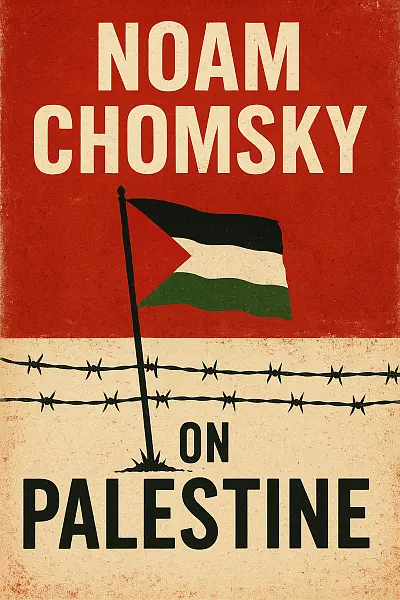
On Palestine
by: Noam Chomsky
Noam Chomsky and Ilan Pappé, two outspoken voices for justice, tackle the Israeli-Palestinian conflict in the aftermath of Operation Protective Edge. They’re deeply invested, spotlighting the struggles of Palestinians living under enduring occupation.
When Israel’s latest assault on Gaza leaves devastation and fuels another round of land seizures, Chomsky and Pappé can’t remain silent. They challenge the global community’s apathy, confronting mounting human rights abuses and asking—who will step up?
The heart of the book? Whether international solidarity can actually spark real change, or if the status quo will grind on. Written in a sharp, direct style, it’s raw, urgent, and unflinchingly honest.
""Enduring justice begins when we recognize the humanity of those to whom justice has long been denied.""
Let's Break This Down
The Author's Voice
Atmosphere
Intensely thought-provoking and unflinchingly direct, the atmosphere of On Palestine is intellectually charged from start to finish. Expect a tone that feels urgent and serious, but never sensationalized. The mood is sober, reflective, and underscores the gravity of the issues at hand. There’s a sense of moral clarity, often grounded in a quietly powerful sense of ethical responsibility.
Prose Style
Concise, unembellished, and highly accessible—Chomsky doesn’t waste time on florid descriptions or decorative language. The writing is functional and to the point, favoring clarity over flair. Explanations are systematic, peppered with evidence and logical progression. The ideas are dense, but the language remains straightforward, making complex topics feel navigable even for general readers.
Pacing
Measured and steady, the pacing is contemplative rather than rushed. Each argument unfurls gradually, with Chomsky and his interviewer carefully building on every point. Dialogue-driven sections provide a natural back-and-forth, but the overall tempo leans toward methodical investigation rather than brisk page-turning. Readers are encouraged to pause, absorb, and reflect.
Dialogue & Argumentation
Penetrating and thoughtful, the dialogue is anchored in Socratic inquiry—questions prompt deep dives, and answers rarely settle for superficiality. There’s a healthy balance between challenge and explanation, urging readers to examine assumptions without feeling browbeaten.
Intellectual Tone
Analytical and uncompromising, the tone is assertively rational. Chomsky draws from historical context, political analysis, and documented fact, lending the prose an authoritative but never patronizing feel. Opinions are substantiated, and rhetoric is kept in check by a commitment to logical consistency.
Overall Feel
On Palestine reads like an incisive, urgent conversation with a world-class thinker—challenging, earnest, and deeply engaged with the real-world stakes of its subject matter. It’s perfect for readers who appreciate substance over style and want to walk away smarter and more informed than when they started.
Key Moments
- No-holds-barred dialogues dissecting U.S. complicity in Israeli policy
- Page-turning debate energy—Chomsky vs. Pappé sparks fly!
- Jaw-dropping stats that challenge every mainstream narrative
- Eyewitness testimonies make historical analysis pulse with heartbreak
- A relentless takedown of media bias—prepare to rage-underline
- Fresh perspective on the “peace process” myth—blunt, provocative, unforgettable
- Gripping snapshots of daily Palestinian resistance woven into political critique
Plot Summary
On Palestine isn't your typical novel or narrative-driven non-fiction; instead, it's a dynamic collection of interviews and essays between Noam Chomsky and Ilan Pappé, exploring the ongoing Israeli-Palestinian conflict. The book kicks off with an analysis of recent events (notably the 2014 Gaza War), then unpacks the roots of the conflict, detailing historical grievances, political strategies, and the international community’s role. It takes a critical turn by challenging the "peace process" and dissecting power imbalances between Israel and Palestine, advocating for alternative solutions like BDS (Boycott, Divestment, Sanctions). The climax comes as both authors question the viability of a two-state solution and deliberate over one-state proposals, emphasizing the urgency of justice over illusory peace agreements. By the end, the book leaves readers with a call to action—suggesting that meaningful change depends on global solidarity and critical engagement with the existing power structure.
Character Analysis
Since On Palestine is a work of nonfiction, the “main characters” are really its primary voices—Noam Chomsky and Ilan Pappé. Chomsky appears as a sharp, unapologetic critic, motivated by his lifelong commitment to human rights and skepticism toward global power. Pappé complements this with a historian’s depth, providing context and emotional weight to the human suffering detailed in the book. Both “characters” evolve in their arguments, growing more urgent and reflective as the book progresses, revealing their frustrations but also hope for activism and justice. Their interplay and occasional disagreements add layers that push readers to think critically and engage with multiple perspectives.
Major Themes
- Power & Justice: The book centers on the power imbalance between Israel and Palestine, questioning what justice actually means under occupation, and examining how language can obscure or reveal the truth.
- International Responsibility & Activism: Chomsky and Pappé challenge Western governments, especially the U.S., calling out complicity and encouraging grassroots activism like BDS as a method for real change.
- Limits of Diplomacy: The authors critically evaluate peace processes, arguing that negotiations often entrench inequality rather than resolve it, and exploring the dangers of performative politics.
- Memory & History: The recounting of historical trauma and the erasure of Palestinian narratives raise questions about whose memory gets legitimized, a theme that runs through the interviews and essays.
Literary Techniques & Style
Chomsky and Pappé’s style is academic yet accessible—there’s a back-and-forth interview format that keeps things engaging and conversational, rather than overwhelming readers with jargon or dense theory. They deploy sharp metaphors (like comparing Gaza to an “open-air prison”) and use real-world examples and statistics for emotional and persuasive effect. Symbolism is subtle but present: the persistent reference to walls, borders, and “process” serves as metaphors for stasis and division. The book’s structure, alternating between commentary and analysis, allows readers to move fluidly between big-picture theory and on-the-ground realities.
Historical/Cultural Context
On Palestine is set against the backdrop of the decades-long Israeli-Palestinian conflict, with particular emphasis on events around 2014, including the Gaza War and the contentious peace process. The rise of Palestinian activism, shifts in international opinion, and both authors’ extensive experience provide deep context. Culturally, the book probes the narratives that dominate Western media and challenges students to consider colonial histories and their lasting effects.
Critical Significance & Impact
While not a “classic” story, this book has made a crucial impact in political literature, widely praised for its clear-eyed critique and its call for ethical engagement. Reception has been polarized—acclaimed by activists and academics, but heavily critiqued by some for its strong pro-Palestinian stance. Its relevance only grows as the conflict persists, making it an important text for anyone grappling with issues of justice, power, and international responsibility.
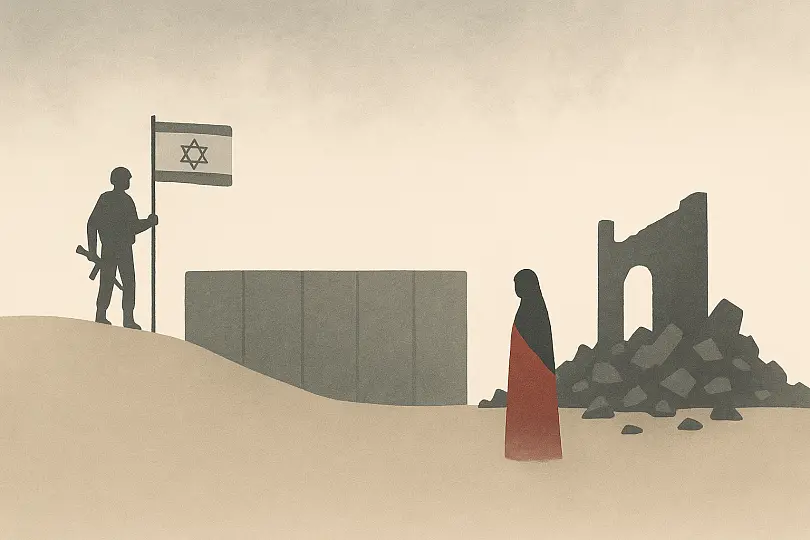
Unmasking injustice—Chomsky’s bold critique of a divided land
What Readers Are Saying
Right for You If
If you’re the kind of reader who loves to dig into current events, politics, or world affairs, On Palestine by Noam Chomsky is right up your alley. This book totally scratches that itch for thoughtful analysis and debate—especially if you’re into geopolitical issues, social justice, or you like books that challenge the mainstream narrative.
- If you’re already a fan of Chomsky, or you enjoy authors like Edward Said, Naomi Klein, or Arundhati Roy, you’ll probably get a lot out of this one.
- Anyone interested in the history and ongoing situation between Israel and Palestine will find loads to chew on here—it’s great if you like your nonfiction deep and thought-provoking.
- Debate club types, activists, or even university students working on international relations or Middle Eastern studies? This feels tailor-made for you.
But let’s be real—if you usually reach for light reads, fiction, or stories with a fast plot, you might find this a little dense or even frustrating. Chomsky’s style can be a bit intense and not everyone loves the interview/essay format, either.
Also, if you prefer books that lay everything out super simply or avoid controversy, this isn’t for you. He doesn’t really sugarcoat anything, and the subject matter is complicated and sometimes heavy.
So, if you can’t resist big ideas, or you like to debate over coffee, this book is a winner. But if politics isn’t your thing, or if you just want something relaxing for the beach, you’ll probably want to skip it.
What You're Getting Into
Curious about the Israel-Palestine conflict but not sure where to start?
On Palestine by Noam Chomsky lays out a gripping, thought-provoking conversation between Chomsky and scholar Ilan Pappé, as they break down the core issues, history, and ongoing struggles shaping the region. Through sharp dialogue and clear explanations, the book explores the central challenge of how justice, freedom, and peace might be achieved amidst decades of tension, all while maintaining a tone that’s surprisingly accessible and surprisingly hopeful for such a heavy topic.
If you want an insightful, passionate take on real-world complexity that’s both eye-opening and easy to follow, this one absolutely delivers!
Characters You'll Meet
-
Noam Chomsky: Co-author and central voice who critically analyzes U.S. and Israeli policies regarding Palestine. Known for his incisive logic and unyielding advocacy for justice and human rights.
-
Ilan Pappé: Co-author, providing historical context and alternative perspectives on the Israeli-Palestinian conflict. Renowned for challenging mainstream narratives and offering sharp, archival-based insights.
-
Palestinian People (collective): Frequently discussed as the primary subjects whose struggles and aspirations for self-determination anchor the book’s moral and political focus.
-
Israeli Government (collective): Examined as a principal actor in shaping realities on the ground, often critiqued for policies impacting Palestinians and peace prospects.
-
United States Government (collective): Highlighted for its influential role in the region and its longstanding political and military support of Israel, shaping the discourse and outcomes of the conflict.
More Like This
If On Palestine by Noam Chomsky caught your attention, you’ll likely be reminded of the unflinching analysis in Edward Said’s Orientalism—both books peel back layers of narrative and challenge the way the West frames discourse around the Middle East. The probing intellectual rigor and advocacy for the oppressed found in Chomsky’s work echo Said’s passionate critiques, making them feel like kindred spirits for readers who crave political depth and historical context.
Feeling the energy of Persepolis by Marjane Satrapi? Chomsky’s On Palestine also merges the personal with the political but does so through sharp dialogue rather than visuals. While Satrapi leans into memoir and illustration, both texts spark conversations about identity, resistance, and the impact of geopolitics on everyday lives, urging readers to reexamine mainstream narratives.
For anyone who’s watched The West Wing and appreciated its behind-the-scenes debates on foreign policy, you’ll sense familiar vibes in On Palestine. Chomsky and Pappé’s dialogue pulses with the same intensity as the show’s Situation Room scenes—full of ideological clashes, ethical quandaries, and urgent calls for justice. This book doesn’t shy away from difficult questions, and the lively, incisive exchanges create a compelling experience for anyone fascinated by the intersection of politics, morality, and power.
Critic's Corner
What does it look like to bear witness, not just to suffering, but to the world’s excuses for ignoring it? On Palestine asks us to look unflinchingly at a conflict so often buried under political euphemism and media haze. In a world keen to move on from yesterday’s tragedies, Chomsky and Pappé press us to acknowledge complicity and resist comfortable ignorance, making the book’s call for engagement as urgent as it is uncomfortable.
On Palestine thrives on its conversational intimacy. Chomsky’s prose is famously lucid—direct but never coarse—while Pappé’s contributions add a tighter, almost polemical edge. The book’s dialogue format feels brisk and natural, yet surprisingly deep, letting complex ideas unfold without descending into jargon or abstraction. Chomsky wields accessible language as a tool for demystification; he’s unafraid to be blunt, but it’s always in service of clarity. Pappé’s historical context elevates their exchanges, grounding theory in lived experience and challenging prevailing narratives. At times, the rapid back-and-forth energizes the text, giving readers the sense of being present at a high-stakes symposium. However, this structure occasionally sacrifices nuance for immediacy—a trade-off that both sharpens the book’s polemic and occasionally limits its depth.
The book’s strength lies in its thematic scope: solidarity, accountability, and moral responsibility pulse through every page. Both writers sear through the rhetoric of “neutrality,” exposing the costs of inaction and the machinery of occupation. The role of Western governments and media as complicit actors is dissected with chilling clarity, raising uncomfortable—but vital—questions about collective responsibility. Discussions of Boycott, Divestment, Sanctions (BDS) and grassroots activism tap into contemporary anxieties around resistance and complicity, making the work as much a manual for engagement as a critique. Particularly compelling is the exploration of how power manipulates language—transforming homes into “security threats” and entire populations into abstractions. Yet for all its moral urgency, the book never quite tips into despair; instead, it channels outrage into a sense of solidarity and possibility, urging readers to reimagine not only Palestine’s future, but their own capacity for dissent.
Within the landscape of contemporary political nonfiction, On Palestine feels more necessary than ever—especially as a sequel to the acclaimed Gaza in Crisis. Where much writing on this topic risks either emotional sensationalism or dry recitation, Chomsky and Pappé strike a rare balance: passionate advocacy coupled with intellectual rigor. In the broader tradition of dissident literature—think Edward Said or Arundhati Roy—this book stands out for its clarity, its commitment to challenging consensus, and its accessibility to non-specialist readers.
That said, On Palestine isn’t flawless. Its dialogue-driven structure, while engaging, sometimes blunts analytic depth in favor of rhetorical punch, leaving certain nuances underserved. Readers hoping for detailed policy blueprints may find the book more urgent manifesto than pragmatic roadmap. Still, for those willing to be challenged—and to challenge themselves—this is essential reading: timely, unflinching, and fiercely humane.
Community Thoughts
so I was just reading along, thinking I knew what was up, and then BOOM—Chomsky drops this line about “international consensus” and my brain short-circuited. sat there for like ten minutes. how does he make global politics feel like a personal argument?
Honestly, I can’t stop thinking about that line: “The powerful make their own reality.” It rattled around my brain at 3 a.m. and made me question every headline I’ve ever read. Chomsky’s words mess with your sense of what’s real.
couldn't stop thinking about that moment chomsky just lays out the blockade logic like it's basic math. my brain kept looping it at 3am. even in sleep, the injustice wouldn't shut up.
honestly, I almost put the book down after reading Chomsky’s breakdown of media complicity. But then I couldn’t stop thinking about how every headline I see now feels different. It’s like he rewired my brain, whether I wanted it or not.
Never thought a book would make me STARE at the ceiling at 3 AM, but Chomsky’s relentless logic in On Palestine just kept looping in my head. Sleep? Forget it. My routine is broken and my brain’s a mess now.
Leave Your Review
Local Take
Why It Matters
On Palestine by Noam Chomsky: Cultural Resonance in Readers from this Country
- Relatable Parallels:
Many readers here draw sharp parallels between the Israeli-Palestinian conflict and our own experiences with political upheaval, colonial legacies, and struggles for self-determination. Chomsky’s emphasis on media narratives and power dynamics echoes local movements aiming to reclaim authentic voices.
- Clash and Alignment of Values:
Themes of justice, resistance, and solidarity speak to deeply rooted cultural values of standing up for the marginalized—a sentiment that feels almost universal here. Yet, the book’s unflinching critique of Western foreign policy can sometimes contrast with local sensitivities or existing diplomatic ties, sparking reflection or even debate.
- Unique Emotional Impact:
Sections highlighting daily life under occupation might resonate more strongly here due to lived or inherited memories of division, displacement, or protest. This creates an emotional immediacy that might be less palpable elsewhere.
- Echoes in Local Literature:
Chomsky’s direct, analytical style and advocacy vibe echo our tradition of political essays and resistance poetry, while also challenging the often-preferred narrative fiction in local storytelling.
It’s the kind of read that doesn’t just inform—it gets people talking, debating, and connecting the dots between history abroad and issues at home.
Food for Thought
Controversies Surrounding On Palestine by Noam Chomsky:
This book has sparked strong debates, with critics arguing that Chomsky's perspective is one-sided and overly critical of Israeli policies while allegedly downplaying complexities on both sides. Some cultural commentators also feel the book doesn't fully address regional historical context or offer practical solutions, fueling ongoing disputes about balance and objectivity in discourse on the Israeli-Palestinian conflict.
Like what you see? Share it with other readers