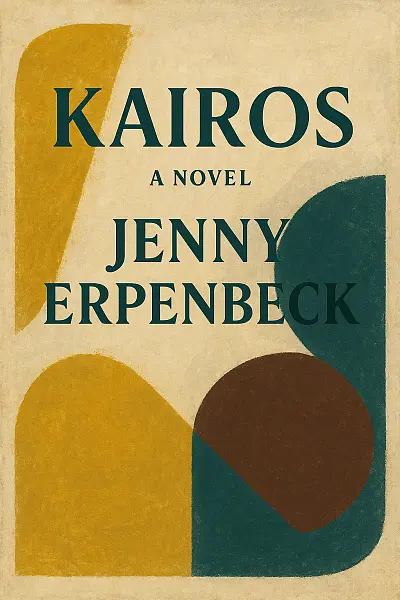
Kairos
by: Jenny Erpenbeck
Nineteen-year-old Katharina is drifting through late-1980s East Berlin, longing for meaning in a world on the brink, when she meets Hans, a magnetic, much older, married writer. Their charged, all-consuming affair crackles with promise and danger, instantly upending Katharina’s sense of self and belonging.
As the GDR unravels, outside certainties dissolve, mirroring the increasingly turbulent power dynamics within their relationship. Both lovers are desperate for connection but haunted by fears of loss, betrayal, and the crumbling of their ideals.
Written in Erpenbeck’s signature, precise style, Kairos feels raw, lucid, and intimate—will Katharina and Hans’s fragile love survive a country’s seismic transformation?
"Love, like history, is a tapestry woven from longing and regret, each thread a moment we cannot hold or escape."
Let's Break This Down
The Author's Voice
Atmosphere
Moody, fraught, and achingly intimate. Erpenbeck crafts a world thick with the melancholy of late-1980s East Berlin—expect a setting saturated with tension, nostalgia, and the quiet weight of political and personal unraveling. Everything feels close and a little claustrophobic, like fog on an autumn night or the hum of unresolved longing in a dimly-lit room.
Prose Style
Elegant, elliptical, and deeply lyrical. Erpenbeck’s sentences are polished yet emotionally raw, looping bold introspection with subtle shifts in perspective. The writing leans poetic—expect haunting metaphors, shifting stream-of-consciousness, and dialogue that flows into internal monologue. It’s not breezy; moments stretch with philosophical observations, and language is precise but never cold.
Pacing
Measured, immersive, and sometimes intentionally disorienting. The narrative moves at the steady, deliberate pace of memory itself. Time skips forward and circles back, echoing the inner turmoil of the characters and the historical backdrop. Don’t go in expecting big plot twists or action—this is the kind of story that invites you to linger in the details and live inside the characters’ heads.
Character Focus
Relentlessly introspective and psychologically sharp. The book zeroes in on the lovers’ emotional landscapes rather than big plot movements. You’ll get deep dives into shifting power dynamics, self-doubt, yearning, and the messy, sometimes brutal machinery of intimacy.
Dialogue & Interior Monologue
Blurring boundaries—fluid and often indistinguishable. Conversations slip seamlessly into thought, making for an immersive but occasionally disorienting read. If you love unraveling subtext and reading between the lines, this style is deeply rewarding.
Mood
Bittersweet, haunting, and suffused with a sense of impending loss. Kairos feels like a love letter written in the ashes of an era—passionate and devastating in equal measure.
Overall Rhythm
Dreamlike tapestry rather than tight choreography. The structure ebbs and flows, with tension simmering beneath quieter moments and erupting unexpectedly. If you’re drawn to stories where feelings take center stage and historical change is a constant low thrum in the background, you’ll fall right into Erpenbeck’s rhythm.
Key Moments
- Stolen kisses on the banks of the Spree, unraveling beneath the weight of secrecy
- Erpenbeck’s hypnotic, looping sentences mirror the obsession at the novel’s heart
- Love entangled with surveillance, as East Berlin bruises both politics and passion
- Devastating cassette tape confessions—intimacy recorded and replayed into obsession
- Power imbalances exposed with every controlling letter and silent gaze
- Everyday moments charged with the electric ache of a doomed affair
- The fall of the Wall as backdrop, magnifying private collapse and impossible choices
Plot Summary
Kairos by Jenny Erpenbeck sweeps us into late-1980s East Berlin, where a chance meeting between Katharina, a 19-year-old student, and Hans, a much older, married writer, ignites a passionate, all-consuming love affair. As their romance deepens, it becomes increasingly fraught—marred by jealousy, emotional manipulation, and possessiveness. All the while, the world around them changes dramatically: the fall of the Berlin Wall thrusts both their personal and societal certainties into chaos. Their relationship ultimately crumbles under the weight of mistrust, abuse, and the shifting tides of history, leaving Katharina isolated, wiser, but marked by what she’s endured. The novel closes with her acceptance of the affair's end and of herself, scarred but changed as a new era begins.
Character Analysis
Katharina starts off as an idealistic, eager young woman who falls under Hans’s intellectual and emotional spell. Over time, the affair strips her of naivete: she becomes increasingly anxious, battered by Hans’s emotional cruelty, yet can’t let go, illustrating both dependency and the struggle for selfhood. Hans, charismatic and cultured, is also deeply insecure and controlling, his love turning to manipulation as he ages and feels threatened by Katharina’s independence. Both characters are profoundly shaped by outside historical forces, but it’s their interpersonal dynamic—alternating between tenderness and destruction—that propels their personal metamorphoses and eventual estrangement.
Major Themes
Power and manipulation pulse at the heart of Katharina and Hans’s relationship, revealing how love can tip into obsession and abuse; Erpenbeck shows this power play through Hans’s demands, Katharina’s compliance, and their mutual mistrust. Change and historical transformation also loom large—their affair is interwoven with the collapse of the GDR and reunification, suggesting private lives are inseparable from public events. Finally, the novel dives deeply into questions of memory and time: the very title, “Kairos,” refers to the opportune moment, exploring how split seconds can define entire lives, and how past decisions resonate long after love has soured.
Literary Techniques & Style
Erpenbeck’s writing is lyrical and fragmented, mirroring the instability of both personal and historical landscapes; she weaves short chapters and shifting perspectives, often blurring the temporal boundaries between past and present. Symbolism abounds–most notably, the motif of windows reflects longing and the walls between lovers and worlds, while recurring references to classical music evoke both harmony and discord. Narrative techniques like interior monologue plunge us into Katharina’s anxious psyche, yet Erpenbeck withholds easy judgment, instead letting ambiguity linger. The use of choppy, impressionistic scenes—almost like snapshots—intensifies the atmosphere of uncertainty and flux.
Historical/Cultural Context
Set at the end of East Germany’s existence, the novel is saturated with the anxiety, hope, and bewilderment unleashed by the fall of the Berlin Wall. The constraints of GDR society—surveillance, repression, and ideological rigidity—press in on the characters’ private yearnings, while reunification brings both freedom and dislocation. The historical collapse mirrors the lovers’ unraveling, underlining how seismic cultural shifts can upend even the most intimate bonds.
Critical Significance & Impact
Kairos has been widely praised for its blend of intense emotional realism and historical breadth, cementing Erpenbeck’s reputation as a major contemporary German novelist. Its unflinching look at power, abuse, and the ambiguities of love, set against epoch-defining events, has resonated with readers, especially those interested in the intersection of the personal and political. With its haunting style and moral ambiguity, the novel continues to spark discussions about memory, trauma, and the costs of both love and revolution.
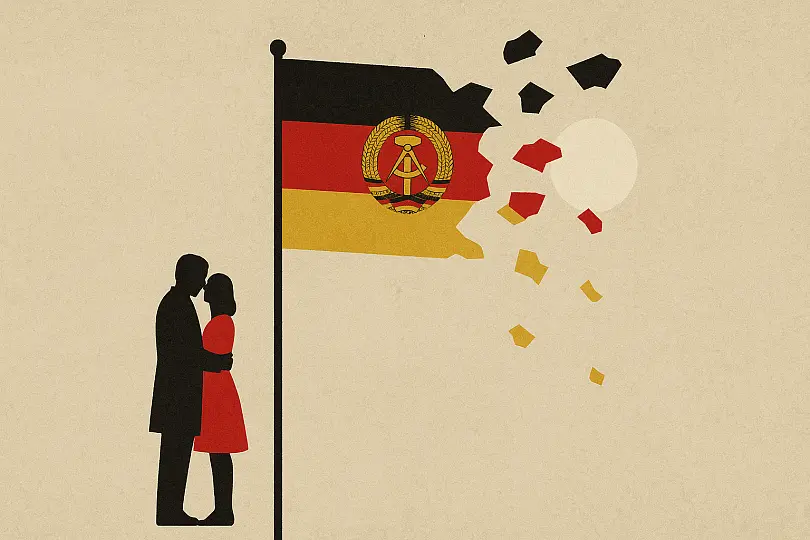
Love and loss collide in East Berlin’s shadows of a fading regime
What Readers Are Saying
Right for You If
Who’s going to love Kairos?
- If you’re into literary fiction that’s all about complex characters, intricate emotions, and the kind of writing you want to savor line by line—yep, this one’s your jam.
- Fans of slow-burn stories that are heavy on introspection and set against big political backdrops (think late Cold War Berlin) will totally vibe with it.
- Love books that dig into messy relationships, moral gray areas, and the weight of memory changing what we thought we knew? This is that kind of journey—both beautiful and sometimes gutting.
- It’s a goldmine for anyone who enjoys novels with rich atmosphere and a subtle, slightly haunting exploration of time and fate.
- If you’re a history buff, or you like your romance stories complicated and raw rather than sugary-sweet, you’ll be pulled right in.
But honestly, who might want to skip it?
- If you prefer fast-paced plots or books that just sweep you along without asking you to slow down and reflect, you’re probably going to get restless.
- People who hate ambiguous endings or crave tidy resolutions should brace themselves—Erpenbeck doesn’t tie things up neatly.
- Romance purists who need likable characters and happy-ever-afters may find this a bit too thorny and emotionally intense.
- And if nuanced political and historical context isn’t your thing, you might feel a bit lost or just not as invested.
In a nutshell: If you like your fiction challenging, thoughtful, and emotionally true—even when it’s uncomfortable—give Kairos a shot. But if you want something easy, escapist, or super plot-driven, this one probably isn’t for you.
What You're Getting Into
Set in late-1980s East Berlin, Kairos follows the intense, passionate affair between a young woman and an older, married man, set against the backdrop of a rapidly changing world.
Their forbidden relationship is marked by art, longing, and secrets, unfolding as history itself begins to unravel around them.
This book captures those fleeting, charged moments when private and political lives collide—expect a raw, haunting story crackling with yearning and the sense that everything could change in an instant.
Characters You'll Meet
-
Katharina: Teenaged protagonist swept up in a passionate but destructive relationship; her journey explores the intersection of love, obsession, and coming-of-age during a time of political upheaval.
-
Hans: Older, married radio playwright whose affair with Katharina shapes both their lives; his charisma is matched by controlling tendencies that drive the novel’s emotional tension.
-
Katharina’s Mother: A steady, background presence whose conventional worldview contrasts with Katharina’s choices; symbolizes generational divides and the weight of societal expectations.
-
Hans’s Wife: Though largely offstage, she represents the collateral damage of Hans and Katharina’s affair; her existence lingers as a source of guilt and conflict.
More Like This
Fans of Atonement by Ian McEwan will immediately recognize the lingering ache of memory and regret woven through Kairos. The way both novels unravel a sweeping, ill-fated romance against the churn of history—whether wartime England or crumbling East Berlin—creates a haunting sense of missed chances and personal blame that makes you linger on every page.
If you’ve ever been swept up by the atmospheric melancholy of Julian Barnes' The Sense of an Ending, prepare for another deep dive into introspection. Like Barnes, Erpenbeck is a master at dissecting how time reframes every look, every word, every messy entanglement, leaving you questioning the reliability of memory itself and wondering what’s lost between truth and recollection.
The novel also brings to mind the raw, complicated passion and historical undercurrents of The Lives of Others. The way relationships in Kairos twist under the pressures of surveillance, loyalty, and betrayal will definitely resonate if that film left a mark on you. The emotional and political intensity here makes the struggles of love and freedom feel universal, yet deeply tied to their moment in history.
Whether you’re drawn to stories of doomed love, political upheaval, or the trickery of memory, Kairos weaves elements reminiscent of both literary classics and acclaimed cinema—offering something both achingly familiar and provocatively unique.
Critic's Corner
What do we do with love when the world it unfolds in begins to vanish? Kairos by Jenny Erpenbeck extends far beyond romantic cliché, wrapping a feverish affair around the aching void left by a collapsing nation. The novel insists we reckon with the ways private obsession and public chaos entwine, and dares us to ask whether old selves—or old worlds—can ever truly be mourned.
Erpenbeck’s style here is mesmeric, with prose as rich and unpredictable as shifting allegiances. Sentences seem to inhabit two times at once: their own urgent present, and the afterimage of history catching up from behind. She moves with percussive precision between microscopic emotional detail and panoramic social unrest. The narrative’s structure is fragmented, almost staccato; chapters splinter and coalesce, mirroring both the lovers’ disintegrating trust and the state dismantling around them. Hofmann’s translation is no mere conduit—his English sings with sharp clarity yet retains the density and ambiguity of the German, allowing readers to feel both seduced and unnerved by the language itself. Dialogue is spare, yet full of subterranean threat or longing; descriptions of mundane acts—making coffee, reaching for a book—are saturated with tension, as if meaning might leak from the smallest gesture. Erpenbeck’s restraint is her power: what remains unsaid is as devastating as the shouted arguments or whispered endearments.
At heart, Kairos is an excavation of time and memory: Who are we without the stories—or states—we believed we belonged to? The novel’s core tension is how public transformation seeps into private space. The affair between Katharina and Hans is obsessive, yes, but also deeply imbalanced, casting a critical gaze at power, manipulation, and the cost of surrender—whether to a lover or to ideology. The dying GDR is never mere backdrop; instead, it is an active, even oppressive, agent in shaping intimacy and selfhood. Erpenbeck draws sharp parallels between the personal and political: both are susceptible to betrayal, nostalgia, and the lure of an irretrievable “before.” The novel pulses with anxiety around agency and complicity, particularly through Katharina, who must learn—painfully—that becoming an adult means watching cherished illusions rot and then learning to live without them. In a moment when borders—both physical and psychological—are being redrawn across Europe and beyond, Kairos feels uncannily urgent; it’s a meditation on what we inherit, what we destroy, and what we dare to grieve.
Within the tradition of post-Unification German literature, Kairos stands apart for its refusal to sentimentalize either the past or its protagonists. Compared to Erpenbeck’s earlier work—such as the migratory sorrow of Go, Went, Gone—this novel is more intimate, more confrontational, and ultimately more haunting in its ambiguity. The ghosts of Sebald and Christa Wolf linger here, but Erpenbeck’s voice stays utterly her own: precise, unsparing, and electrifyingly alive.
If there’s a flaw, it’s in the novel’s relentless intensity; at times the claustrophobic focus on power dynamics may exhaust, even alienate, some readers. Yet it’s precisely this relentlessness—this refusal to look away from the pain of change—that makes Kairos essential. A triumph of feeling and form, this book doesn’t let any of us off easy—which is precisely why it matters, and why it demands to be read now.
Community Thoughts
That scene by the Spree river, where everything felt suspended yet inevitable, will not leave my head. The water, the tension, and the sense that history is always lurking. This book’s mood sticks long after the last page.
that scene where Katharina sits by the window, rain streaking the glass, everything silent except her thoughts—I've replayed it so many times in my head. how does Erpenbeck make stillness feel so loud?
I can’t get Hans out of my head. The way he navigates longing and loss feels like he’s haunting the margins of every page, making me question what’s real and what’s memory.
I didn’t expect to keep thinking about Hans days after finishing. His contradictions, his intensity, just wouldn’t leave me alone, like he’d slipped into my dreams and rewritten the ending. Erpenbeck really knows how to haunt a reader.
that scene on the bridge refuses to leave my mind, the way their hands barely touch as the city moves around them, all the history pressing in. i keep replaying it, wondering what i would have done.
Leave Your Review
Local Take
Why It Matters
Jenny Erpenbeck’s Kairos hits close to home for readers here, especially with its backdrop of East Germany’s collapse—think about those moments of national uncertainty and generational change we’ve faced ourselves.
-
Parallel Events: People here can’t help but draw lines to our own late 20th-century social shakeups, like the collapse of authoritarian structures or protests demanding greater freedoms. Just as Kairos captures personal lives twisting in tandem with political upheaval, we remember how public revolutions sparked private reckonings.
-
Cultural Values: The novel’s exploration of freedom vs. conformity and the complexities of love shaped by turbulence mirrors our own debates about individuality versus belonging—some will nod in recognition, others might feel a sting where tradition clashes with personal autonomy.
-
Plot Points: That obsessive, sometimes destructive relationship at the book’s center? For many here, it resonates differently—we’re drawn to stories of quiet endurance rather than open emotional chaos, so the raw messiness may feel foreign, but also oddly liberating.
-
Literary Traditions: Erpenbeck’s blend of the personal with the political riffs on our own confessional writing and historical fiction but brings a sharper, existential edge—challenging expectations that personal suffering always leads to redemption.
All in all, Kairos doesn’t just echo our history—it flips the script, making us question how much of the past still echoes in our hearts today.
Food for Thought
Notable Achievement & Cultural Impact
Jenny Erpenbeck’s Kairos has garnered significant acclaim, winning the 2024 International Booker Prize and sparking widespread attention for its exploration of love and power during the collapse of East Germany.
- Praised for its vivid evocation of a historical moment and the psychological depth of its characters, the novel has further solidified Erpenbeck's reputation as a leading voice in contemporary European literature.
- Kairos has captivated readers around the world, drawing in fans of literary fiction with its mix of personal and political themes and showcasing the enduring impact of East German history on modern storytelling.
Like what you see? Share it with other readers