
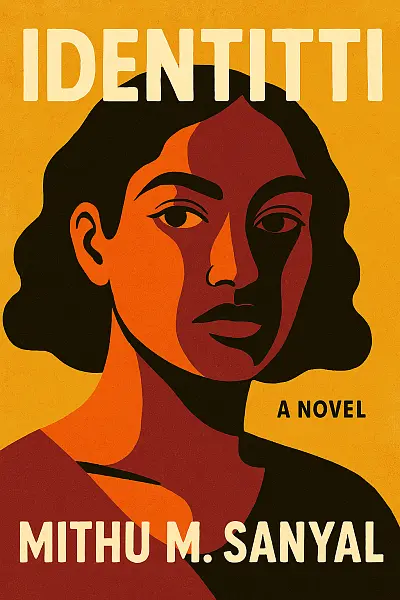
Identitti
by: Mithu M. Sanyal
Nivedita, a sharp and witty German Indian blogger and PhD student, thrives in the buzzing world of academia, soaking up wisdom from her idol—Professor Saraswati, a celebrated voice in race studies. Everything feels solid until explosive news breaks: Saraswati, thought to be Indian, is actually white.
Suddenly, Nivedita’s carefully crafted identity cracks. Publicly tied to Saraswati’s image, she’s thrown into a social media firestorm, her activism and authenticity in doubt. Navigating fierce debates and friendships, Nivedita grapples with who she is and what it means to belong.
Blending satire and sharp cultural commentary, Identitti asks: can Nivedita reclaim her voice, or will her worldview unravel?
"“In the shifting mirror of identity, truth is seldom singular and almost never simple.”"
Let's Break This Down
The Author's Voice
Atmosphere
- Buzzing with intellectual energy, the novel thrums with lively debates, provocative questions, and academic scandal.
- There’s a frenetic, restless sense to every scene—think coffee-fueled uni corridor gossip, mixed with sharp social media commentary.
- The vibe veers from sardonic and playful to genuinely fraught, shifting between biting satire and earnest vulnerability as the protagonist’s crisis unfolds.
Prose Style
- Expect layered, witty, and self-aware writing—Mithu M. Sanyal loves wordplay, clever allusions, and meta-humor.
- There’s a chatty, confessional tone, with frequent digressions and asides, like you’re listening to an extremely opinionated friend who just can’t help but comment on everything.
- Pop culture, theory, and internet-speak all intertwine; references fly fast, and the narrative voice is unapologetically sharp and whip-smart.
Pacing
- The pace is propulsive but intentionally chaotic: ideas tumble over each other, mirroring the protagonist’s spiraling emotions.
- The plot majorly unfolds through dialogue, emails, and essay-like reflections—so don’t expect traditional novelistic momentum, but rather a patchwork of perspectives and heated exchanges.
- It’s fast-moving when it wants to be, especially during argumentative set pieces, but it occasionally lingers to unpack big, thorny themes, so stay patient during the more contemplative stretches.
Overall Feel
- Bold, irreverent, and densely clever—this is a novel that loves a good argument and expects you to keep up.
- If you appreciate fiction that’s both reflective and playful, with characters who define themselves by their ideas as much as their actions, you’ll find the style exhilarating.
- But if you’re looking for lyrical description or gentle storytelling, this book’s style might feel too hectic or heady—it’s always on, always talking, and never afraid to get messy.
Key Moments
- Wildly meta WhatsApp chats where theory meets chaos
- Identity unraveling on a public stage after a scandalous professor reveal
- Unfiltered campus protests—intellectual debates collide with raw emotion
- Mother-daughter confrontations simmering with generational tension
- Footnotes as punchlines—witty, brainy, never boring
- Cultural appropriation and belonging tangled in messy, hilarious self-discovery
- Sneaky satire: academia’s wokeness skewered, but with surprising tenderness
Plot Summary
Identitti follows Saraswati, a renowned academic and public intellectual specializing in postcolonial and race studies in Germany, who is revealed to be a white woman passing as South Asian. The story is narrated by Nivedita, one of Saraswati’s admiring students and a popular blogger exploring her own mixed-race identity. The news of Saraswati’s deception shatters both Nivedita’s worldview and the academic community, setting off heated debates about authenticity, appropriation, and identity. As Nivedita grapples with betrayal, she confronts her own insecurities and cultural heritage, questioning her loyalties and sense of self. By the end, relationships are forever changed, but Nivedita reaches a fraught new understanding of complexity in identity—and the story closes with her cautiously seeking her own voice outside Saraswati’s shadow.
Character Analysis
- Nivedita is dynamic and deeply relatable, torn between admiration for Saraswati and anger at her deceit; her journey is marked by confusion, growth, and eventual self-assertion.
- Saraswati is an enigmatic figure whose motivations—whether driven by solidarity, ambition, or self-delusion—remain ambiguous, challenging readers to grapple with the limits of empathy and cultural imposture.
- Throughout the novel, the complex supporting cast (Nivedita’s family, friends, fellow academics) serve as chorus and counterpoint, expressing diverse perspectives on race, authenticity, and belonging. The characters’ development hinges on how each negotiates the fallout from Saraswati’s exposure, with allegiances constantly shifting.
Major Themes
Identitti tackles the slipperiness of identity—how it’s shaped by race, culture, and social expectations, and who gets to claim it. The novel asks big, uncomfortable questions about cultural appropriation vs. appreciation, especially through the lens of academic discourse and social media outrage. Hybridity and the search for belonging are central—from Nivedita’s internal conflicts as a German-Indian woman to Saraswati’s disruptive masquerade. The dangers and power of narrative—who tells which story, and what those stories mean—underscore every debate and crisis in the novel.
Literary Techniques & Style
Mithu Sanyal’s writing is sharp, ironic, and playful, weaving in blog posts, email chains, memes, and Twitter threads alongside traditional narrative. This collage-like structure reflects the fragmented, performative experience of modern identity and debate. The use of metafiction—characters are keenly aware of how they’re perceived—adds layers of self-reflexivity. Symbolism abounds: names, skin color, and cultural artifacts become battlegrounds for larger ideological struggles. Sanyal’s humor and wit offer both levity and pointed critique, parsing genuine pain with whip-smart satire.
Historical/Cultural Context
Set in contemporary Germany, Identitti sits at the intersection of heated global conversations about race, migration, and representation—drawing on real-world controversies like Rachel Dolezal and the discourse on “passing.” The story is steeped in the politics of the German academic system, but its debates about authenticity and identity resonate far beyond. Cultural references, from postcolonial theory to pop culture, keep the novel rooted in its social moment.
Critical Significance & Impact
Identitti has been celebrated for its fearless, witty engagement with thorny issues too rarely tackled in German literature, prompting much debate and acclaim. Sanyal’s approach—bold, experimental, and empathetic—has sparked wider conversations around representation, privilege, and the boundaries of solidarity. The novel is a key text for anyone studying contemporary identity politics, and its lasting impact stems from its refusal to offer easy answers, insisting instead on the generative mess of being human.

Identity unmasked in a witty satire of race, academia, and self-invention
What Readers Are Saying
Right for You If
Alright, here's the deal with Identitti by Mithu M. Sanyal and who I think would vibe with it (and who might not):
If you love books that mash up big ideas with biting humor, this one's for you. Think social commentary, identity politics, academia dramas—all delivered with a good dose of wit. If you’re into novels that actually make you think (without being all preachy), and you don’t mind your fiction getting a little messy and meta, you’re gonna have a great time. This book dives into things like race, culture, and belonging, but doesn’t take itself too seriously—so if you liked books like Such a Fun Age or White Teeth, or even stuff by Zadie Smith, there’s a good chance you’ll be hooked.
- Especially perfect if:
- You enjoy stories that challenge you and make you question stuff (sometimes uncomfortably so)
- You’re obsessed with campus novels or anything set in the world of academia
- Debates about race, identity, social justice, and internet scandals are totally your jam
- You can handle characters who are far from perfect (and often make you facepalm)
But, fair warning: If you want your novels to be straightforward, fast-paced, or heavy on action and plot twists, this might not be your happy place. The book goes deep into intellectual arguments and sometimes gets a bit heady and circular. If you’re not already interested in topics like cultural identity or modern social debates, you might find it hard to stay engaged. Also, if you’re not a fan of satire or irony, some jokes might fly over your head—or just not land at all.
So, if you’re up for a book that’s smart, funny, and totally uncompromising about the messy reality of identity today—grab this! But if you’re craving a cozy escape or a break from “issues,” you might want to try something else.
What You're Getting Into
Ever wonder what really happens when identity politics crash into academic life?
Identitti follows Saraswati, a charismatic, controversial professor of postcolonial studies, whose secret sparks a media frenzy, forcing her student Nivedita to confront her heroes, her heritage, and herself.
Think: whip-smart campus satire, spiraling social media storms, and a fresh, witty dive into who gets to define their identity—with plenty of sharp humor and big questions along the way.
Characters You'll Meet
-
Nivedita: The witty, questioning grad student at the story’s heart, Nivedita’s faith in her idol is tested, pushing her to confront issues of identity, authenticity, and belonging. Her intellectual and emotional journey fuels the narrative’s pulse.
-
Saraswati: Nivedita’s charismatic professor and a public intellectual, Saraswati is revered for her writing on race—until her true background is revealed, sparking a scandal that upends perceptions and loyalties.
-
Priti: Nivedita’s blunt, no-nonsense friend who anchors her, providing tough love and sharp perspective as the drama intensifies. Priti’s unwavering honesty acts as a reality check against Nivedita’s dilemmas.
-
Kalpana: An activist acquaintance who challenges Nivedita’s views with uncompromising idealism. Kalpana’s presence highlights the complexities and contradictions within progressive circles.
-
Yasemin: Another of Nivedita’s friends, grappling with her own identity issues. Yasemin’s story parallels and contrasts with Nivedita’s, deepening the novel’s exploration of cultural belonging.
More Like This
If you found yourself drawn into the tangled webs of identity and cultural appropriation in Zadie Smith’s White Teeth, Identitti’s thought-provoking humor and sharp social observations will instantly resonate—the same blend of wit, messiness, and challenging of boundaries courses through both stories. There’s also a distinct echo of Brit Bennett’s The Vanishing Half in the way Sanyal explores questions of race, belonging, and the sometimes uncomfortable process of self-discovery; both novels unravel the complexities of passing and authenticity in incredibly nuanced ways, sparking urgent conversations.
On the screen, Identitti channels the energy and academic satire of Dear White People—the prickly college campus dynamics, provocative debates, and relentless dissection of privilege all create that same cocktail of awkward humor and necessary confrontation. Sanyal invites readers to laugh, question, and squirm, making the book as electric and unforgettable as the best moments in contemporary pop culture explorations of race and identity.
Critic's Corner
What happens when the boundaries of race and identity—so fiercely policed and passionately debated—are not only crossed, but performed? Mithu Sanyal’s Identitti throws us into this powder keg, daring readers to face unsettling questions about authenticity, cultural inheritance, and the commodification of trauma in the age of hashtags and hot takes.
Sanyal’s writing is a kinetic blend of wit, intellect, and deliberate messiness. The novel pulses with social media flair—tweets, blog entries, sharply rendered dialogues—offering a reading experience as fragmented and hyperconnected as digital discourse itself. Language here is both a weapon and a shield; Sanyal toggles nimbly between biting sarcasm and earnest vulnerability, immersing us in Nivedita’s whiplash shifts between outrage and introspection. There's a distinctive rhythm—sometimes intoxicating, occasionally exhausting—in how Sanyal captures the noise of public scandal echoing against the quiet, private doubts of her characters. The real-life intellectuals who “chime in” as if from Twitter threads provide a meta-layer that toys with fiction’s boundaries without ever feeling forced. Sometimes, the overload of references and voices threatens to tip into excess, but more often, it mirrors the cacophony of our times.
At its core, Identitti wrestles fearlessly with themes of race, passing, academic gatekeeping, and how “truth” is negotiated in public and private spheres. Sanyal probes the seductions and pitfalls of identity politics—how solidarity can shade into performance, how allyship can mutate into appropriation, and how trauma can be both a source of power and a trap. Through Nivedita’s turmoil, the novel captures the paradox of “belonging”: Is it something inherited, chosen, bestowed, or performed for an audience? The book is unflinching in exposing the uncertainty and pain behind even the most hashtagged convictions. Yet, for all its intellectual heft, Identitti refuses to settle for easy cynicism or glib satire. Sanyal’s characters ache, doubt, and rage in ways that feel heartbreakingly real, their confusion a mirror held up to our own.
Within the crowded tradition of identity-focused satire—think Paul Beatty’s ferocious wit in The Sellout, or Charles Yu’s genre-bending in Interior Chinatown—Sanyal’s Identitti stands out for its blended forms and distinctly European lens. Her riff on public intellectual debate, threaded with diaspora anxieties and media spectacle, brings something fresh to the genre, setting it apart from its American counterparts. The playful metafictional touches, reminiscent of Ali Smith’s work, infuse the novel with unpredictability and giddy energy.
If Identitti occasionally stumbles under the weight of its own ambition—certain passages overplay the intellectual fireworks at the cost of emotional subtlety—it lands more hits than misses. Sanyal’s debut matters because it refuses to settle for simple answers. It’s messy, smart, and urgent—a riot of voices for anyone grappling with the ever-shifting sands of identity right now.
Community Thoughts
That scene where Nivedita stares at her reflection, questioning who she is, hit me like a punch to the gut. The confusion, the defiance, the raw vulnerability—I saw myself in her and couldn't look away.
I still can't believe how Saraswati's secret dropped like a literary bomb. That reveal spun my brain for days. I kept replaying her lectures in my head, wondering what was real. Sanyal knows how to yank the rug out.
so I was minding my own business and then Saraswati’s reveal happened and I legit dropped my book. I couldn’t sleep, replaying every convo in my head. This book hijacked my brain and didn’t let go. Why is it so addictive?
Protect your peace before diving into Identitti; Saraswati’s unraveling had me ready to throw the book across the room, yet I couldn’t stop. It’s WILD, messy, and might just rewire how you see identity. Proceed with caution, but definitely proceed.
so THAT scene where Saraswati drops the bombshell in the seminar room? I literally paused to pace around my kitchen. Never trusted a professor again. Sanyal’s chaos detonates academia and my brain.
Leave Your Review
Local Take
Why It Matters
Identitti really sparks intense debates among readers here in Germany—unsurprisingly, since its themes of race, identity, and academic controversy directly echo issues raised by the country’s own debates about integration, multiculturalism, and the reckoning with colonial pasts.
- Parallel historical events? The Sarrazin debates, Germany’s Black Lives Matter protests, and ongoing discussions about “Leitkultur” (guiding culture) strongly mirror the book’s probing of who gets to define identity.
- Cultural values at play: Germans prize authenticity, social responsibility, and public debate, so the novel’s exploration of performative “wokeness” both fascinates and unsettles. It challenges the country’s careful approach to discussing race—making some plot twists feel even more provocative.
- Literary connections: Sanyal’s playful, essayistic style riffs on traditions of German autofiction and intellectual debate, recalling writers like Max Czollek or Feridun Zaimoglu, yet pushes boundaries by centering intersectional voices often marginalized in mainstream discourse.
- Why certain moments sting: When the scandal unfolds, readers here may feel extra resonance—Germany’s academic scandals (like the Giffey plagiarism case) and sensitivity about cultural appropriation make the twists land with sharper cultural relevance.
Food for Thought
Controversies:
Identitti sparked vibrant debates, especially around its satirical portrayal of identity politics and cultural appropriation, with some readers and critics questioning whether the novel trivializes sensitive racial and academic discussions.
Additionally, discussions emerged concerning the representation of hybrid identities and the ethics of centering a narrative on a character who self-identifies outside conventional cultural boundaries, drawing both praise for boldness and criticism for potential insensitivity.
Like what you see? Share it with other readers