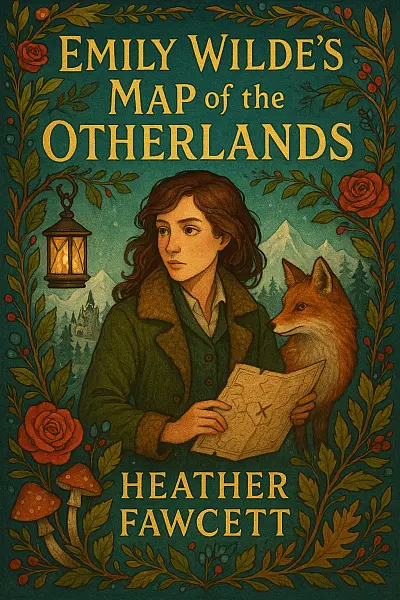
Emily Wilde’s Map of the Otherlands
by: Heather Fawcett
Emily Wilde, brilliant yet prickly scholar of faerie lore, is finally settling into academic life at Cambridge, fiercely devoted to mapping the many realms of the Otherlands. Everything changes when a wave of enigmatic faeries—some dangerous, some beguiling—invade her campus, threatening the fragile order she cherishes.
Caught in the chaos, Emily’s feelings for the charmingly infuriating Bambleby, an exiled faerie king, are pushed to their limits as his dark past brings assassins to her door. Their search for a portal to his lost realm whisks them to breathtaking, perilous Alps, piling secret upon secret and risk upon risk.
Told with warmth and sly humor, the story teeters between cozy academia and magical adventure, with the emotional stakes so high you can’t help but wonder: will Emily open her heart, or lose everything to the shadows between worlds?
"“To chart a world unseen, one must first map the unspoken hopes and fears of the heart.”"
Let's Break This Down
The Author's Voice
Atmosphere
Heather Fawcett creates an enchanting, ever-so-slightly chilly world, woven through with a sense of old-world magic and scholarly adventure. Expect cozy academia colliding with eerie fairy-tale landscapes—think mossy woods, snow-dusted fields, and candlelit libraries, all humming with the possibility of secrets just out of sight. There’s a gentle whimsicality here, yet danger and wonder still lurk around each corner, giving everything a quietly charged undertone.
Prose Style
Fawcett’s prose is clear-eyed and wry, effortlessly mingling wit with a touch of lyrical flair. Dialogue sparkles with understated humor, and descriptions capture both the intellectual rigor of a researcher and the author’s obvious delight in magical curiosities. Don’t expect overwrought or flowery writing—every sentence feels purposeful, peppered with dry observations and clever asides that make the narrator’s personality shine through.
Pacing
The pacing veers toward the measured and deliberate: chapters unfold like entries in a travel journal, inviting you to savor the discoveries, idiosyncratic notes, and little mysteries piling up. Action and excitement simmer in the background but rarely spill over into high-octane territory; instead, the pleasures lie in the details, the gradual buildup of magical lore, and the slow-burn development of both relationships and plot revelations. Perfect for readers who love to meander and linger in a beautifully built world.
Overall Mood & Feel
Infused with curiosity, droll charm, and a lingering sense of the uncanny, this book is a warm blanket on a frosty night. Expect a blend of scholarly banter, fae mischief, and emotional undercurrents, all packaged in an immersive, slightly offbeat tone that feels refreshingly original—ideal for fans of gentle fantasy with a brainy twist.
Key Moments
- Emily’s annotated field journal entries—equal parts dry wit and folkloric gold
- Wendell’s magical mischief teeters between charm and chaos
- A perilous crossing into the Otherlands where logic unravels—nothing is as it seems
- Intimate tea-table diplomacy with shape-shifting fae (and plenty of biscuits)
- Glimmers of romance that sneak up gently, layered with longing and awkwardness
- Scholarly banter that somehow makes medieval Latin feel spicy
- Stunning blend of cozy academia and high-stakes adventure—like slipping into a fairy ring, then realizing you forgot the way out
Plot Summary
Emily Wilde’s Map of the Otherlands follows brilliant but socially awkward scholar Emily Wilde as she teams up with her enigmatic academic rival-turned-partner Wendell Bambleby for a new adventure studying fair folk. After the success of her previous fieldwork, Emily seeks to create the first comprehensive map of the Otherlands—the mysterious and perilous faerie realms. Their journey takes them through hidden portals and strange landscapes, confronting deadly fae riddles, betrayals, and revelations about Wendell’s true heritage as a lost faerie king. The stakes rise when Emily and Wendell are separated and must each face their deepest fears to reunite, with Emily risking her life—and perhaps her humanity—to save Wendell and return to the mortal world. Ultimately, Emily completes her research, but at great personal cost, including having to decide where she truly belongs and who to trust as lines blur between human and fae worlds.
Character Analysis
Emily shines as a brilliant but introverted folklorist whose dedication to academic rigor frequently clashes with her inability to navigate social nuances. Her intellectual growth mirrors her increasing emotional vulnerability, especially in her complex relationship with Wendell, who evolves from roguish charm and secrecy to genuine openness and sacrifice as he confronts both his faerie heritage and his feelings for Emily. Secondary characters, like the loyal dog Shadow and various faerie beings, serve as catalysts for Emily and Wendell’s development—challenging their beliefs and pushing them toward growth. By the end, both protagonists are more self-aware, forced by the Otherlands' trials to reconcile personal desires with larger responsibilities and to admit how much they rely on each other.
Major Themes
The novel digs deep into identity and belonging, with Emily torn between the safety of academia and the alluring, dangerous independence of the fae realm, while Wendell faces the legacy of his royal faerie blood and what it means for his future with Emily. Knowledge versus experience plays out as characters realize how little books can prepare them for the reality of the Otherlands, echoing the broader caution against academic arrogance divorced from real-world empathy. The tension between order and wildness is ever-present: mapping the Otherlands itself is a metaphor for making sense of chaos and the ultimate futility of controlling the unknown. Vulnerability and trust tie these themes together, as both leads must risk not just their lives but their hearts to triumph.
Literary Techniques & Style
Fawcett’s writing sparkles with witty, dry humor and lush, immersive descriptions that bring the Otherlands to life. The story employs a first-person journal format, letting us see directly into Emily’s thoughts—a clever device for balancing academic observation with emotional honesty. The mysterious, veiled nature of the Otherlands is enhanced through metaphorical language and evocative imagery: shadows, mists, and hidden pathways repeatedly symbolize internal uncertainty and discovery. Faerie folklore and riddles layered throughout the narrative serve as symbols for academic puzzles and personal quandaries, while the interplay between academic prose and Emily’s increasingly candid reflections highlights her growth.
Historical/Cultural Context
While set in a clearly fictionalized, late 19th- to early 20th-century Europe, the book draws inspiration from the real-world blossoming of folklore studies, an era fascinated by the clash between rationality and superstition. Social hierarchies, the gendered obstacles Emily faces in academia, and anxieties about the “unknown” reflect broader cultural tensions of the time as science and myth vied for prominence. Fawcett nods to the historical portrayal of fairy folklore in British and Scandinavian culture, infusing the story with both authenticity and a subtle critique of academic gatekeeping.
Critical Significance & Impact
Emily Wilde’s Map of the Otherlands stands out in modern fantasy for blending cozy academia with dark fairy-tale adventure, appealing to readers who love both meticulous world-building and character-driven romance. Its warm reception owes much to its clever inversion of traditional folklore tropes and its nuanced portrayal of introverted scholarship. The novel has sparked renewed interest in “folk academia” fantasy and encourages discussions on gender representation, the limits of knowledge, and courageous vulnerability, making it both timely and enduringly resonant for today’s readers.
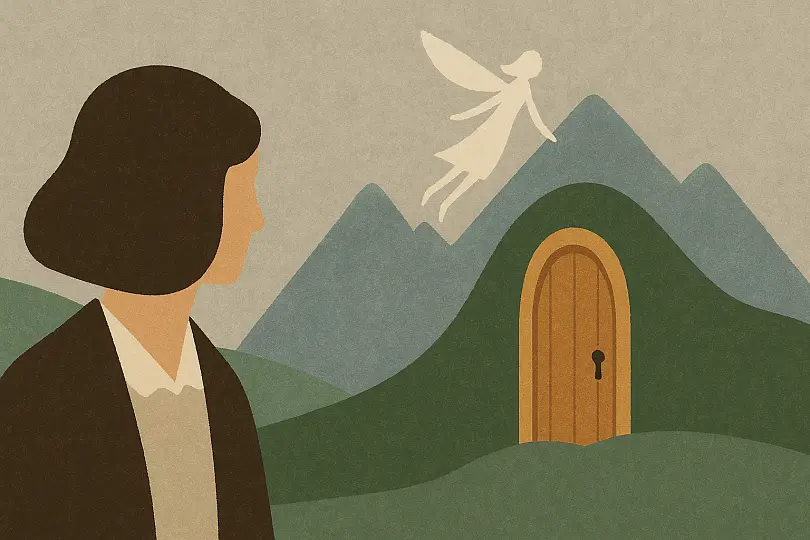
Academic intrigue meets faerie peril in a scholarly quest through enchantment
What Readers Are Saying
Right for You If
If you love cozy fantasy vibes, think Tea with the Fae, and you want your magic laced with charm instead of high-stakes drama, Emily Wilde’s Map of the Otherlands is right up your alley. It’s perfect for anyone who loves books like Legends & Lattes or the whimsical world-building of Howl’s Moving Castle.
- If you’re into:
- Scholarly heroines and delightfully awkward academia
- Slow-burn romance where the tension simmers rather than explodes
- Fantastical creatures, folklore, and fairy lore
- Cozy mysteries that don’t take themselves too seriously
- Atmospheric settings—think wild forests, twinkling faerie lights, and a dash of old-fashioned adventure
—then honestly, you’re going to have a great time.
But let me be real—if you need breakneck pacing, gritty action, or high-stakes danger every few pages, this one might feel a little sleepy for you. The plot meanders in spots, and it’s really more about the vibe, the endearing characters, and all those magical details than racing to an explosive conclusion.
If you’re not into quirky academics obsessing over footnotes and magical research, or you just don’t click with slice-of-life fantasy, you might find it a bit too gentle or slow. Also, if you want intense romance, this gives you more longing glances and witty banter than swoony declarations.
Bottom line: If you want something cozy, clever, and sparkling with faerie mischief—absolutely give it a try. But if you’re craving epic battles or super fast pacing, maybe keep this one for a rainy weekend when you’re in the mood for something a little softer and more whimsical.
What You're Getting Into
If you’re craving magical academia with a dash of danger and whimsy, Emily Wilde’s Map of the Otherlands is an absolute treat!
Join Emily Wilde, the fiercely smart but socially awkward scholar, as she embarks on a globe-trotting expedition to chart mysterious realms brimming with fae secrets. Teaming up with the enigmatic Wendell Bambleby, Emily navigates not just treacherous magic and hidden creatures, but also the prickly challenges of friendship, trust, and belonging. Expect a cozy-but-thrilling adventure—equal parts folklore, clever puzzles, and heart—with just enough peril and enchantment to keep you hooked from the very first page!
Characters You'll Meet
-
Emily Wilde: The brilliant and socially awkward scholar at the heart of the story, whose curiosity about faeries leads her into fresh mysteries. Her meticulous research and emotional growth drive the plot forward.
-
Wendell Bambleby: Emily’s enigmatic and charming colleague, whose mysterious past and magical abilities keep everyone guessing. He adds wit and warmth, acting as both ally and romantic interest.
-
Shadow: A fiercely loyal, magical dog companion to Emily, providing comfort and comic relief throughout her adventures. Shadow’s presence grounds Emily and adds a touch of whimsy.
-
Dr. Rose: A trusted friend and fellow academic, she serves as a sounding board for Emily's theories and helps anchor her in the mortal realm. Her practical insights often balance out Emily’s impulsiveness.
-
Tamsin: A faerie figure whose motivations and allegiances remain ambiguous. Tamsin’s interactions with Emily challenge the protagonist’s understanding of Otherlands and force her to question her own assumptions.
More Like This
Reminiscent of Susanna Clarke’s Jonathan Strange & Mr Norrell, Emily Wilde’s Map of the Otherlands enchants with its blend of scholarly adventure and dry wit, populating an ostensibly academic world with fae mysteries and subtle emotional undercurrents. Readers who thrive on lushly detailed folklore, nuanced magic systems, and brilliant (if occasionally prickly) protagonists will immediately recognize a kindred spirit in Fawcett’s deft storytelling.
There’s also a charming kinship with Naomi Novik’s Uprooted, in the way Fawcett weaves fairytale danger into everyday life, infusing her narrative with that sense of wonder layered over an ever-present shadow. Both novels revel in the friction between academic logic and the seduction of the wild, unpredictable Other.
Fans of Netflix’s The Witcher will find a similar allure here—the juxtaposition of scholarly pursuits with the capricious threats of magical entities, not to mention a cast of characters whose relationships evolve with delightful unpredictability against a backdrop of snow-cloaked, perilous beauty. The series’ deft blend of humor and darkness, as well as its richly textured world, feel right at home alongside Emily Wilde’s own adventures.
Critic's Corner
What are the boundaries between science and enchantment, and what happens when a rational mind collides with the wild, unpredictable forces of magic—and love? Emily Wilde’s Map of the Otherlands spins this question into a dazzling dance, inviting us to explore not only the shadowy edges of faerie worlds but also the labyrinths of the human heart.
Fawcett’s prose is elegantly mischievous—wry, precise, and brimming with subtle wit. She masterfully blends the stuffiness of academia with the chaotic poetry of faerie, crafting a narrative voice that is both brisk and slyly self-aware. By filtering the action through Emily’s irritable, bookish perspective, the story becomes both journalistic and deeply personal, grounding magical absurdity with the scrupulousness of fieldwork. Dialogue sparkles: Emily’s dry, reluctant banter with Bambleby provides levity without indulging in cliché. The lush, tactile descriptions of the Alpine setting and the oddities of the Folk strike a perfect balance—evocative without oversaturating. Pacing, though occasionally hampered by Emily’s digressive tendencies and scholarly asides, remains generally crisp; the action flares quickly enough to keep readers invested, yet always leaves space for reflective interludes. Fawcett’s language is accessible but peppered with clever turns of phrase and, at just the right moments, an undercurrent of wistfulness that lingers.
At its heart, this novel is about mapping the unmappable: the attempt to chart liminal spaces—whether physical portals between worlds or the subtle boundaries between intimacy and self-preservation. Fawcett interrogates the ethics of scholarship, the seduction and danger of “Otherness,” and the costs of belonging in more than one world. Emily’s prickliness is not just a quirk; it’s a defense forged by academic invisibility and a hunger for autonomy. The book’s exploration of partnership—particularly between mortals and immortals—echoes contemporary anxieties about vulnerability, trust, and mutual transformation. The looming threat of familial obligation and political machinations in Bambleby’s story resonates with anyone who’s ever felt ensnared by inherited histories. Yet, despite its flirts with darkness, the text glows with hope: it affirms that community, however strange, can be chosen, and that even the most hard-headed rationalist isn’t immune to wonder.
Within the burgeoning subgenre of cozy fantasy, “Emily Wilde’s Map of the Otherlands” both honors and subverts expectations. Fans of T. Kingfisher or Naomi Novik will delight in its fusion of folklore, romance, and gentle humor, while series devotees will appreciate Fawcett’s deepening of emotional stakes. Unlike many faerie novels that luxuriate in gothic excess, this book foregrounds intellectual curiosity and awkward, genuine connection—making its world feel unusually lived-in and fresh.
If there’s a drawback, it’s that Emily’s incurable rationality can sometimes muffle emotional stakes, and the narrative’s careful layering occasionally slips into repetition. Still, the novel’s intimate scale, inspired prose, and gentle slyness make it not just an excellent sequel, but an invigorating meditation on what it means to study, to risk, and to love the unknowable. This is a read as transportive as a faerie door—quietly transformative, both delightful and wise.
Community Thoughts
I was up until 3am because of that scene where Emily faces the door to the Otherlands. I kept imagining what I’d do in her shoes, and honestly, it got in my head. Why did it feel so real?
i lost track of time reading about Emily and Wendell’s wild Otherlands trek! THE MAPS, THE MYSTERY, THAT WRENCHING MOMENT AT THE GATE—my brain is still reeling. fawcett, what have you done to me?!
First of all, I genuinely thought I could just read a few chapters before bed, but Emily Wilde’s Map of the Otherlands had me up until 3am. The way Wendell just appears out of nowhere? My sleep schedule is ruined and I regret nothing.
So, I literally could not stop thinking about Wendell after finishing this. That weird, prickly charm stuck in my head and I kept replaying his scenes instead of actually getting anything done. 10/10 haunted, send help.
at first i thought i’d just breeze through but then that one scene with Wendell’s impossible kindness hit me like a brick and suddenly i’m up at 2 am rereading passages and questioning reality. this book is chaos and i’m obsessed.
Leave Your Review
Local Take
Why It Matters
Wow, Emily Wilde’s Map of the Otherlands feels surprisingly in-sync with readers here! There’s this shared love for folklore and nature—the way the book weaves academic curiosity with fae mythology really echoes local traditions of blending scholarly pursuits and old stories. If you think about the fascination with national fairy tales and legends, it’s almost like reading a modern-day take on those classic campfire tales, but with a clever, headstrong heroine.
Certain plot points—like Emily navigating bureaucratic academic circles and local customs—hit home for anyone who’s tangled with hierarchies or struggled with belonging. The theme of outsiders carving their place shines here, mirroring our own historical waves of migration, integration, and search for identity.
Plus, the book’s mix of whimsy and matter-of-fact narration feels kind of familiar, almost like a nod to beloved local authors who balance magic and realism. This blend of skepticism and wonder definitely resonates, making Fawcett’s world feel both fresh and comfortingly close to home.
Food for Thought
Notable Achievement:
Emily Wilde’s Map of the Otherlands by Heather Fawcett has received widespread acclaim for its imaginative world-building and charming protagonist, rapidly amassing a devoted fanbase and being shortlisted for the 2024 Hugo Award for Best Novel.
This sequel has solidified its place as a standout in cozy fantasy, inspiring enthusiastic discussions across book communities and establishing Fawcett as a fresh voice in the genre.
Like what you see? Share it with other readers