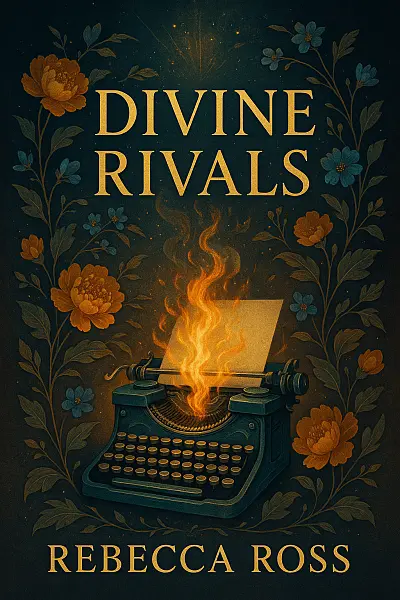
Divine Rivals
by: Rebecca Ross
Iris Winnow is desperate to keep her fractured family together in a city simmering with war between vengeful gods. Chasing stability, she sets her sights on winning a coveted columnist role at the Oath Gazette, juggling ambition and a quietly crumbling home life. Everything flips upside down when her heartfelt letters—meant for her missing brother—magically end up with her icy, competitive colleague, Roman Kitt.
Drawn together by enchanted typewriters and growing sparks, Iris and Roman are swept into the chaos of a ruthless divine conflict. With their hearts and humanity on the line, the question lingers: will they risk everything for love?
Ross’s writing blends lyrical prose and real emotional punch, giving readers a tender, urgent atmosphere threaded with yearning and hope.
""Even in a world torn by war, the quiet honesty of words can bridge the distance between unknown hearts.""
Let's Break This Down
The Author's Voice
Atmosphere
- Dreamily somber, with a whisper of magic lingering even in the bleakest scenes
- Expect a lush, melancholic vibe—a world tinged with war-worn exhaustion yet pierced by shimmering hope
- The setting is painted with an elegiac softness, where ordinary moments feel spun with golden light and every brush with the fantastical is poignant, never flashy
Prose Style
- Elegant and richly descriptive, but never stuffy or overwrought
- Rebecca Ross loves a lingering metaphor, turning emotional moments into almost lyrical set pieces
- Dialogue feels cozy, intimate, sometimes achingly heartfelt, while the narration slips easily into the poetic—expect lines you’ll want to reread just for the cadence
- There’s a gentle restraint: she shows deep feeling without melodrama, letting the weight settle quietly
- Occasional florid flourishes, but mostly warm, inviting language that draws you right in
Pacing
- Measured, with a slow-blooming tension that rewards patience
- Early chapters ease you into the world and characters, focusing on subtle emotional build rather than bombastic action
- The story flows more like a gentle current than a pulse-pounding river—you’ll linger in feelings, relationships, and world-building details
- Momentum gathers quietly, with stakes gradually intensifying, especially as the fantasy and romance threads intertwine
- Readers craving fast-moving plots might feel restless, but those who savor a gradual emotional crescendo will be totally absorbed
Mood & Feel
- Intimate, bittersweet, and quietly hopeful
- There’s a soft ache humming beneath the story—a sense of characters reaching out through loss and uncertainty
- Even at its darkest, the book offers flickers of joy and beauty, grounding its magic in the real emotions of grief, longing, and loyalty
- Very much one for fans of immersive, emotionally tender reads with just the right hint of quiet magic
Key Moments
- Typewriter letters bridging two worlds—romance that blooms through ink and secrets
- Rival journalists on opposite sides of war, but their words spark undeniable chemistry
- Grief and longing interwoven with divine conflict—heartbreak set against mythic chaos
- Chapter 13: an unexpected revelation that throws Iris’s loyalties into question
- Lyrical prose—Rebecca Ross paints heartbreak and hope with just a few sentences
- Standout: Iris’s fierce ambition and vulnerability, a heroine you want to root for
- A love story threatened not just by war, but by ancient gods themselves—stakes like no other
Plot Summary
Divine Rivals follows Iris Winnow, a young journalist living in a war-torn world where gods have reawakened and are battling for supremacy, with humanity caught in the crossfire. Struggling with her mother’s alcoholism and her brother Forest's disappearance at the front, Iris channels her grief into her work—writing passionate letters to him, which magically end up in the hands of her rival at the newspaper, Roman Kitt. Through these anonymous letters, Iris and Roman grow close, but their real-life rivalry creates tension and misunderstanding. As the war intensifies, Iris risks everything to report from the front lines, discovering Forest fighting for the wrong side and being deeply affected by the horrors of battle. The climax arrives when Iris is mortally wounded by the goddess Enva’s followers, prompting Roman to use a god-given bargain to try to save her, leaving the story on a poignant and unresolved note.
Character Analysis
Iris is fiercely determined and idealistic, driven by both personal loss and a desire to uncover truth; her journey is one of growing from naïve hopefulness to hard-won maturity in the face of immense loss. Roman, initially privileged and emotionally reserved, gradually opens up as he falls for Iris, learning humility and empathy along the way. Their dynamic—both rivals and confidants—creates real growth as they confront shared trauma. Forest, though absent for most of the book, serves as a haunting reminder of what’s at stake and anchors Iris’s emotional arc.
Major Themes
The story grapples with the cost of war, exploring how conflict distorts humanity and leaves scars on both soldiers and civilians—seen in Iris’s transformation and her brother’s fate. Grief and hope are tightly interwoven, with Iris clinging to hope through her letters as a way to survive devastating losses. Connection across distance is a powerful undercurrent, as the enchanted letters literally bridge the gaps created by war and misunderstanding, and reveal the healing power of vulnerability.
Literary Techniques & Style
Rebecca Ross uses dual perspectives and an epistolary device—anonymous letters—to deepen intimacy and tension between Iris and Roman, letting readers experience their most private thoughts. Her prose is evocative yet accessible, blending fantastical imagery (like the magical typewriter and aching visions of the gods) with grounded emotional realism. Symbolism abounds, especially in the motif of letters representing hope and resilience, while her use of metaphors (such as war as a storm) reinforces the story's heavy emotional atmosphere.
Historical/Cultural Context
Set in a world that feels reminiscent of early twentieth-century Europe, with trench warfare and old-fashioned journalism, the novel mirrors themes and imagery from the World Wars. The backdrop of divine conflict reflects how ideology and myth often drive real-world wars, forcing ordinary people to become unwilling pawns. These influences give the story a timeless, almost mythic resonance while speaking to universal struggles.
Critical Significance & Impact
Divine Rivals stands out for its original blend of magical realism and wartime romance, resonating with readers through its honest depiction of trauma and healing. It’s been praised for its lyrical writing and emotionally charged character work, quickly earning a dedicated fanbase and sparking discussions about narrative structure in YA fantasy. The open ending and complex character arcs ensure its relevance for anyone interested in stories that question the boundaries between love, duty, and survival.

Rival journalists, secret love—war stirs magic beneath every word.
What Readers Are Saying
Right for You If
Who’s Going to Love Divine Rivals?
- If you’re obsessed with lush, atmospheric fantasies and love a book that feels equal parts fairy tale and epic romance, you’re in for a treat.
- It’s perfect for fans of slow-burn relationships and characters with a ton of heart—so if you live for banter and emotional tension, you’ll devour this.
- Anyone who eats up vintage, historical vibes mixed with magic (seriously, that 1920s/fantasy war blend is so cool) is going to fall hard for this world.
- If epistolary elements make your heart skip a beat (letters that actually matter to the story!), this one really delivers—there’s just something so swoony about secret correspondence.
- Oh, and if you’ve been missing the emotional high of books like Sorcery of Thorns or An Enchantment of Ravens, Rebecca Ross does not disappoint on the feels front.
Who Might Want to Skip It
- If action-packed plots are your #1 need and you get restless when the story slows down for feelings or world-building, you might get a little antsy here—the pacing leans way more gentle and character-focused than adrenaline-fueled.
- People who don’t vibe with romance as the central theme (especially if you’re tired of “will-they-won’t-they” longing) probably won’t find what they’re looking for.
- Honestly, if flowery, poetic prose drives you up the wall, this style might not click for you—it’s beautiful writing, but it definitely lingers on mood and detail.
Bottom line:
If you want your next read to sweep you up in magic, longing, and gorgeously written letters, Divine Rivals is a win. But if you need nonstop action or aren’t here for major romantic tension, it might not be your best match.
What You're Getting Into
In Divine Rivals by Rebecca Ross, two rival journalists find themselves entangled in a war between ancient gods and battling for the truth amidst chaos. When Iris discovers a magical typewriter that connects her to a mysterious correspondent, their anonymous letters spark an unexpected bond and hope in a world on the brink. Sweeping, romantic, and brimming with tension, this book delivers a mix of heartfelt connection, fantastical stakes, and all the feels you crave in a character-driven YA fantasy.
Characters You'll Meet
-
Iris Winnow: Determined young journalist who grapples with loss and ambition. Her journey centers on resilience, hope, and navigating new love amidst the chaos of war.
-
Roman Kitt: Reserved and thoughtful rival reporter with a secret admiration for Iris. Over the course of the story, he transforms as he faces loyalty, vulnerability, and the realities of conflict.
-
Marion Winnow: Iris’s older brother caught on the frontlines of war, serving as Iris’s emotional anchor and driving much of her motivation.
-
Attie: Iris’s loyal friend and fellow journalist who provides steady support and levity, subtly highlighting themes of connection and solidarity.
More Like This
If Divine Rivals swept you away with its magic-infused letters and slow-burn romance, you might recognize the same heart-tugging chemistry found in The Night Circus by Erin Morgenstern, where lush prose and an undercurrent of rivalry pull two souls together within a world shimmering with enchantment. Similarly, fans of The Invisible Life of Addie LaRue by V.E. Schwab will appreciate the bittersweet longing and timeless sweep of Ross’s storytelling, as both novels entwine romance with the ache of memory and the high stakes of supernatural bargains.
On the screen, Divine Rivals conjures the haunting atmosphere and emotional intensity that make Shadow and Bone so compelling, with its war-ravaged landscapes and characters forced to choose between love, destiny, and survival. The show’s blend of fantasy, intimate character arcs, and gritty tension echoes through Ross’s pages, offering a similarly addictive escape for anyone who likes their magic laced with real-world consequences and unforgettable connections.
Critic's Corner
What if the words you poured out in private became someone else’s salvation in the dark? Divine Rivals dares to ask just how fiercely hope can burn in the midst of devastation—and whether the bonds we forge under fire can truly alter the fate of gods and mortals alike. Ross plunges us into a world where love and war write each other’s stories, inviting us to wonder: who do we become when everything is at stake, and words are our only weapon?
Ross’s prose achieves that rare, luminous clarity—her sentences are crisp and vivid, painting grief and yearning with equal delicacy. The alternating perspectives between Iris and Roman are handled deftly, layering tension and vulnerability without dipping into melodrama. Dialogue feels natural yet charged, subtle turns of phrase carrying as much heat as a clash of swords. Perhaps most impressive is Ross’s command of emotionally-driven pacing; she masterfully calibrates moments of quiet introspection against the ticking clock of looming battle. The magical typewriters are a stroke of invention—infusing classic epistolary techniques with fantastical conflict and lending an unmistakable intimacy. That said, the world-building, while intriguing, occasionally leans on familiar fantasy shorthand and at times leaves secondary characters underexplored. But overall, Ross strings each scene with emotional resonance, never losing sight of her characters’ interior landscapes.
At its core, Divine Rivals is a meditation on connection—how the need to be seen and understood drives us, even in the shadow of loss. The book wrestles with grief, faith, and duty, using the fantastical war of gods as a metaphor for our own struggles with powerlessness and legacy. In Iris’s every desperate letter, and Roman’s silent longing, the narrative insists that hope persists because it is fragile. The novel resonates powerfully with modern anxieties—how does one endure amid overwhelming conflict? Where does personal desire end and responsibility begin? Ross skillfully asks whether love can be more than escapism, whether it can refashion what’s broken rather than simply letting us forget. In this way, her story becomes both a balm and a rallying cry—reminding readers that their voices, however small, matter most when the world is on fire.
Within the YA fantasy tradition, Ross’s work stands out for its elegant language and the emotional maturity of her protagonists, recalling the nuanced romance of Nina Varela’s Crier’s War and the war-haunted tenderness of Kristin Cashore’s novels. Fans of epistolary storytelling or the enemies-to-lovers trope will find Ross’s take refreshingly earnest, sidestepping cliché in favor of hard-won vulnerability. Yet she is not afraid to leave some narrative threads unresolved, trusting her audience to crave complexity over tidy resolution.
Divine Rivals occasionally stumbles in its secondary world-building and side plots, but its beating heart—gorgeously rendered characters, aching prose, and authentic emotion—make those flaws minor. Ross offers a stirring, contemporary-sounding fantasy that feels genuinely necessary right now. If you want a book that will crack you open and tenderly put you back together, this is it.
Community Thoughts
Why did I think I could just read one chapter before bed? IRIENE'S LETTERS got me all twisted up, now I'm exhausted and can't stop thinking about her quiet strength. Zero regrets but also send coffee.
Honestly, I stayed up until 3 AM because Iris’s letters would NOT let me sleep. Her longing and hope crawled under my skin and I just kept turning pages. If you value your sleep, maybe don’t start this one at night.
Okay, listen, I THOUGHT this was just another fantasy with rivals but Iris absolutely haunted me. Her letters, her pain, her hope—could not shake her from my head for days. Rebecca Ross, you win.
okay, so irene is literally living rent-free in my head, her letters are like daggers wrapped in poetry. how is she both tough and vulnerable? i need answers and also maybe therapy. divine rivals has me rethinking fictional crushes forever.
okay but roman kynes has officially taken over my brain, haunting every quiet moment since i finished. why did i think i could move on? his letters, his longing, it's all i think about now. REBECCA ROSS, EXPLAIN YOURSELF.
Leave Your Review
Local Take
Why It Matters
Divine Rivals strikes a really deep chord with readers here, especially with its backdrop of war and letters as lifelines—it totally echoes our own history of conflict and family separation. The theme of hope under fire feels extra poignant, reminding people of stories passed down from relatives who lived through wartime (think about how letters kept love alive during those turbulent decades!).
What’s cool is how Iris’s grit and resilience line up with our strong belief in perseverance and finding light in tough times. But there’s also a subtle clash: the book’s focus on open self-expression and questioning authority might feel a bit bold in a society that often values community and harmony over individual rebellion.
In terms of literary vibes, Ross’s blend of magical realism and romance feels fresh, but older readers might see echoes of epistolary classics and war literature that have shaped our shelves for years. All in all, the story’s emotional honesty and poetic style fit right in with our appetite for heartfelt, relatable fiction—while sparking conversations about the personal costs of war and change.
Food for Thought
Divine Rivals by Rebecca Ross
Notable Achievement:
- Divine Rivals made a significant splash in the young adult fantasy scene, quickly becoming a BookTok sensation and earning a devoted following for its fresh twist on magical realism and epistolary romance.
- Its heartfelt storytelling and unique letter-based magic system have even landed it regular spots on bestseller lists and garnered nominations for several YA book awards, cementing its status as a beloved modern fantasy read.
Like what you see? Share it with other readers