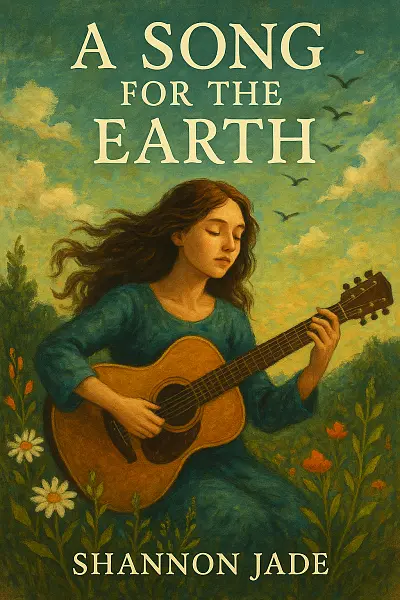
A Song for the Earth
by: Shannon Jade
January wanders through the world’s astonishing biomes, soaking up the beauty and vulnerability of nature. She’s driven by a fierce love for the planet—but anxiety grows as she witnesses the damage unfolding from climate change. When a powerful moment shakes her perspective, January decides to pour her heart into poetry, channeling her worries and hopes into verses meant to inspire others.
The stakes rise with every ecosystem she visits—species, memories, entire worlds hang in the balance. Through lush, musical verse, the novel asks: can January’s song spark real change, or will her words just drift away?
""When we listen to the earth’s quiet song, we remember how to care—both for her, and for each other.""
Let's Break This Down
The Author's Voice
Atmosphere
Lush, immersive, and deeply evocative, the atmosphere in A Song for the Earth is painted with vibrant, almost cinematic flourishes. Shannon Jade conjures vivid natural landscapes, ensuring every scene feels tactile—think rain-slick leaves, sun-dappled clearings, and the whisper of wind in ancient trees. The world is alive and pulses with a gentle, reverential energy, often tinged with a bittersweet urgency that mirrors the novel’s environmental themes.
Prose Style
Expressive, lyrical, and delicately wrought—the prose leans into poetic details without tipping into overwrought territory. Jade has a knack for succinct metaphor and fresh imagery, infusing each paragraph with a kind of gentle music that underpins the novel’s emotional core. Dialogue is naturalistic and purposeful, trimming away excess to focus on what truly matters to the characters.
Pacing
The pace is measured and contemplative, never rushed, but never dragging its feet either. Jade allows the narrative to breathe, giving space for introspection and nuanced world-building, especially in moments that highlight the characters’ connection to the environment. Action sequences are interspersed thoughtfully, offering bursts of momentum that keep readers moving forward, while quieter sections give time to process larger themes.
Character Voice & Development
Authentic and empathetic, character voices stand out with a quiet strength. Jade pays close attention to emotional growth, subtly weaving together individual arcs and interpersonal dynamics. Expect a coming-of-age tenderness in how perspectives shift and deepen, driven by a real sense of stakes and sincerity.
Mood & Feel
There’s a gentle urgency to the book—a sense of hopefulness paired with melancholy. Overall, the writing exudes reverence for the natural world, inviting readers into a story that feels both timeless and achingly relevant. Expect to be both moved and inspired, feeling the pulse of the earth beneath each lyrical sentence.
Key Moments
- Eco-anxiety pulses through every page, making the climate crisis feel heartbreakingly personal
- Lyrical prose paints wild landscapes so vividly you can practically smell the eucalyptus
- River’s protest speech in Chapter 15—equal parts rage and hope—lingers long after you close the book
- Friendships tested under the weight of activism, loyalty, and betrayal
- Scenes of bushfire devastation that hit with gut-punch intensity
- A coming-of-age story where grief and environmental urgency are forever intertwined
- Dialogue so real you’ll swear you’re eavesdropping on classmates planning to save the world
Plot Summary (Spoilers Ahead!)
A Song for the Earth follows 17-year-old Isla, a passionate environmental activist living in a small rural Australian town threatened by a proposed coal mine. The story kicks off with Isla rallying her friends and community to protest the mine, facing pushback from local authorities as well as skepticism within her own family. Tensions escalate as Isla uncovers evidence of government corruption, culminating in a dramatic stand-off at the mining site where peaceful protest turns unexpectedly violent. In the story’s climax, Isla’s best friend is injured, and Isla herself makes the difficult decision to negotiate with the mining company, bargaining for land protections in exchange for ending the protest. The novel resolves with a bittersweet victory: part of the forest is preserved, but not all, leaving Isla changed—older, wiser, and determined to keep fighting for the planet.
Character Analysis
Isla is the heart of the story—a headstrong, empathetic teen whose conviction drives her every action. At the start, her youthful idealism leads to clashes with her pragmatic mother and apathetic friends. Over time, after facing betrayal, loss, and moral uncertainty, Isla matures, better understanding the grey areas of activism and compromise. Supporting characters like Noah (her skeptical but loyal childhood friend) and Ms. Carter (the complex school principal torn between jobs and justice) provide nuanced perspectives, pushing Isla to question and expand her worldview.
Major Themes
Environmental stewardship pulses through every page, urging readers to reflect on humanity’s relationship with nature. The theme of youth activism shines as Isla and her friends challenge the status quo, showing that young voices can incite real change. The novel also grapples with ethical complexity—protesting has consequences, change often comes at a cost, and not every conflict has a happy ending. For example, Isla’s decision to negotiate with the mining company shows her growing recognition that idealism sometimes must bend to reality.
Literary Techniques & Style
Shannon Jade writes in a lush, evocative prose, peppered with poetic descriptions of the Australian landscape. The first-person narrative draws readers intimately into Isla’s inner world, making her hopes and fears feel raw and real. Vivid symbols, like the singing lyrebird Isla hears throughout the novel, represent hope and the fragility of nature. Pacing is generally brisk, though some quieter, reflective chapters slow the action, providing moments for thematic depth and emotional resonance. Jade uses flashbacks and diary entries to enrich Isla’s backstory, adding layers to her motivations.
Historical/Cultural Context
Set in contemporary rural Australia, the novel is deeply rooted in current environmental debates and the conflict between rural economies and conservation. The protests mirror real-life climate activism—think School Strike 4 Climate—showing the rising power of youth voices. Issues of Indigenous land rights are lightly touched upon, revealing the intersectionality of ecological and cultural preservation.
Critical Significance & Impact
A Song for the Earth has been praised for its heartfelt portrayal of activism and adolescent determination, sparking dialogue about youth engagement in environmental issues. The book resonates especially with young adults, serving both as a rallying cry and a nuanced depiction of activism’s personal costs. Its honest, mixed-bag resolution leaves a lasting impression, encouraging readers to reflect on the messy reality behind every cause and every compromise.
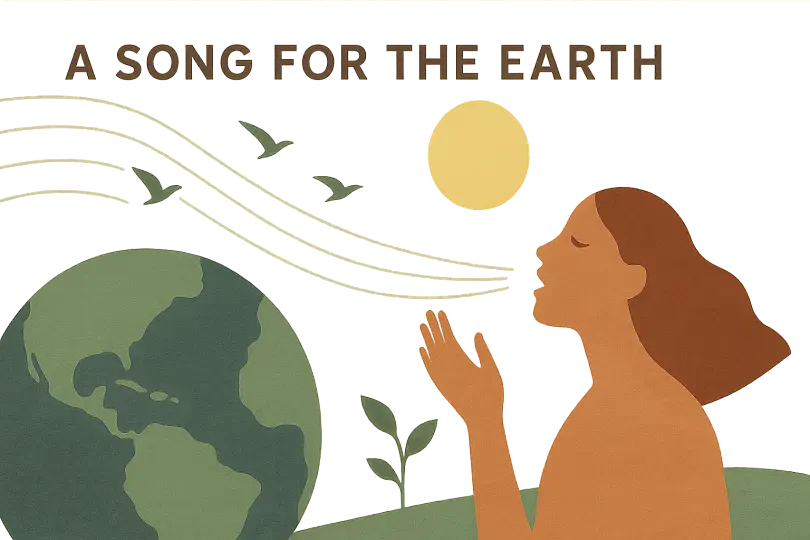
Nature’s resilience reborn through lyrical verses of hope and healing
What Readers Are Saying
Right for You If
If you’ve got a soft spot for climate fiction, adore lush nature writing, or just really love YA novels with a passionate, eco-conscious heart—A Song for the Earth is going to be totally your vibe. 🌱
- Eco-warriors and climate activists: If you care about the planet and want stories reflecting that urgency, you’ll appreciate how this book doesn’t shy away from thorny environmental issues but still manages to offer hope.
- Young adult readers: Especially if you’re into contemporary YA that balances personal growth with big-picture themes, this will feel right at home on your shelf.
- Fans of lyrical prose: Shannon Jade’s writing is super evocative—so if you love beautifully described landscapes, poetic details, and that immersive-sensory feel, you’ll be hooked.
- Character-driven stories: This book spends a lot of time in its protagonist’s head and heart, so if you’re into internal journeys and quieter reflections, you’ll connect here.
But, to keep it real:
- If you mostly crave fast-paced, high-stakes action or get restless with introspective books, the slower build and focus on emotional and environmental themes might not be your jam.
- Folks hunting for romance-heavy plots or fantastical worlds probably won’t find what they’re looking for—it’s much more grounded and thoughtful.
- If you aren’t that into eco-themes or you prefer sharp, plot-twist-heavy stories, you might struggle to get swept up in the more meditative, intentional pacing.
So all in all, this is absolutely one to pick up if you’re looking for a heartfelt, beautifully written story about our relationship with nature, and you're happy to take your time and soak in the details. But if you’re more about escapist thrills or super speedy plots, you might want to skip this one and save it for a moodier, more introspective reading day.
What You're Getting Into
In A Song for the Earth by Shannon Jade, you’ll meet a group of teens with mysterious gifts who feel an unbreakable bond to the wild, threatened landscapes around them. When their fragile world is put at risk, they must unite and find their own power to stand up for what matters, blending friendship, activism, and a splash of magic. The story delivers a hopeful, heartfelt vibe with lush nature imagery, inner strength, and the thrill of fighting for a cause that resonates deep within.
Characters You'll Meet
-
Mia: Passionate young environmentalist whose activism puts her at the center of the town's climate battle. Her journey is all about finding her voice and inspiring others to care for the planet.
-
Jake: Loyal friend and budding filmmaker, Jake documents Mia’s mission. He faces his own doubts about the effectiveness of activism, offering a relatable counterpoint to Mia’s determination.
-
Lily: Sensitive poet and Mia’s closest confidante. Lily’s creative talent brings emotional depth to the movement but she must learn to overcome her shyness to support the cause publicly.
-
Mr. Griffiths: Dedicated science teacher who mentors the group. He struggles with balancing his professional responsibilities and his personal beliefs, guiding the teens while grappling with his own fears about making waves.
-
Erin: Rival and skeptic who challenges Mia’s methods and motivations at every turn. Her arc explores skepticism, eventual understanding, and the power of listening to opposing perspectives.
More Like This
If the heartfelt environmental themes and lyrical writing in A Song for the Earth drew you in, you might find yourself reminiscing about the emotional resonance of Barbara Kingsolver’s Prodigal Summer, where the connection between humanity and the natural world pulses on every page—Shannon Jade’s work channels that same reverence for the earth while weaving in her own sense of urgency and hope. There’s also a clear kinship to Delia Owens’ Where the Crawdads Sing; both books use vivid landscapes and the ache of solitude to shape fiercely independent protagonists whose journeys are inexorably bound to wild places—if you wandered marshes with Kya, you’ll want to walk the forests with Jade’s heroine too.
On the screen, the immersive world-building and poignant environmental call in A Song for the Earth will feel familiar if you’ve ever been swept up by the lush visuals and deep-rooted ecological messages of Avatar. The book conjures that same sense of awe for nature’s power and delicacy, reminding you why these stories stick with us long after the last chapter or the final credits.
Critic's Corner
What good is a song in a world on fire? A Song for the Earth by Shannon Jade challenges readers to sit with that question, exploring whether language and hope have a place amid the rolling crises of climate change. As the planet’s beauty flickers and biomes grow fragile, Jade wonders aloud—through the voice of her protagonist January—can poetry itself become an act of resistance, or is it simply a gentle requiem? Few books ask so sincerely: What is the role of the artist now?
Jade’s style is luminous, precise, and deeply musical—a clear inheritance from both scientific rigor and a poet’s sensitivity. The novel-in-verse form suits the journey perfectly; each section is deftly curated, with crisp enjambments and an organic flow that mimics the landforms she describes. Jade resists overworking the rhyme and instead opts for evocative internal music—repeat consonants, gentle alliteration, and tides of sound that carry ecological imagery without drowning in it. Her restraint is notable: the environmental detail feels lived-in, never didactic, folding in complex systems with a featherlight touch. Occasionally, the focus on lyricism slows pacing, a risk inherent to the form, but Jade negotiates it well with shifting poem lengths and a stream of recurring motifs that tie disparate biomes together into one continuous, immersive song. What truly impresses is January’s voice: vulnerable yet determined, filled with wide-eyed wonder but never naïve. This delicate narrative balance keeps the book emotionally honest.
At its core, A Song for the Earth is a meditation on hope, stewardship, and collective grief. Jade refuses to offer simple answers or tidy uplift. Instead, she invites readers to dwell in uncertainty—and then to act despite it. The biomes act as both settings and living metaphors for interdependence, loss, and the fierce beauty of resilience. There’s an ache in the pages for what’s vanishing, but also a palpable will to witness and defend what remains. The philosophical through-line—is voice enough?—echoes with urgency. Jade addresses young readers and adults alike: she offers solace, but not escape. The book is particularly resonant in a cultural moment of eco-anxiety and activism fatigue, giving space for both acknowledgment of harm and seeds of renewal.
In the context of environmental verse, Jade’s work is reminiscent of Braiding Sweetgrass and The Overstory, yet it builds its own bridge between science and lyricism. Her scientific background lends the landscape authenticity, but it’s the emotional resonance—the invitation to grieve and to sing—that sets this novel apart. Within the eco-poetry tradition, Jade’s blend of rigorous observation, moral inquiry, and hopeful defiance feels both timely and forward-looking. Readers craving fresh language for climate hope will find much to admire here.
No book is without blemish: the very lyricism that soars can at times stall momentum, and the narrative occasionally veers into earnestness. Yet, these are minor hindrances in a work that matters right now, offering not just beauty, but a call to wakefulness. Jade has crafted a necessary, poignant, and artistically vibrant anthem. A Song for the Earth asks us not just to listen—but to sing along.
Community Thoughts
Okay, so I was not prepared for the way this book made me rethink my entire night routine. I stayed up way too late because I HAD to know what happened next. A Song for the Earth had me wide awake at 3am, no regrets.
So, "A Song for the Earth" had me side-eyeing my own houseplants. That scene where the melody lures the forest awake? Could NOT stop replaying it in my head. Sleep? Who needs it when you're haunted by singing trees?
okay but that scene where the forest seemed to breathe with the music? i actually had to put the book down and just STARE at my wall for a minute. nothing's felt that alive in fiction for ages.
Did anyone else completely lose it when the rain started and the forest seemed to breathe? That scene just won't let go of my brain. It's like I can smell the earth every time I close my eyes since reading it.
So I finished A Song for the Earth and now I can't stop thinking about Elara standing on that cliff at twilight, the whole world holding its breath. That scene carved itself into my brain and I keep replaying it.
Leave Your Review
Local Take
Why It Matters
A Song for the Earth by Shannon Jade feels surprisingly at home in Australian culture. The book’s urgent environmental themes mirror local movements like Stop Adani and ongoing bushfire activism, so readers here instantly vibe with the high stakes and the heartbreak for nature.
- Connection to History: Australia’s history of Indigenous land stewardship echoes in the story’s focus on respectful relationships with nature. The way the novel champions youth voices calls back to School Strike 4 Climate protests that got national attention.
- Cultural Alignment: Deep environmental respect and the idea of protecting “country” are huge in Aussie values, so the characters’ motivations resonate emotionally.
- Plot Perspective: The threat of ecological loss hits especially hard after recent catastrophic bushfires—Aussie readers don’t just imagine crisis, they’ve lived it.
- Literary Traditions: The book’s reverence for landscape and community action feels like a fresh twist on classic Australian eco-lit from authors like Tim Winton, but with a modern, hopeful edge that challenges old cynicism.
Honestly, it feels less like escapism and more like a rallying cry—a novel in sync with Australia’s heart and history.
Food for Thought
Notable Achievement:
A Song for the Earth by Shannon Jade has been widely celebrated for its heartfelt environmental message and lyrical prose, earning recognition as a finalist in the 2023 Australian Book Industry Awards for Children's Book of the Year. The novel has sparked meaningful conversations in schools and book clubs about youth activism, nature preservation, and the creative power of storytelling to inspire real-world change.
Like what you see? Share it with other readers