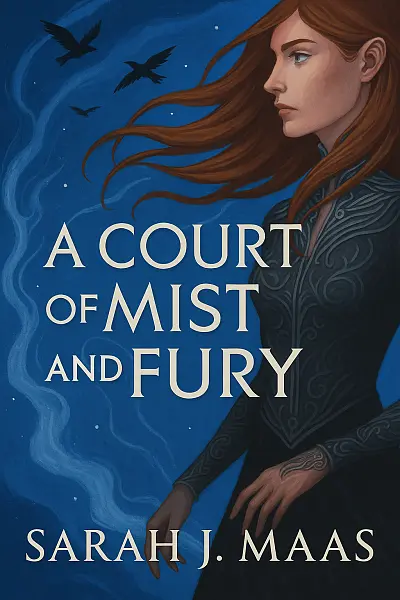
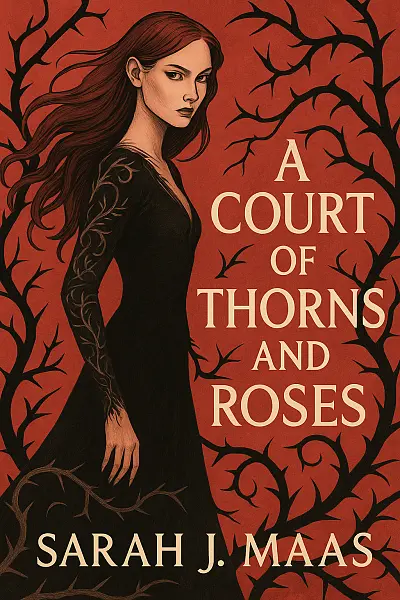
A Court of Thorns and Roses
by: Sarah J. Maas
Nineteen-year-old Feyre scrapes by as a struggling huntress on the edge of a magical faerie realm, driven by her will to protect her family. Her world spins off course when, after killing a mysterious wolf, a fearsome faerie lord, Tamlin, demands she cross the wall into his enchanted—and very dangerous—lands.
Now held captive, Feyre faces a beautiful but perilous world where every rumor about fae cruelty seems threateningly true. As she deals with Tamlin’s enigmatic charm and growing darkness within the realm, Feyre’s heart and beliefs are tested.
Lush, romantic, and tense, the story pulses with raw emotion, seductive danger, and the big question: will Feyre risk everything for love and save a world that once haunted her nightmares?
"“Sometimes, the hardest battles are won not with blades, but with the courage to let your heart trust what fears most.”"
Let's Break This Down
The Author's Voice
Atmosphere
Imagine stepping into a lush, dangerous fairy tale drenched in shadows and splendor. Maas crafts an intoxicating world layered with magic, peril, and a heady sense of romance. Settings pulse with tactile detail—crumbling manor halls, haunted forests, and vibrant courts that feel both inviting and menacing. The atmosphere is thick with longing, tension, and anticipation, pulling you deeper into the intrigue and danger lurking around every corner.
Prose Style
The writing leans decidedly lush and vivid, painting scenes with sensory-heavy strokes. Maas blends straightforward, sometimes punchy dialogue with poetic description, sprinkling drama into every glance and touch. The narration dives into Feyre’s inner world with plenty of emotion—expect raw vulnerability, quick bursts of sarcasm, and a tendency toward introspective, sometimes repetitive, monologues. It’s not subtle, but it’s strikingly immersive and unabashedly emotional.
Pacing
Think of a rollercoaster with slow, scenic climbs and heart-pounding drops. The story starts with careful, suspenseful world-building, unhurried but captivating. Once the central romance and conflict ignite, the pacing ramps up—quick chapters and cliffhangers keep those pages flying. Some midsections may linger a bit on Feyre’s internal struggles or descriptions, but big, tension-filled moments and action scenes reignite the momentum whenever it flags.
Dialogue
Maas’s dialogue is direct, often flirtatious, and dripping with subtext. Characters banter, argue, and confess with a blend of modern wit and old-world intensity. At times, conversations border on melodramatic—but that suits the fairy tale vibe, amplifying both the romance and the suspense.
Tone & Mood
Darkly enchanting, dramatic, and intensely romantic. The tone oscillates between foreboding dread and sweeping yearning. Maas isn’t shy about plunging readers into fear, pain, or hope—all dialed up to eleven. Expect to feel the full spectrum, from hushed awe to open-mouthed shock.
Overall Rhythm
Prepare for a highly emotional ride packed with rich world-building, dangerous intrigue, and slow-burn longing. Maas’s style is unapologetically intense, ideal for readers who crave immersive, romantic fantasy where every glance could mean everything and no feeling is left unexamined.
Key Moments
-
Feyre’s brush with the monstrous Suriel—secrets revealed in the shadows of the woods
-
“Under the Mountain” trials: brutal, twisty, and totally pulse-pounding—pain and sacrifice collide
-
Steamy, slow-burn romance between mortal and fae—chemistry you can feel on every page
-
Lucien’s biting wit and tragic backstory: sidekick goals, but oh, the angst
-
Vivid, sensual world-building—dangerous courts, magic bargains, and a fairy-tale edge that feels dangerously grown-up
-
Themes of survival, trust, and finding your own power—Feyre’s journey is as fierce as it is heartbreaking
-
Jaw-dropping final showdown—love and violence entwined in a battle you won’t forget
Plot Summary
A Court of Thorns and Roses follows Feyre Archeron, a mortal huntress, who kills a wolf in the woods, only to discover it was actually a faerie in disguise. As retribution, she’s taken to the magical land of Prythian by Tamlin, a High Fae lord, where she learns about the curse afflicting his court. Over time, Feyre and Tamlin develop a romance, but when Feyre sacrifices her safety to save Tamlin and his people from the cruel Amarantha’s rule, the story intensifies. Under the mountain, Feyre undergoes deadly trials and faces brutal challenges to break the curse. Ultimately, she prevails, breaking Amarantha’s hold, saving Tamlin and Prythian, but at a steep personal cost, emerging forever changed—both mortal and fae.
Character Analysis
Feyre starts off as a hardened, practical survivor, motivated by her family’s welfare, but gradually evolves into a character capable of love, sacrifice, and self-discovery as she becomes immersed in the fae world. Tamlin is portrayed as the brooding, duty-bound High Lord, showing vulnerability beneath his authority but remaining somewhat static, primarily serving as Feyre’s love interest and protector. Lucien, Tamlin’s sharp-tongued emissary, adds wit and complexity, challenging Feyre but ultimately supporting her. Amarantha, as the main antagonist, is driven by vengeance and cruelty, acting as the catalyst for Feyre’s transformation and the escalating stakes of the narrative.
Major Themes
At its core, the novel explores sacrifice and love, highlighted by Feyre’s willingness to risk everything for those she cares about, especially during her trials under the mountain. Freedom versus oppression emerges strongly in Tamlin’s court’s struggles under Amarantha’s rule, as characters wrestle with literal and emotional captivity. There’s a constant tension between mortality and transformation—Feyre’s journey into the unknown, both in the fae world and within herself. The story also grapples with moral ambiguity as Feyre confronts choices that test her ethics and desires, especially in scenes depicting her trials and her relationship with Rhysand.
Literary Techniques & Style
Sarah J. Maas’s writing is lush and immersive, packed with evocative descriptions and rich sensory detail, making Prythian feel vivid and dangerous. The story uses a first-person, present-tense perspective, pulling readers tightly into Feyre’s emotional state and experiences. Symbolism abounds, particularly in the motifs of the mask and the wolf, each representing hidden identities and blurred boundaries. Foreshadowing and metaphor are skillfully woven throughout—the curse, for example, doubles as a metaphor for the weight of trauma and the hope of redemption.
Historical/Cultural Context
Set in a fantasy world inspired by faerie folklore and classic fairy tales (notably Beauty and the Beast), the novel plays with familiar European mythological elements, but reinvents them within a darker, more violent context. The feudal-like courts and rigid social hierarchies reflect old-world sensibilities, while Feyre’s outsider perspective probes issues like class division and prejudice. The book also responds to contemporary readers’ interest in strong female protagonists navigating moral ambiguity and complex worlds.
Critical Significance & Impact
A Court of Thorns and Roses quickly became a standout in the realm of young adult and new adult fantasy fiction, loved for its addictive romance, world-building, and strong heroine. While some critics found the romance formulaic and the pacing uneven, most praised Maas’s ability to blend fairy tale and fantasy conventions with emotionally charged storytelling. The novel’s massive popularity has influenced the resurgence of faerie-inspired fantasy in YA and beyond, cementing Maas as a genre-shaping author still relevant to both devoted fans and newer readers.
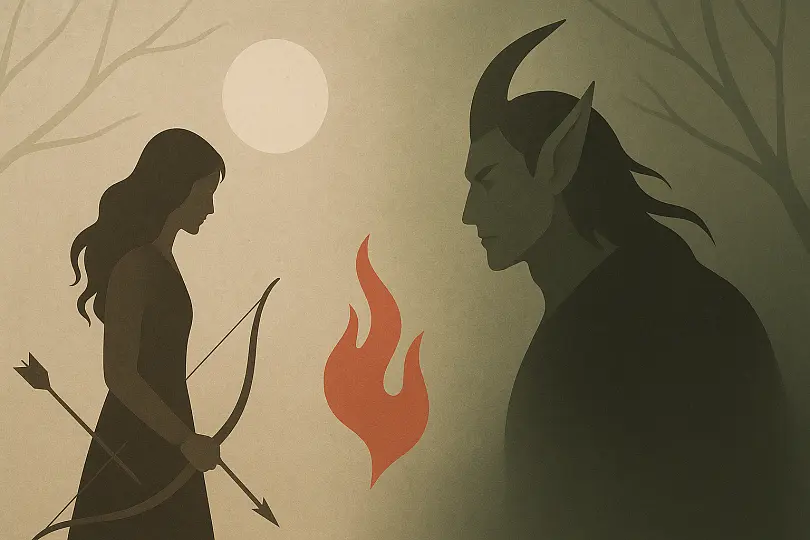
Mortal sacrifice meets fae intrigue in a lush world of deadly desire.
What Readers Are Saying
Right for You If
If you love diving into lush fantasy worlds, getting swept up in forbidden romance, and enjoy stories where the main character’s sass levels are always on point, A Court of Thorns and Roses will totally hit the spot for you. Seriously, if the thought of magical courts, dangerous faeries, and a dash of steamy tension makes your bookish heart race, go ahead and bump this series up your TBR.
Fantasy fans who appreciate a fairy tale retelling with a darker twist (think: Beauty and the Beast but with way more edge, and absolutely no singing teapots) are gonna have a blast here. And if you enjoy seeing a tough, flawed heroine fighting not just for survival but for her own sense of self, you’ll really connect with Feyre’s journey.
Here’s who I think will totally eat this book up:
- Lovers of romantasy where the relationship drama is just as juicy as the world-building
- Readers who can’t resist a story with dangerous, morally gray love interests
- Anyone who enjoys slow-burn tension, emotional twists, and a healthy dose of snarky banter
- People who adore series with lots of drama, betrayal, and high-stakes action
But, real talk—this one’s not for everyone:
- If you prefer hardcore, complex world-building à la Tolkien or Sanderson, ACOTAR can feel a little more soap opera than epic saga
- Readers who aren't into romance-heavy plots or who cringe at the idea of faeries being, well, sexy, might want to steer clear (honestly, there’s a lot of smoldering looks and “will-they-won’t-they”)
- If you love super fast-paced plots that never slow down, be warned—ACOTAR takes its time building relationships and atmosphere
So, if you’re in the mood for a dramatic, addictive escape with beautiful people, banter, and plenty of feels, give it a shot. If not, there are definitely other fantasy worlds you might vibe with more!
What You're Getting Into
In a lush, dangerous world where humans and fae are bitterly divided, fearless huntress Feyre is thrust into the magical lands of Prythian after a fateful encounter in the woods.
Facing powerful, mysterious fae lords and an ancient curse, she must navigate courtly intrigue, simmering romance, and deadly threats that challenge everything she thought she knew.
Brimming with dark fantasy vibes, swoony tension, and addictive twists, this is a story about sacrifice, trust, and discovering magic in the most unexpected places.
Characters You'll Meet
-
Feyre Archeron: Resourceful and determined human protagonist who risks everything to save her family. Her journey thrusts her into the world of the fae, where she learns bravery and self-worth.
-
Tamlin: High Lord of the Spring Court and Feyre's initial love interest. He is powerful yet emotionally guarded, torn between duty and desire as he navigates the curse threatening his court.
-
Lucien: Tamlin's witty and loyal emissary. He serves as an ally and confidant to Feyre, often bringing levity but also revealing deeper scars from his past.
-
Rhysand: Mysterious and cunning High Lord of the Night Court. Though his role is initially ambiguous, he challenges Feyre’s perceptions and subtly shapes the story's direction.
-
Amarantha: The vicious fae villain who rules Prythian with cruelty. Her actions set the main conflict in motion, forcing Feyre into deadly trials and moral dilemmas.
More Like This
If you found yourself swept away by the romantic tensions and shifting alliances in Throne of Glass, Sarah J. Maas’s own earlier fantasy mega-hit, you'll instantly feel at home among the dangerous fae courts and morally gray heroes of A Court of Thorns and Roses. There’s that same addictive blend of high-stakes adventure, slow-burn romance, and world-building that practically crackles with magic, making it easy to see why fans of one tend to fall hard for the other.
Readers of Beauty and the Beast retellings like Uprooted by Naomi Novik will also get the delicious suspense of a heroine forced into a magical world not of her choosing. But where Novik's tale leans on Eastern European folklore and subtle, creeping enchantment, Maas dials up the peril, the passion, and the darkness—a heady twist for fans who crave a more action-packed, fiercely emotional spin.
Visually, it’s hard not to think of the intoxicating blend of lush visuals and political intrigue that makes Shadow and Bone (Netflix) so binge-worthy. Both stories immerse you in dangerous magical courts, romantic entanglements, and the sense that dark secrets lurk behind every exquisite mask, offering that irresistible mix of escapism and edge that keeps you glued to the page (or screen). If those are your vibes, A Court of Thorns and Roses fits right onto your must-read list.
Critic's Corner
What do we become when we cross the threshold into a world built on our oldest fears and secret desires? Sarah J. Maas’s A Court of Thorns and Roses invites readers to consider whether love can bloom amidst danger, and what price we’re willing to pay for it. The novel’s central question—how much of ourselves must we surrender to survive—or to truly live—echoes through every enchanted forest and tangled emotion in Feyre’s journey.
Maas’s writing style is vivid, sensorial, and unapologetically immersive. She crafts Prythian with lush, tactile detail—think velvet petals under bloodied feet, the sharp perfume of a faerie feast, the sinister hush of a haunted court. Her language is accessible yet evocative, reflecting Feyre’s initially rough-hewn perspective in prose that grows more lyrical as Feyre’s world expands. Maas’s greatest narrative strength lies in her ability to build palpable tension—both romantically and in the mounting sense of menace—by alternating between slow-burning intimacy and heart-thumping peril. The use of first-person narration tightens the psychological focus, pulling readers directly into Feyre’s hope and dread. There’s a sincerity to the romantic development—measured, reluctant, then all-consuming—that resonates in its tentativeness and eventual abandon. However, the pacing occasionally falters; certain early sections repeat Feyre’s anxieties or linger on daily minutiae, which can momentarily dilute the narrative’s urgency. Dialogue sometimes runs to melodrama, particularly in emotionally fraught exchanges, slightly blunting the rawness of character revelations.
At its core, the novel scrutinizes power and agency—Feyre’s path from survival-driven sacrificial lamb to a woman discovering her worth and will. Themes of sacrifice, transformation, and the blurring of monstrous and human natures ripple through the narrative, echoing classic fairy tale motifs but infusing them with thorny ambiguity. Maas skillfully interrogates love’s redemptive—and destructive—potential, refusing to settle for clear-cut morality. The story’s engagement with trauma, recovery, and self-sacrifice feels urgent given contemporary debates around female agency, consent, and the cost of loving something “other.” The book further subverts and modernizes the Beauty and the Beast framework, refusing passive damsels: Feyre wields, suffers, and chooses with consequence. Questions of class and prejudice surface, but are sometimes relegated to background in favor of personal stakes, limiting deeper societal critique. Nevertheless, Maas’s treatment of darkness—internal and external—shows real narrative courage, never shrinking from ugliness in pursuit of happily-ever-after.
In the landscape of new adult fantasy, Maas’s series opener stands apart through its willingness to blend classic myth, steamy romance, and psychological grit. While it borrows liberally from traditional fairy tales, it carves out space for messy, resilient heroines. Compared to earlier Maas work, ACOTAR signals a shift toward richer emotional complexity and a bolder mix of violence and passion—bridging YA and adult sensibilities. For fans of Holly Black or Naomi Novik, this book offers a darker, more intimate take on faerie lore.
Strengths: intoxicating atmosphere, dynamic protagonist, mastery of tension
Weaknesses: occasional uneven pacing, melodramatic dialogue, some thematic underdevelopment
Final verdict: A Court of Thorns and Roses is a compulsively readable, emotionally charged fantasy with teeth and heart. Not flawless, but undeniably original in its blend of sensuality, peril, and transformation—an essential read for anyone craving fairy tales with shadows and substance.
Community Thoughts
when I hit THAT SCENE under the mountain, I swear I stopped breathing. Feyre’s choices shattered me. I kept flipping pages at 3am, cursing the dawn, desperate to find out who would survive. My sleep schedule was RUINED but I’d do it again.
I didn’t sleep for two nights because I HAD TO KNOW what happened to Feyre. My brain replayed that Under the Mountain scene like a fever dream. This book consumed my every thought and I’m not even sorry.
honestly, that one moment under the mountain when everything went sideways? I had to put the book down and just stare at the wall. Feyre's choices haunted me all night. seriously, how do you sleep after that?
the surreal, gut-punch moment when feyre paints on the cell wall stuck with me for days. it’s the kind of quiet, desperate hope you don’t see coming. i kept picturing it in my head long after i finished.
Honestly, I still think about the surreal moment under the mountain when Feyre solved Amarantha’s riddle. That twist hit so hard I had to put the book down and stare into space. Maas really knows how to shatter and rebuild you.
Leave Your Review
Local Take
Why It Matters
A Court of Thorns and Roses really clicks with readers in the U.S. because its themes—independence, resilience, and rebellion against oppressive systems—echo key currents in American history, like the fight for civil rights and emphasis on personal freedom. Feyre’s journey from powerlessness to agency has serious resonance in a society that values self-determination and reinvention.
- Parallel to local values: The push-pull between Feyre’s duty to family and her yearning for autonomy mirrors America’s classic tension between communal responsibility and rugged individualism.
- Social movements: Feyre’s resistance to exploitation and her forging of new alliances can hit differently for readers drawn to feminist or anti-establishment movements in modern U.S. culture.
- Literary echoes: Maas’s blend of romance, adventure, and dark fairy tale vibes slots right in with the American love for genre-bending fiction—think Twilight meets Beauty and the Beast, but with a gutsier edge.
Some plot twists—like the deep moral ambiguities and shifting allegiances—can actually challenge the local love for tidy heroes and clear lines, giving the story extra bite. If you’re into stories that mess with tradition and put fierce agency front and center, this one feels surprisingly at home here.
Food for Thought
Controversies:
- A Court of Thorns and Roses has sparked criticism for its depiction of romantic relationships that some readers find problematic, highlighting issues of consent and power dynamics.
- There's ongoing debate over the representation of diversity in the series, with some readers expressing disappointment about the lack of inclusive characters and occasional reliance on fantasy stereotypes.
Like what you see? Share it with other readers