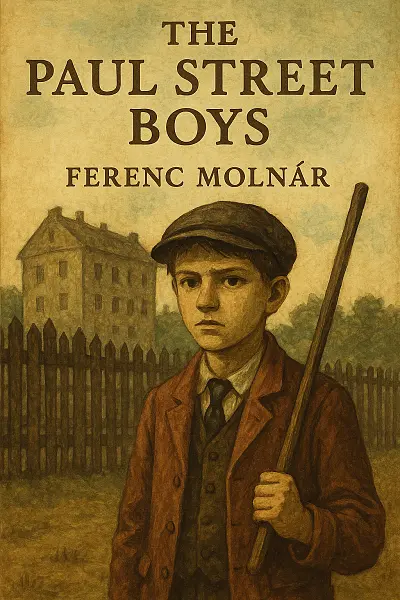
The Paul Street Boys
by: Ferenc Molnár
The Paul Street Boys huddle in their scrappy Budapest lumberyard, fiercely proud of their makeshift home. Led by the earnest János Boka, they savor belonging and friendship, flying the Hungarian colors as their badge. But everything tilts when the swaggering Redshirts—inspired by Garibaldi, wearing red and ambition—plot to seize the boys’ cherished “grund.”
Suddenly, Boka and his crew must unite against the looming invasion, testing loyalties and courage. The battle for the playground becomes a symbol for childhood honor and the pain of growing up, where losing means not just territory, but trust.
Will these underdogs outwit the Redshirts and prove their worth? The story’s kid-eye view is heartfelt, vivid, and full of real stakes—inviting you right into the fray.
"True friendship is not measured by victory or defeat, but by the courage to stand together when the world demands you run."
Let's Break This Down
The Author's Voice
Atmosphere
- The book buzzes with the energy of turn-of-the-century Budapest, immersing you in narrow city streets, bustling playgrounds, and makeshift battlefields
- There’s a palpable tension between childhood innocence and looming adult realities, with a wistful, almost nostalgic air blending excitement, competition, and camaraderie
- Readers can feel the dust, sunlight, and the stakes of a world where a vacant lot becomes a kingdom worth fighting over
Prose Style
- Molnár’s writing is clear, direct, and surprisingly witty, painting scenes with lively descriptions but never bogging you down in purple prose
- Dialogue pops with authenticity—funny, touching, and perfectly tuned to kid logic and street-smart schemes
- Every paragraph brings you closer to the boys’ inner worlds, relying on subtle emotional cues rather than grand statements, which makes big moments hit that much harder
Pacing
- The story moves briskly, constantly shifting between mischievous plotting, tense showdowns, and quieter moments of self-reflection
- There’s a real momentum here: Molnár builds suspense gradually, layering playful banter with a creeping sense of what’s truly at stake
- Chapters end with just enough intrigue or unresolved tension to keep you flipping pages, yet occasionally linger on poignant scenes, giving the reader space to breathe and reflect
Mood & Feel
- Expect a blend of lighthearted fun and aching poignancy—laugh-out-loud childhood antics set against themes of loyalty, bravery, and the bittersweet pangs of growing up
- The tone strikes a rare balance: sentimental without ever turning saccharine, realistic yet infused with the magic of youthful imagination
- If you love stories where the smallest mischief feels epic and every friend might be a hero (or a rival), Molnár’s style will absolutely pull you in
Character Voice & Perspective
- Every boy feels distinctive, not just in what he says but how he acts and views the “war” over Paul Street; narration is intimate without losing sight of the larger gang dynamic
- There’s a gentle, almost teasing humor throughout, countered by flashes of deep insight and empathy for childhood’s silent struggles
- The book lets readers inhabit the boys’ minds, making their victories and heartbreak feel immediate and unforgettable
Key Moments
- Gutterball marbles and sawdust forts—childhood stakes never felt so real
- Red-shirted “Boys of the Paul Street Ground” form unbreakable bonds amid Budapest’s urban sprawl
- Nemecsek’s quiet bravery steals the spotlight and hearts—get ready to tear up
- Fierce turf wars with the “Redshirts” erupt in tactical showdowns… all for a patch of sand
- Loyalty and betrayal run side by side—one muddy pond, one unforgettable sacrifice
- Molnár’s brisk, dialogue-heavy chapters make every scraped knee and secret strategy pulse with energy
- A nostalgia-soaked salute to lost innocence—with a gut-punch ending you’ll never forget
Plot Summary
The Paul Street Boys centers on a group of schoolboys in Budapest who cherish their makeshift playground—the "grund." Their peaceful days are disrupted when a rival gang, the Redshirts, led by the assertive Feri Áts, sets out to claim the grund for themselves. After a series of skirmishes and strategic planning, the boys mount a spirited defense, with each member playing a critical role. During the climactic battle, Ernő Nemecsek, the group's youngest and most overlooked member, displays remarkable bravery but falls gravely ill as a result of exposure and exhaustion. The novel concludes with the Paul Street Boys victorious, yet the victory is bittersweet as Nemecsek tragically dies, leaving a significant impact on his friends.
Character Analysis
- Ernő Nemecsek, initially timid and underestimated, becomes the story's moral center through his unwavering loyalty and courage, ultimately sacrificing everything for his friends.
- János Boka, the clear-headed leader, evolves from a responsible overseer to a deeply compassionate figure, especially in his grief over Nemecsek's death.
- Feri Áts, the Redshirts' leader, starts as an adversary but reveals layers of honor and respect, particularly towards Nemecsek.
Throughout the book, the boys confront the brutal realities of conflict and loyalty, emerging changed—more aware of the costs of heroism and the fragility of innocence.
Major Themes
Friendship and loyalty pulse at the story's heart, with the boys’ fierce defense of their ground serving as a powerful metaphor for unity under pressure—Nemecsek’s selflessness especially exemplifies this. The tension between innocence and the harshness of life comes through vividly in the boys' struggle for their playground, highlighting the bittersweet transition from childhood to maturity. There’s also a sharp commentary on social hierarchies, visible in the group’s structure and the way respect must be continually earned and tested. The tragic ending underscores the theme of sacrifice, making readers question what is truly worth fighting for.
Literary Techniques & Style
Ferenc Molnár’s writing is unapologetically honest yet tinted with nostalgia, brilliantly capturing the intensity of childhood feelings. His use of a close third-person perspective pulls readers into the boys’ world, with crisply paced action scenes juxtaposed against moments of quiet vulnerability. Symbolism shines—most notably the grund itself, which represents both the physical and emotional territory of youth—and even minor objects like marbles and lists take on deeper meaning. Molnár’s tone swings from lighthearted camaraderie to deeply moving tragedy, making for a narrative that feels both sweeping and intimate.
Historical/Cultural Context
Set in late 19th-century Budapest, The Paul Street Boys reflects a society shaped by Austro-Hungarian values, class divisions, and the pressures of modernization. The boys' fierce attachment to their grund mirrors the era’s anxieties about losing cultural and national identity. The competitive, almost militaristic organization of the groups echoes the disciplined structures prevalent in European societies of the time, hinting at the looming tensions that would eventually shape 20th-century Europe.
Critical Significance & Impact
Widely celebrated as a classic in Hungarian and world literature, The Paul Street Boys remains a staple in schools for its honest exploration of youth, courage, and loss. Its enduring popularity across generations and cultures attests to its universal themes and nuanced character studies. The novel’s influence can be seen in later coming-of-age stories, and its poignant take on friendship and sacrifice ensures its relevance for anyone navigating the bumpy road from childhood to adulthood.

Childhood loyalty tested in a fierce battle for honor on Budapest’s streets
What Readers Are Saying
Right for You If
If you’re into stories about friendship, loyalty, and all the drama of childhood adventures, The Paul Street Boys is right up your alley. Honestly, anyone who loved classics like The Outsiders, Lord of the Flies, or even Bridge to Terabithia will find something here to connect with—especially if you get a kick out of those heartfelt, bittersweet coming-of-age feels.
- History buffs and fans of old-school tales: If you’re curious about life in Budapest over a century ago, this book gives you a genuine slice of what it felt like for kids back then—full of street games, rival “gangs”, and tiny battles fought with huge emotions.
- Readers who like deeper messages: The book doesn’t shy away from real stakes and tough choices, so if you’re into stories that actually mean something (think courage, belonging, the costs of loyalty), you’ll find plenty to chew on.
- Young adult & middle grade fans: Even though it’s a classic, it’s super relatable for tweens and early teens, but honestly? Adults with a soft spot for nostalgia will get a lot out of it, too.
But fair warning: If you’re someone who prefers fast-paced plots with lots of twisty action, or if you get bored by stories that really dig into feelings and friendships, this might not be your vibe. The book spends a lot of time on character moments and everyday life, so if “slow burn” isn’t your thing, you might struggle. Plus, the translation feels a bit old-fashioned at times, so if you only like ultra-modern language, you might find it clunky.
Bottom line: If you like heartfelt stories about kids, loyalty, and what it means to belong, this is totally worth your time. If you need constant thrills and super sleek writing, maybe grab something else.
What You're Getting Into
Get ready for a nostalgic dive into childhood loyalty and courage with The Paul Street Boys by Ferenc Molnár!
Set in turn-of-the-century Budapest, this coming-of-age tale introduces a spirited group of boys who fiercely defend their beloved playground from a band of rivals. At its heart, the story centers on friendship, rivalry, and the bittersweet earnestness of youth as alliances are tested and bravery takes unexpected forms. Expect a vibe that's both playful and deeply heartfelt—think classic schoolyard adventures with real emotional stakes!
Characters You'll Meet
-
János Boka: The wise and compassionate leader of the Paul Street Boys, Boka is committed to protecting the "grund" (their playground) and displays strong loyalty and resolve throughout the story.
-
Ernő Nemecsek: The smallest and most vulnerable member of the group, Nemecsek’s unwavering bravery and selflessness make him the emotional heart of the novel, ultimately becoming its tragic hero.
-
Ferenc Áts: Charismatic and formidable leader of the rival Redshirts, Áts represents both the main threat and, at times, a surprising sense of respect for his opponents.
-
Geréb: A member of the Paul Street Boys whose ambition and insecurity lead him to initially betray the group, Geréb’s arc explores guilt, redemption, and the real meaning of loyalty.
-
Csónakos: Resourceful and adventurous, Csónakos is always up for a bit of espionage, contributing comic relief and practical skills to the boys’ defense strategies.
More Like This
If the camaraderie and heartfelt intensity of The Outsiders by S.E. Hinton gripped you, The Paul Street Boys will hit a familiar, bittersweet nerve—both plunge deep into the emotional world of youth, loyalty, and the desperate fight to defend what matters most when the odds are stacked high. Similarly, anyone who was moved by the ragtag heroism and imaginative bonds of Bridge to Terabithia by Katherine Paterson will find a kindred spirit here: Molnár’s depiction of friendship, bravery, and the sanctity of childhood territory echoes the poignant mix of innocence and loss so central to Paterson’s world.
On screen, The Paul Street Boys radiates the same fierce energy and stakes as found in Stand by Me, with its unforgettable portrayal of young boys standing up to personal challenges and external threats. That unmistakable combination of vulnerability, loyalty, and coming-of-age revelations links these stories, drawing readers (and viewers) into the timeless struggle of claiming agency and meaning amid the turmoil of youth.
Critic's Corner
What draws a boundary between play and true conflict? The Paul Street Boys plunges us into this charged space where children’s games eerily echo the politics and passions of adults. Ferenc Molnár raises uncomfortable questions about loyalty, belonging, and the costs of war—even in a realm that, on the surface, seems safely tucked away from the gravity of real battlefields. As rival groups stake their claims on the humble "grund," readers are left to wonder: is innocence ever truly immune to the weight of history?
Molnár’s prose is nimble yet unsentimental, suffused with the energy of youth while undergirded by a sobering awareness of larger truths. The narrative voice possesses a gentle irony, alternately warm and wry, and Molnár masterfully balances intimacy with detachment: we are invited to empathize deeply with the boys’ struggles, even as the omniscient narration keeps us mindful of their ultimate vulnerability. Dialogue crackles with authenticity—banter, bravado, and moments of raw fear play out with a keen ear for the rhythms of childhood. His pacing is deft: scenes of quiet camaraderie give way to escalating tensions, and Molnár’s restrained descriptions allow the action and emotion to take center stage. There’s a real theatricality to how key sequences unfold, suggesting his roots as a playwright, yet the writing always serves the story rather than showboating for effect.
At its core, The Paul Street Boys isn’t just a tale of territorial squabbles—it’s a meditation on the nature of courage, the bittersweet transition from innocence to experience, and the seductive allure of group identity. The boys’ war is painted in vivid national colors, hinting at patriotism, tribalism, and the constructed lines that shape—and sometimes destroy—our loyalties. There is an undercurrent of loss running through the novel: the costs of heroism, the sadness of betrayal, and the fleeting nature of childhood safety. What feels remarkably fresh over a century later is Molnár’s unnerving prescience about the ways violence and attachment echo across generations. For contemporary readers, the narrative invites uncomfortable parallels: how easily we slip into “us vs. them,” and what it really means to defend a home or an idea. The book begs the question: Is defending territory ever truly worth the innocence it demands?
Situated amongst classic coming-of-age tales—think Treasure Island and Lord of the Flies—Molnár’s novel is uniquely grounded in a particular time and place, infused with mid-European melancholy and humor. Its influence in Central European literature is profound, and yet it resonates with the universality of all childhood wars, both literal and figurative. Molnár’s focus on the ordinary over the epic, on underdogs rather than obvious heroes, marks him as both modern and subtly subversive.
The Paul Street Boys endures for its honest, unflinching gaze at both the glory and heartbreak of childhood allegiance. Though a few supporting characters veer toward caricature, and occasional melodramatic flourishes briefly derail its subtlety, its power rests in its emotional integrity and psychological acuity. Ultimately, Molnár gifts us a coming-of-age story that feels as vital now as ever—a quiet, devastating triumph.
Community Thoughts
honestly, i read The Paul Street Boys and STILL can't get over Nemecsek. the way he kept trying so hard—like, for what? i just wanted to pull him out of the book and give him a break. haunting stuff.
Barabas! That guy’s stubborn streak totally threw me. I kept thinking about him long after I finished. Why do I care so much about a boy with a stick? Molnár, what have you done to my brain?
Nemecsek. That kid just wouldn’t leave my mind. His stubborn bravery and those moments in the cold pond? I mean, how can a book with marbles and a sandlot do THIS to my heart?
I CAN'T STOP THINKING ABOUT Nemecsek, that scrawny kid with the biggest heart. I legit lost sleep over how fiercely he fought for his friends. The ending hit me right in the gut. Still haunted, not okay.
I still can’t get Nemecsek out of my head. That tiny, brave kid just kept popping up in my dreams, making me rethink what loyalty really means. His story messed with me way more than I expected.
Leave Your Review
Local Take
Why It Matters
The Paul Street Boys by Ferenc Molnár really strikes a chord with Hungarian readers because it taps deep into national identity and echoes Hungary’s own coming-of-age stories. The theme of camaraderie and defense of “the homeland” perfectly mirrors Hungary’s historic struggles—from the 1848 Revolution to the 1956 Uprising—where youths and everyday citizens became unexpected heroes. Those moments of standing up for one’s ground, even in the face of overwhelming odds, are almost a cultural motif here.
You’ll notice that the boys’ fierce loyalty and value placed on group honor reflect longstanding Hungarian values like solidarity, stoic perseverance, and collective sacrifice. The bittersweet ending, with its focus on loss and nostalgia, also resonates big time—Hungarian literature loves tackling themes of melancholy and heroic, if doomed, resistance. Honestly, the novel feels like it was written for Hungarian sensibilities, blending youthful bravado with that underlying, thoughtful melancholy unique to local classics.
Food for Thought
Notable Achievement & Cultural Impact
The Paul Street Boys by Ferenc Molnár is one of the most beloved Hungarian novels of all time, inspiring generations of young readers worldwide. Its impact is huge—translated into dozens of languages, adapted into films, stage plays, and comics, it became a staple of youth literature in Central and Eastern Europe and is even required reading in several countries' school curriculums.
Like what you see? Share it with other readers