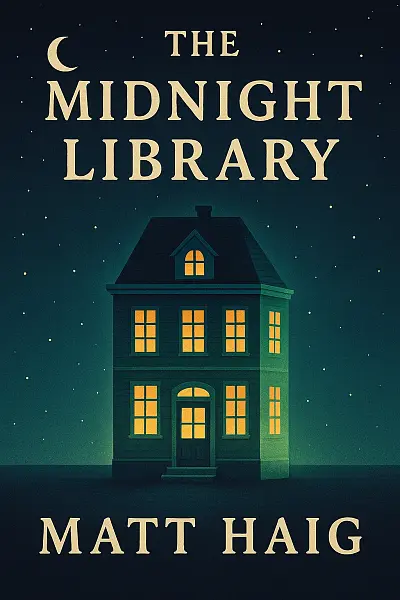
The Midnight Library
by: Matt Haig
Nora Seed is drifting through life, weighed down by regret and sadness, until she lands in the mysterious Midnight Library—a place between life and death where each book lets her step into a different version of her own story. Suddenly, she’s offered the ultimate second chance: the possibility to erase old mistakes and discover if happiness is just one different choice away.
But with every new life Nora tries, she faces fresh dilemmas and realizes that chasing “what could have been” isn’t as simple—or safe—as it sounds. The Midnight Library pulses with hope and emotional intensity, its whimsical yet thoughtful tone nudging readers to reflect on meaning, second chances, and what truly makes life worth living.
"Every unlived life is merely a story waiting for the courage to turn its first page."
Let's Break This Down
The Author's Voice
Atmosphere
Dreamlike, bittersweet, and quietly magical—the book wraps you in a gentle, contemplative mood from the first page. There’s a soft glow to every scene, whether in the gray melancholy of Nora’s real world or the shimmering possibility of the library. The atmosphere walks the line between whimsical possibility and poignant sadness, perfect for late-night musings or curling up with a cup of tea.
Prose Style
Clear, approachable, and heartfelt. Haig’s writing skips over pretension, opting for crisp, accessible sentences that make weighty themes feel personal and conversational. He peppers in philosophical musings, but always in an easy-to-digest way. Every page feels inviting, with dialogue and description kept tight and uncluttered. There’s a quiet earnestness to the prose—it aims for emotional resonance without flowery detours.
Pacing
Steady, reflective, with bursts of momentum. The book moves at a thoughtful pace, pausing often to explore Nora’s inner world and the emotional implications of her choices. Don’t expect breakneck thrills, but rather a steady rhythm that mirrors Nora’s journey through possibility and regret. Short chapters and sharp scene shifts keep the story moving, while introspective passages slow you down just enough to breathe in its message.
Dialogue & Character Voice
Intimate and authentic. Conversations aren’t flashy but feel natural—like snippets you’d overhear in a quiet café. Nora’s voice in particular is candid, vulnerable, and relatable, drawing you into her doubts, hopes, and discoveries. Secondary characters are sketched with just enough color to be memorable without overwhelming Nora’s story.
Emotional Tone & Themes
Uplifting with a thread of melancholy. This is a novel for anyone who’s ever wondered “what if?”—it’s equal parts hope and regret, exploration and acceptance. The emotional tone is encouraging but honest, unafraid to dip into sadness or anxiety before surfacing with optimism. Themes of choice, second chances, and meaning run throughout, handled with warmth and sincerity.
Overall Feel
This is a gentle, life-affirming read with a philosophical twist—think “It’s a Wonderful Life” meets cozy contemporary fiction. Matt Haig’s style invites you to linger, ponder, and maybe see your own crossroads a little differently. Expect introspection, possibility, and a writing style that feels like a soft guiding hand through the dark.
Key Moments
- Infinite doors, infinite regrets—Nora’s dizzying journey through “what ifs” you’ll feel in your bones
- Slipping on new lives like secondhand sweaters—every chapter, a new universe of heartbreak and hope
- Mrs. Elm, the wry librarian who’s equal parts mentor and mystery—she steals every scene
- Glorious, gut-punching meditation on second chances—Haig makes existential dread almost comforting
- “The only way to learn is to live”—this line lands like a revelation
- Time-bending library shelves stacked with witty, philosophical banter and hushed melancholy
- Nora’s root of despair—unforgettable “Ash panic” chapter where she faces her darkest fear
Plot Summary
The Midnight Library follows Nora Seed, who, drowning in regret and depression, decides to end her life. She wakes up in a mystical library run by Mrs. Elm, where every book represents a different path her life could have taken if she’d made different choices. Nora explores alternate realities—being a rock star, a glaciologist, a cat owner, and more—each revealing unexpected outcomes and disappointments. Eventually, she realizes that no life is perfect and comes to appreciate the potential and worth of her own original life. The story climaxes as Nora chooses to leave the library and returns to her waking life, inspired to embrace its possibilities.
Character Analysis
Nora Seed is the emotional heart of the story—her struggles with regret, anxiety, and depression make her deeply relatable. Through her journeys into alternate lives, she grows from a woman paralyzed by “what-ifs” into someone who finds meaning in the ordinary and learns to forgive herself. Mrs. Elm, the librarian, acts as a wise guide, pushing Nora to explore her choices. Supporting characters, seen in the fragmented lives Nora experiences, help her re-evaluate her relationships and self-worth, adding layers to Nora’s development even if they’re not fully fleshed out themselves.
Major Themes
The novel dives deep into the concept of regret—how dwelling on past mistakes can consume us, and why it's important to accept our imperfections. Another huge theme: the idea of parallel lives, inviting readers to imagine all the “what-ifs”—but showing that every life has challenges. Haig also explores the value of existence and mental health, with Nora’s journey moving from despair to hope. The theme of choice and possibility is woven throughout the story, ultimately celebrating the beauty of ordinary life.
Literary Techniques & Style
Haig’s style is clear, direct, and approachable, using simple language to tackle complex existential questions. The Midnight Library concept itself is a powerful symbol for liminality and choice, with the countless books representing infinite possibilities. Metaphors are sprinkled throughout—life as a chessboard, the library as a crossroads. Haig uses a nonlinear narrative as Nora jumps between realities, creating a structure that mirrors the uncertainty and unpredictability of life itself. Dialogue is natural but sometimes leans toward being a bit on-the-nose, sacrificing subtlety for clarity, which works well for younger readers or anyone new to these deep themes.
Historical/Cultural Context
Set in contemporary Britain, the novel draws on current conversations around mental health, loneliness, and personal fulfillment. The COVID-19 pandemic hovers subtly in the background, shaping themes of isolation and hope, even if not explicitly mentioned. The story reflects a broader cultural focus on wellbeing and self-discovery, resonating with a modern audience seeking meaning in a complicated world.
Critical Significance & Impact
The Midnight Library made a splash due to its comforting approach to heavy issues like regret and suicide, quickly becoming a bestseller and book club favorite. Critics have praised its optimistic take on mental health without shying away from darkness, though some note its simplicity may gloss over complex emotional realities. Its broad appeal and accessible style have made it a go-to recommendation for readers of all ages, helping to destigmatize mental health struggles in literature.
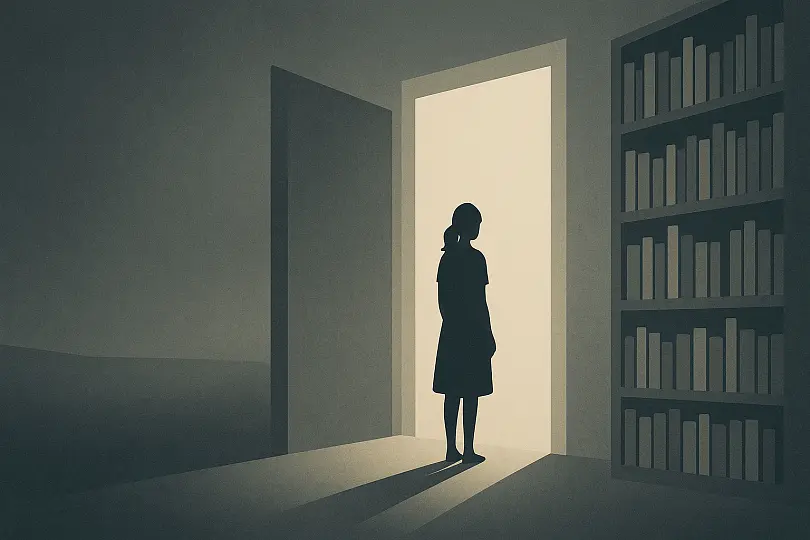
Infinite lives, infinite regrets—a chance to rewrite your own story
What Readers Are Saying
Right for You If
If you’re the sort of reader who loves stories about second chances, magical realism, or exploring the “what ifs” in life, The Midnight Library will be right up your alley. Seriously, this book is tailor-made for folks who enjoy a little introspection mixed with an imaginative twist.
- Big on emotional journeys? If character growth and self-discovery tug at your heartstrings, you’ll probably fall for Nora’s story.
- Fans of “sliding doors” moments—people who obsess over paths not taken and alternate realities—are going to find this book totally addictive.
- If you’re into books like Eleanor Oliphant is Completely Fine, The Alchemist, or anything that makes you feel seen when you’re stuck in life, add this one to your list.
- It’s also perfect if you appreciate a gentler take on mental health themes—serious topics are here, but handled in a warm, hopeful way.
But honestly, if you want non-stop action, tons of plot twists, or really gritty, realistic fiction, this probably isn’t your jam. The pace is more reflective than fast, and it leans pretty heavily into life lessons and feel-good vibes. If “uplifting with a pinch of magic” isn’t your scene, or if you roll your eyes at books that wear their heart on their sleeve, you might want to skip this one.
Overall: Pick it up if you like moving, thoughtful reads with a splash of fantasy and a big dose of hope. Maybe give it a pass if you prefer your fiction darker, messier, or more high-octane.
What You're Getting Into
Step into The Midnight Library, where between life and death lies an infinite library filled with books, each offering a glimpse of what could have been.
Nora Seed, wrestling with regret and disillusionment, finds herself with the chance to explore alternate versions of her life, guided by the mysterious rules of this magical place.
💫 Blending hope, melancholy, and a touch of whimsy, this novel invites you to imagine how different choices can reshape everything, all while asking what it really means to find happiness.
Characters You'll Meet
-
Nora Seed: The heart and soul of the story, Nora is a deeply regretful woman at her lowest point, exploring countless alternate lives in the Midnight Library as she searches for meaning and a reason to live.
-
Mrs. Elm: Nora’s wise and compassionate childhood librarian, who acts as her guide in the Midnight Library, encouraging her to confront regrets and consider the possibilities of her life.
-
Joe Seed: Nora’s estranged brother, a symbol of lost connections and missed opportunities, whose relationship with Nora is explored and reimagined in several of her alternate lives.
-
Ash: Nora’s kind-hearted former neighbor and potential romantic interest, appearing in different versions of her life and representing paths not taken.
-
Dan: Nora’s ex-fiancé, who serves as a reminder of roads chosen and abandoned—their broken engagement is just one of the many regrets Nora must face on her journey.
More Like This
If you found yourself captivated by the whimsical soul-searching in The Time Traveler’s Wife by Audrey Niffenegger, you’ll absolutely click with The Midnight Library’s meditative journey through alternate realities and the bittersweet possibility of what might have been. Both novels peel back the layers of life’s regrets and yearning, but while Niffenegger uses time travel as a metaphor for loss and love, Matt Haig threads his exploration through endless libraries of possibility—each book a doorway to a life unlived.
Similarly, readers who devoured Oona Out of Order by Margarita Montimore will sense a familiar pulse in Haig’s novel. Montimore’s playful take on time jumps and the unpredictability of fate dovetails smoothly with the way The Midnight Library allows its protagonist to wander among infinite personal timelines, searching for meaning, redemption, and a reason to start again. Both stories invite us to question if happiness is a destination, or something deeper that we carry with us, no matter the path chosen.
And, if you were ever haunted—in all the best ways—by the vivid tapestry of It’s a Wonderful Life, you’ll notice how Haig’s narrative echoes the film’s core questions about existence, worth, and the myriad ways our choices shape the world. The library’s dreamlike sequences and heartfelt what-ifs channel the same honest curiosity and emotional catharsis as George Bailey’s mythical Christmas Eve reckoning. In every sense, The Midnight Library taps into a universal longing to understand where we belong, making it richly resonant for fans of introspective, transformative storytelling.
Critic's Corner
What if every regret was a doorway? The Midnight Library by Matt Haig dares us to face the dizzying breadth of lives unlived, to confront that very human itch: What if I’d chosen differently? It’s a bold, moving invitation to step into a liminal realm—between despair and possibility—where existential questions suddenly pulse with thrilling, urgent heat.
Haig’s writing style is disarmingly direct, almost conversational, making the book remarkably accessible—even comforting—for those wrestling with their own shadows. The prose avoids ornate flourishes in favor of simplicity, yet there’s an undeniable poetic undertone to his imagery (think: shelves stacked to infinity, each book a shimmering “what might have been”). He leans on brisk chapters and a tight, interior narration that pulls the reader straight into Nora’s aching headspace. This intimate narrative technique allows Haig to sketch both the outer oddity of the Midnight Library and the messy inner world of its protagonist. He plays with structure cleverly, using the “book within a book” conceit to explore different realities without ever losing narrative momentum. Yet, the risk of repetition looms—the many alternate lives sometimes blend together, and secondary characters can feel like shadows rather than flesh-and-blood presences. Still, Haig keeps the emotional stakes real and relatable.
In terms of thematic depth, the novel hums with questions of regret, meaning, mental health, and the nature of happiness. Haig doesn’t shy away from darkness: Nora’s depression is handled with honesty, neither romanticized nor trivialized. But the heartbeat of the book is hope—radical, stubborn, and vital. Haig weaves in gentle philosophy, from Henry David Thoreau to quantum possibility, gently nudging readers to ask themselves what really matters when choices seem infinite. It’s this fusion—of deeply personal anguish with universal dilemmas—that gives the story cultural resonance, especially in an era when anxiety and regret feel almost epidemic. The library as a liminal space amplifies our cultural fixation with self-optimization and “perfect lives,” but Haig’s answer is generous and humane: perfection is neither real nor necessary.
Within the tradition of speculative fiction and contemporary fables, The Midnight Library owes a stylistic debt to works like It’s a Wonderful Life and Kate Atkinson’s Life After Life, yet Haig’s approach is more direct and less ornate. Fans of his previous work, such as “Reasons to Stay Alive,” will recognize his empathy-driven storytelling and his hopeful, gently didactic voice. The book stands out in the current wave of accessible literary fiction addressing mental health and meaning, offering consolation without condescension.
That said, Haig’s earnestness can sometimes tip into the obvious, and his themes, while poignant, are often delivered with a heavy hand rather than left to shimmer in ambiguity. But for many readers, especially those craving connection and affirmation, this book will feel like both a comfort and a call to action. At its best, The Midnight Library is a tender, resonant reminder: our lives are imperfect, but dazzlingly precious all the same.
Community Thoughts
I still hear Mrs. Elm’s calm voice when I can’t sleep, replaying her wisdom about regrets and possibilities. The Midnight Library made me question every little choice I’ve ever made. Haunting, beautiful, and totally unsettling at 2am.
I swear, after Nora opened that book and reality just started to BEND, my brain refused to shut up at 2 a.m. It’s like each life screamed at me to rethink every regret. Thanks, Matt Haig, for the existential insomnia.
What just happened? I finished The Midnight Library and I keep thinking about Mrs. Elm. Was she a librarian or some cosmic guide? My brain feels scrambled, but I think I liked it? Still not sure if I understand what really happened.
I CAN'T STOP THINKING ABOUT THE LIBRARIAN, MRS. ELM. She creeped into my dreams and made me question every choice I’ve ever made. Her calm, quiet presence is now forever lurking in my mind’s dark corners.
ok so i literally could NOT stop thinking about Mrs. Elm. she's just sitting there, mysterious and wise, like some cryptic librarian Yoda, popping up in my dreams now thanks a lot midnight library
Leave Your Review
Local Take
Why It Matters
The Midnight Library by Matt Haig totally strikes a chord with readers here, thanks to a bunch of relatable themes and cultural crossovers:
-
Regret and Second Chances: In a society where family expectations and social pressure often dictate choices, Nora’s journey through her possible lives echoes the “what if” daydreaming so common here. It’s almost a parallel to people questioning the road not taken after big societal changes or during economic booms and busts.
-
Mental Health: The book’s exploration of depression and healing feels especially poignant, considering local conversations still carry stigma but are growing more open. Nora’s struggles make readers feel seen and less alone, which really matters.
-
Individual vs. Duty: While Nora’s quest for self-fulfillment challenges the more collectivist leanings of this culture, it also nudges readers to ponder their own balance between personal happiness and family obligations—a tension at the heart of so many local stories.
-
Echoes of Magical Realism: The “in-between worlds” of the library might remind fans of beloved local authors who use similar dreamy settings to reflect on life and fate, but Haig’s accessible, gently philosophical tone feels fresh and universally inviting.
Food for Thought
Notable Achievement:
The Midnight Library by Matt Haig became a massive international bestseller, spending months on bestseller lists and quickly surpassing one million copies sold worldwide, while also being selected for numerous book clubs—including the prestigious Reese’s Book Club—thanks to its relatable themes of regret, hope, and second chances.
Like what you see? Share it with other readers