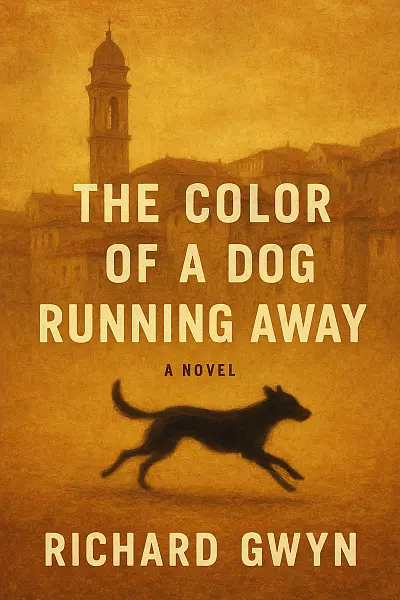
The Color of A Dog Running Away
by: Richard Gwyn
Lucas, a drifting musician and translator in Barcelona’s dreamy Gothic Quarter, leads a laid-back, solitary life until a mysterious note entices him to an art gallery. Suddenly, he’s swept into a world of cryptic invitations, eccentric rooftop dwellers, and the enigmatic Nuria, whose appearance stirs his longing for connection. Their wild affair quickly spirals out of the ordinary when both are abducted by a cult obsessed with reviving ancient beliefs.
As Lucas struggles to break free and win Nuria back, reality blurs with fantasy, and every step forces him to question love, truth, and his own sanity. Will he escape, or get lost chasing shadows?
""In chasing shadows through unfamiliar streets, we find the shape of our own longing.""
Let's Break This Down
The Author's Voice
Atmosphere
Moody, hypnotic, and intriguingly off-kilter. The book completely immerses you in a strange, dreamlike Barcelona where reality blurs at the edges. Expect foggy backstreets, haunted churches, and an ever-present sense of unease. There's a subtle surrealism to every scene, making the city itself feel almost like a sentient, shifting character.
Prose Style
Lyrical, poetic, and lushly descriptive. Richard Gwyn loves sensory detail—smells, colors, shadows, and sounds leap off the page in unexpected ways. The language veers between sharp, jazz-like rhythms and stretches of languid, atmospheric description. Dialogue feels natural yet slightly stylized, giving characters an enigmatic edge. If you like prose that takes its time to savor a mood, you'll be drawn in here.
Pacing
Measured, with pulses of sudden momentum. The story unfolds at a gentle, sometimes meandering pace, pulling you along more through mood and curiosity than blazing action. Yet, just when you settle into the novel’s groove, Gwyn throws in bursts of suspense or mystery that jolt you awake. It’s a slow burn, designed for readers who appreciate lingering in strange places before being swept off their feet.
Character Development
Mysterious, introspective, and elusive. Characters—especially the narrator and his enigmatic acquaintances—are painted in hazy, shifting shades. Don’t expect neat psychological profiles; instead, you get fragments and secrets that deepen the feeling of uncertainty. The emotional interiority is compelling, and motivations are gradually revealed, making you second-guess everyone’s intentions.
Themes
Identity, alienation, and the surreal weirdness of love and longing. At its core, the book is a meditation on the search for meaning in a world that resists understanding. Gwyn explores how we become lost—in places, in passions, in the labyrinths of our own minds. Expect existential undertones and a rich tapestry of symbolism threading through every encounter.
Overall Impact
Haunting, immersive, and slightly disorienting, The Color of A Dog Running Away is perfect for readers who crave atmosphere over breakneck plot. Gwyn’s writing casts a spell, bringing to life a city and state of mind that linger long after you close the book. It’s not for those seeking straight answers, but if you like your literary mysteries with heart and shadows, you’ll find plenty to savor.
Key Moments
-
“Secret messages tucked inside classical music scores”
-
Barcelona’s shadowy cathedral quarter—where nothing is as it seems
-
A mysterious woman and a vanishing act that will haunt you
-
Surreal, fever-dream encounters with cultish art thieves
-
Cynical, bone-dry humor slicing through every page
-
A dog that materializes at midnight—blurring the lines between omen and salvation
-
Whiplash plot turns as Barcelona’s underbelly is slowly revealed
Plot Summary
If you’re looking for a twisty, atmospheric adventure, The Color of a Dog Running Away absolutely delivers. The story kicks off with Lucas, a translator and music lover in Barcelona, whose life takes a strange turn after he receives a mysterious note under his door. He soon meets Nuria, a captivating stranger, and falls for her, but their burgeoning romance is derailed when both are inexplicably kidnapped by a bizarre religious cult. The plot thickens as Lucas is drawn into a world of cryptic symbols and paranoia, desperate to rescue Nuria while grappling with betrayals and surreal experiences. Ultimately, Lucas escapes the cult, but in a bittersweet twist, he and Nuria’s relationship can’t withstand the trauma, leaving Lucas changed and isolated as the story concludes.
Character Analysis
Lucas feels like a classic literary drifter—outsider, introspective, and stuck in his own head—whose restlessness sets the whole story in motion. At first, he’s languid and detached, but the kidnapping and his quest to free Nuria force him toward courage, resourcefulness, and, ultimately, heartbreak. Nuria is enigmatic, a symbol of mystery and allure; while not as fully fleshed out as Lucas, she drives much of the plot and catalyzes his transformation. Secondary characters like Victor, Lucas’s friend, and the cult members serve as foils and obstacles, highlighting Lucas’s alienation and the bizarre unpredictability of his journey.
Major Themes
At its core, the novel is all about alienation—Lucas is perpetually estranged from the world around him, lost in both the literal and metaphorical labyrinths of Barcelona. The book also plays with identity and self-discovery, as Lucas is forced to confront who he is beneath the city’s shifting surfaces and the cult’s manipulations. The threat and allure of mystery permeate the story, with the cult, the cryptic notes, and even the city itself acting as puzzles only partially solved. Finally, love is both redemptive and destructive for Lucas, shown most devastatingly in the fallout with Nuria after their ordeal.
Literary Techniques & Style
Richard Gwyn’s writing style leans lyrical yet gritty—Barcelona’s hidden corners and the surreal qualities of Lucas’s experiences are rendered with sharp, atmospheric prose. The use of unreliable narration keeps readers guessing about what’s real and what’s imagined, while repetition and dream sequences add to the sense of disorientation. Symbolism is everywhere: the titular “dog” hints at fate, wildness, and the unpredictability dogging Lucas’s path. Gwyn’s frequent use of metaphor and sensory imagery pulls you directly into Lucas’s confusion and fascination with his surroundings.
Historical/Cultural Context
Set in early-2000s Barcelona, the novel is steeped in Catalan culture, architecture, and the lingering shadows of city secrets. It captures a city in flux: modern and dynamic, but still hiding centuries-old mysteries and tensions beneath its cosmopolitan surface. The cult’s presence and the themes of secrecy and alienation also echo real-world questions of identity and belonging, particularly in a city shaped by a complex political and cultural past.
Critical Significance & Impact
While The Color of a Dog Running Away doesn’t have the mainstream recognition of some contemporaries, it’s beloved as an under-the-radar cult favorite for its moody voice and noir-meets-magical-realist style. Critics and readers often single out its evocative sense of place and playful blending of reality and dream in the literary tradition of existential urban novels. Even if it didn’t break sales records, it’s earned a lasting place as a hidden gem for anyone fascinated by cities, mysteries, and the search for meaning in chaos.
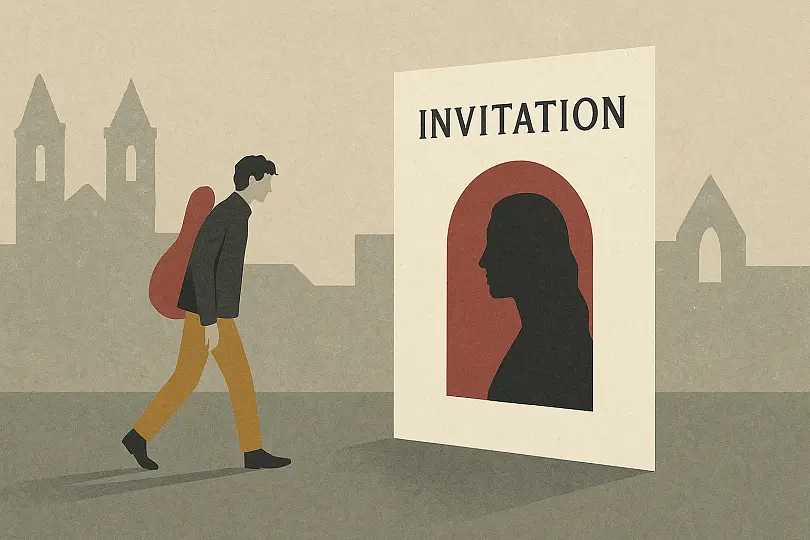
Desire and danger entwine in Barcelona’s shadowy, surreal underworld
What Readers Are Saying
Right for You If
Alright, here’s the scoop on who’s going to vibe with The Color of A Dog Running Away and who might want to pick something else off the shelf:
If you’re all about:
- Moody European settings (think Barcelona’s winding streets and shadowy corners)
- A surreal, slightly off-kilter atmosphere
- Mysterious cults, strange encounters, and a sense of existential adventure
- Stories that blend reality and dreamlike weirdness (fans of David Mitchell, Haruki Murakami, or Paul Auster, this is up your alley!)
…then you’re in for a treat. This book is super immersive if you love getting lost in beautifully written, slightly strange, and atmospheric novels where not everything is spelled out. It’s perfect for people who don’t mind a few question marks at the end and enjoy following a character down a rabbit hole into the unknown.
But, heads up — you might want to skip this one if:
- You need fast-paced, action-heavy plots—this is definitely more about the journey than car chases
- You prefer neat, tidy endings where everything makes perfect sense and all threads are tied up
- You’re looking for traditional thrillers or straightforward mysteries—this book leans hard into the surreal and literary
If you like your stories crystal clear and direct, this might get a little too twisty or ambiguous for you. But if you’re game for something a bit different, atmospheric, and even a little haunting? Definitely give this a shot. It’s the kind of book that sticks with you—and might leave you questioning a few things long after you’ve finished the last page.
What You're Getting Into
Ever wondered what might happen if a quiet translator's life gets turned upside down in the mysterious backstreets of Barcelona?
The Color of a Dog Running Away follows Lucas, who suddenly finds himself swept into a strange and seductive world after a cryptic invitation arrives at his apartment. With its blend of surreal adventure, offbeat romance, and the shadowy allure of an old European city, this book delivers a quirky and even eerie tale about obsession, art, and the secrets swirling just out of reach.
Characters You'll Meet
-
Lucas: The restless translator whose curiosity about a mysterious invitation propels the story. His search for meaning and connection is central, driving both the plot and the book’s atmospheric tone.
-
Nuría: Enigmatic and alluring, she becomes Lucas’s love interest and introduces him to Barcelona’s underground world. Her motivations and loyalties remain ambiguous, adding tension and intrigue.
-
Bernat: The eccentric musician and Lucas’s friend, offering comic relief and a sense of stability. Bernat grounds Lucas while nudging him toward adventure and chaos.
-
Sergi: Charismatic cult leader with a manipulative streak, pulling secondary characters—including Lucas and Nuría—into his mysterious circle. His presence amplifies the story’s suspense and sense of danger.
-
Sara: Mysterious figure with an ethereal allure, often appearing in dreams or in unsettling contexts. Sara’s role blurs the line between reality and illusion, intensifying the novel’s surreal undercurrents.
More Like This
Fans of the labyrinthine urban mysteries in Haruki Murakami’s The Wind-Up Bird Chronicle will find a similar seductive strangeness in The Color of A Dog Running Away. Both novels weave magical realism through the cracks of ordinary city life, drawing you into shadowy underworlds where every clue feels both revelatory and elusive. If cryptic societies and surreal twists are your jam, this will keep you up late turning pages.
At the same time, there’s a dark, obsessive energy to Gwyn’s storytelling that recalls Donna Tartt’s The Secret History. The gradual unraveling of secrets, paired with characters drawn into dangerous, clandestine circles, builds that same delicious sense of unease. If you love intricate plots where people stumble into peril almost by accident, you’ll get lost in these pages.
On the screen, the novel’s blend of European bohemian life and simmering tension conjures the mood of Patricia Highsmith’s The Talented Mr. Ripley—especially the film adaptation with its sunlit settings and undercurrents of menace. The book taps into that seductive cocktail of charm and threat, making Barcelona feel both inviting and shockingly unpredictable.
Critic's Corner
What if the borders between reality and fantasy are no thicker than a slip of paper beneath your door? Richard Gwyn’s The Color of A Dog Running Away throws us into the madcap uncertainty of modern life, challenging whether anything—love, memory, identity—is ever entirely what it seems. It’s a feverish, haunting journey through Barcelona’s shifting shadows, asking us to consider: how much strangeness are we willing to chase in the name of meaning?
Gwyn’s writing is brisk, edgy, and deeply atmospheric. He infuses Lucas’s voice with both wry detachment and aching vulnerability, making it a textural treat for those who enjoy novels that feel lived-in and immediate. Narrative techniques shift on the fly—one moment, intimate first-person, the next, ironic third-person—blurring the line between confession and performance. This narrative shapeshifting cleverly mirrors Lucas’s own crumbling sense of self; Gwyn’s language flickers between sharp humor and lyric melancholy, his metaphors both tactile and unexpected (“the air, thick as molasses…”). But the most impressive sleight of hand is the sustained sense of unreality: dreams bleed into waking life, mythic figures stroll rooftops, and all the while the city itself seems both enchanted and faintly threatening.
Yet Gwyn’s style is never mere window-dressing—the prose is functional, rhythmic, and tailored to the city’s pulse. The pacing is swift but never rushed, waltzing through surreal set-pieces and quieter, booze-soaked introspections. Gwyn peppers the narrative with joyous oddballs—fire-eaters, prophets, cultists—each adding texture and emotional unpredictability. Occasionally, the stylistic verve edges toward self-consciousness, risking alienation for the sake of cleverness, but the emotional stakes keep things grounded.
Beneath the dazzling surrealism, this novel is preoccupied with disconnection and longing. Lucas drifts, not just through Barcelona, but through the stories others assign him—and those he invents for himself. The cult subplot, with its ancient conspiracies and mystical overtones, exposes deep-seated human yearnings: the need for belonging, the peril of certainty, the cost of belief. Gwyn asks tough questions: When does storytelling liberate and when does it imprison? He’s especially sharp on the narcotic haze of contemporary life, the way relationships stumble between liberation and captivity. The city, rendered in rich gothic hues, becomes both labyrinth and sanctuary—a stunning meditation on place as a form of identity, yet never comfortably home. Reading this now, in an era obsessed with authenticity and performance, feels eerily prescient: Gwyn is less concerned with answers than the visitation of radical, beautiful doubt.
For aficionados of surreal urban tales—think early Murakami, Patrick Modiano, or Jeanette Winterson—this book belongs in your stack. While it echoes tradition, Gwyn’s Barcelona is uniquely his own: less a backdrop than a living organism, coconspirator to every fever-dream and heartbreak.
If the novel has a flaw, it’s an occasional overindulgence in clever narrative tricks that can leave readers feeling deliberately unmoored, risking style over emotional resonance. Yet its ambition and originality are hard to dismiss. The Color of A Dog Running Away is a gorgeous, unnerving love letter to the city and to bewilderment—it lingers, like a strange dream, long after you’ve woken up.
Community Thoughts
okay but why did that scene with the church bells feel like a portal opening? i literally paused and stared at the wall. this book snuck under my skin and now i can't hear bells without thinking of that strange, electric unease.
i was just reading, minding my own business, and then THAT SCENE with the mysterious woman and the red scarf hit me. Suddenly, the whole book spiraled into something darker and way more intense than i expected.
So I picked up The Color of A Dog Running Away thinking it’d be a breezy read, but now I keep seeing mysterious cats in my dreams. Gwyn’s surreal Barcelona messes with your head. Can’t stop thinking about that cryptic stain on the wall.
I nearly put it down after the church scene but curiosity yanked me back in. The bizarre twists kept me guessing and by the end, I was weirdly glad I stuck around. If you like mind-bending detours, this one’s for you.
I still can't get the image of the mysterious woman in the blue coat out of my mind. Her presence lingered long after I closed the book, haunting my dreams and making me question reality. This novel sticks with you in the strangest way.
Leave Your Review
Local Take
Why It Matters
The Color of A Dog Running Away by Richard Gwyn really strikes a chord with readers in Spain, especially those in Barcelona, where the novel unfolds. The book’s mysterious underworld and sense of alienation echo the city’s own history of political secrecy and underground rebellion during Franco’s regime and its aftermath. The search for identity and encounters with secret societies strongly parallel Spain’s efforts to reclaim hidden histories after decades of silence—you can totally feel those cultural residues.
The novel’s fascination with art, music, and surreal, almost magical events taps into Spain’s long tradition of blending reality with the fantastic—think Lorca, Dalí, or even the spirit of La Movida Madrileña. Still, Gwyn’s outsider perspective can sometimes clash with local sensibilities—his depiction of Catalan culture walks a fine line between admiration and cliché, and some locals might roll their eyes at certain stereotypes.
But honestly, that feeling of being adrift and searching for meaning? It completely resonates with a generation shaped by rapid urban change and lingering questions of identity. In this sense, the novel challenges but also connects with Spanish literary traditions—mixing noir, existentialism, and the “Barcelona novel” into something strangely familiar yet refreshingly offbeat.
Food for Thought
Notable Achievement:
The Color of A Dog Running Away by Richard Gwyn has garnered a cult following among readers who appreciate atmospheric, unconventional literary thrillers. Its unique blend of magical realism, vivid Barcelona setting, and explorations of identity and obsession have made it a standout favorite for fans of literary fiction seeking something off the beaten path.
Like what you see? Share it with other readers