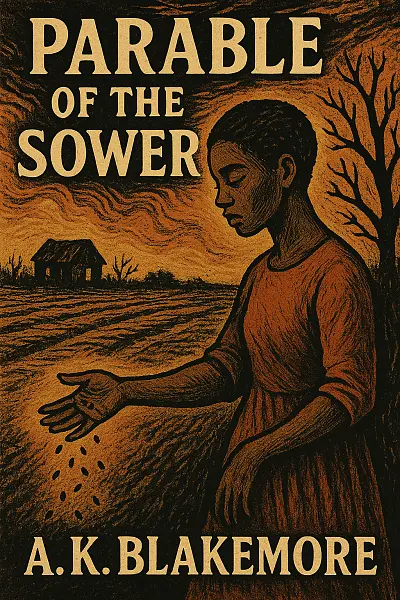
Parable of the Sower
Lauren Olamina lives in a walled enclave outside Los Angeles, clinging to safety while the world outside crumbles into chaos and violence. She’s hyper-aware, wrestling with her unique empathy, desperate to protect her family and hold onto hope.
Everything changes when a devastating fire destroys her home, leaving Lauren alone and vulnerable. Forced into the lawless wilds, she bands with other survivors, journeying north through a nightmarish landscape where trust is a luxury and danger lurks everywhere.
Driven by the fierce belief that humanity can still be saved, Lauren risks everything to spread her new vision. Will her fragile hope survive?
""Hope is not a shelter, but the courage to build new walls when the old ones crumble.""
Let's Break This Down
The Author's Voice
Atmosphere:
Bleak, immersive, and unflinchingly raw—Butler drops you straight into a crumbling near-future Los Angeles where hope feels scarce but never entirely lost. The air in Parable of the Sower is thick with menace, tension, and uncertainty, yet moments of tenderness and human resilience cut through like rare bursts of sunlight. You’ll find an unsettling blend of grim realism and measured optimism that lingers long after you turn the last page.
Prose Style:
Direct, spare, and insightfully observant—Butler’s writing is crisp, uncluttered, and sharply introspective. Most of the story unfolds through Lauren’s journal entries, giving you an intimate, confessional vibe. Expect vivid details in select, deliberate strokes—never flowery, always purposeful—with dialogue that rings true and understated, adding real emotional punch.
Pacing:
Measured but relentless—the narrative unfolds at a steady, thoughtful rhythm. There are no frantic chases or sudden shifts—tension builds gradually, layer by layer, as each hardship and revelation lands with weight. Butler balances passages of quiet reflection with bursts of violence and danger. The world changes slowly but inexorably, keeping you unsettled and invested without ever feeling rushed.
Dialogue:
Authentic, powerful, and concise—Butler’s characters speak with a bluntness shaped by desperation. Conversations are layered with fear, hope, and sometimes biting wit, always serving to reveal motivation and vulnerability. You’ll find few wasted words; every exchange feels loaded with intent.
Mood & Tone:
Somber, earnest, and fiercely hopeful—a palpable sense of loss runs through every page, yet Lauren’s unwavering determination and vision for something better keep the story from sinking into despair. Expect to feel the weight of tragedy, but also the galvanizing force of belief and community.
Imagery & Setting:
Gritty and tactile—the world is painted with just enough detail to evoke its dangers and hardships. From the burning walls of collapsing neighborhoods to the overgrown, dangerous highways, the setting feels hauntingly real but never overwhelming. Butler trusts your imagination to fill in the ash and shadows.
Structure:
Journal format, episodic yet cohesive—entries often open with Lauren’s philosophical musings or scraps of her burgeoning Earthseed faith. The structure gives you an intimate lens on her transformation, making the unfolding crisis feel immediate and personal.
Overall Vibe:
If you’re drawn to thought-provoking, emotionally charged dystopian fiction with a quietly powerful protagonist and writing that pulls no punches, Parable of the Sower will stick with you long after you close the book.
Key Moments
-
Bullet-ridden collapse of Robledo—grief, fire, and the end of safety in one unforgettable night
-
Lauren Olamina’s “hyperempathy” curse—compassion as both weapon and wound
-
Earthseed verses sprinkled like prophecies—philosophy and survival manual in poetic lines
-
The harrowing road north—ragtag survivors, shocking betrayals, raw hope on scorched highways
-
Jaw-dropping scene: desperate escape through burning Los Angeles, fear literally crackling around every turn
-
Doomsday realism meets spiritual yearning—Butler’s voice is unsparing, direct, and always daring
-
Change is God—Earthseed’s radical faith reshapes every page, every choice, every future
Plot Summary
Parable of the Sower dives right into a fractured near-future America, where Lauren Olamina lives in a gated enclave outside Los Angeles. When her community is violently destroyed and her family killed during a raid, Lauren is forced to flee north on foot, braving chaos, poverty, and predatory gangs. Along her harrowing journey, she gathers a diverse group of survivors, united by the hope she finds in her self-created faith, Earthseed. The story climaxes as Lauren and her followers establish a fragile new beginning at Bankole’s land, planting the seeds—literally and spiritually—of a new society. The novel ends with Lauren’s hopeful vision for the future, even in the midst of continued uncertainty and danger.
Character Analysis
Lauren Olamina stands out as a deeply empathetic and pragmatic protagonist, shaped by her unique hyperempathy syndrome and her father’s teachings. She transitions from a cautious but quietly radical teenager to a decisive leader who crafts Earthseed as a new guiding philosophy. Supporting characters like Harry and Zahra start as reluctant companions but become loyal allies; their vulnerabilities and growth highlight the power of community amidst trauma. Bankole’s wisdom and grief echo the losses experienced throughout, and together the group exemplifies adaptability, survival, and hope.
Major Themes
At its heart, the novel tackles survival dystopia, exploring how individuals maintain morality and build community in a lawless world. The transformative theme of change is encapsulated in Earthseed’s central belief: “God is Change,” pushing characters to adapt or perish. Faith and belief systems are critiqued and reimagined—Lauren’s Earthseed offers both structure and liberation against collapsing institutions. There’s also a sharp lens on issues like racial inequality, environmental devastation, and gender power dynamics, making the story feel urgently relevant and thought-provoking.
Literary Techniques & Style
Butler channels Lauren’s voice through diary entries, creating an intimate, raw, and immediate narrative that pulls you right into her psyche. The prose is spare and unflinching, yet threaded with lyrical moments, especially in descriptions of the ruined landscape. Symbolism runs deep—Hyperempathy becomes a metaphor for radical compassion, while fire and seeds recur as emblems of destruction and rebirth. Butler masterfully uses foreshadowing and episodic structure to build tension and depict the incremental collapse of society.
Historical/Cultural Context
Originally published in 1993 but set in the 2020s, the novel eerily forecasts rising economic inequality, mass displacement, and climate change—issues that now seem even more pressing. Against a backdrop reminiscent of both the Dust Bowl and Rodney King-era Los Angeles, Butler draws on real fears of social disintegration, racial violence, and governmental failure. The book also reflects and challenges cultural conversations about family, religion, and what it takes to foster resilience in the face of disaster.
Critical Significance & Impact
Parable of the Sower is widely celebrated as a visionary, genre-defying work—mixing classic science fiction with philosophical and social critique. Butler’s characters and prematurely prescient warnings have made the novel a staple in college and high school classrooms, sparking discussions around activism, justice, and inclusivity. Its lasting influence is seen in its continued resonance with contemporary headlines and its inspiration for numerous writers, activists, and readers searching for hope and change in dark times.
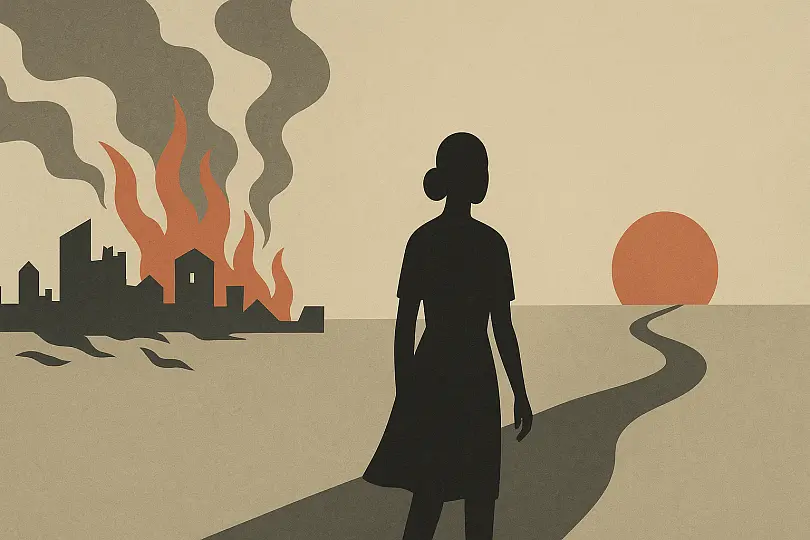
Survival demands hope in a world undone by chaos and empathy.
What Readers Are Saying
Right for You If
If you’re into dystopian stories that actually make you think, Parable of the Sower totally needs to be on your list. This one’s for folks who love gritty, realistic sci-fi—not the spaceships and ray guns kind, but the “what-if-the-world-falls-apart” kinda vibe.
- If you like novels with rich, layered worlds and strong, unique protagonists, especially women navigating brutal societies, you’ll probably fly through this. Lauren is one of those characters you don’t forget—super compelling and easy to root for, even when her world is terrifying.
- Fans of post-apocalyptic stories like The Road or Station Eleven will eat this up, but it’s way more focused on hope, survival, and building something new from scratch.
- If you enjoy books that tackle big themes—like faith, community, and what it means to survive morally when everything’s gone sideways—this one’s got layers for days. Think Margaret Atwood but with a little more rawness and edge.
But real talk—if you’re looking for something fast-paced or action-packed, this might feel slow to you. The story lingers in its world-building and really digs into people’s inner lives, so if you want a breezy read, maybe steer clear. Same goes if you need your dystopias with a dose of escapism, because Butler does not sugarcoat the darkness here.
So basically, if you love smart sci-fi with a social conscience and can handle some intense (and honestly, pretty bleak) subject matter, you’ll find so much to love. But if you’re strictly after happy endings or lots of explosions, you might want to pass—there’s a lot of surviving and soul-searching, but not much mindless fun.
What You're Getting Into
Set in a near-future California ravaged by climate disaster and social collapse, Parable of the Sower follows teenage Lauren Olamina as she searches for hope and safety in a world where basic survival is never guaranteed.
Driven by a fierce sense of purpose and her unique worldview, Lauren must navigate relentless danger while forging unlikely connections with those around her.
This gripping, thought-provoking journey is as much about confronting a broken society as it is about discovering what it means to build something new from its ashes.
Characters You'll Meet
-
Lauren Olamina: Brilliant, fiercely determined protagonist who creates the Earthseed philosophy to survive and inspire hope amidst societal collapse. Her hyperempathy and leadership drive the group’s journey and transformation.
-
Keith Olamina: Lauren’s rebellious younger brother whose choices highlight the perils of their world and serve as a cautionary counterpoint to Lauren’s vision.
-
Bankole: A compassionate, pragmatic doctor who becomes Lauren’s partner and supports her mission. His wisdom and stability help anchor the group during times of crisis.
-
Harry Balter: A loyal but hesitant member of Lauren’s group, whose growth and struggles embody the ordinary person’s challenge in confronting harrowing realities.
-
Zahra Moss: Resourceful and resilient, Zahra escapes from an abusive past to become a vital ally to Lauren, illustrating strength and adaptability in adversity.
More Like This
If you couldn’t get enough of Margaret Atwood’s The Handmaid’s Tale, Parable of the Sower will absolutely grip you with its fierce blend of dystopian grit and razor-sharp social commentary. Both novels paint harrowing portraits of near-future societies where oppressive forces threaten individual agency, but Butler’s unique focus on adaptation and community breathes fresh energy into the genre.
Fans of Cormac McCarthy’s The Road will quickly notice parallels in Butler’s depiction of a crumbling America, where the journey motif isn’t just about physical survival but also the evolution of moral codes and human connection. While McCarthy drills down into bleak minimalism, Butler offers a more hopeful glimpse of humanity banding together against the darkness, making the emotional journeys of both stories resonate in surprisingly different yet powerful ways.
On the screen, Parable of the Sower echoes the raw, immersive worldbuilding of The Walking Dead. Like the survivors in that series, Butler’s characters face shifting alliances, lurking menace, and the constant question of what’s worth preserving when society collapses. The emotional stakes spike as trust, desperation, and hope collide—if you’re drawn to survival dramas with complicated, ever-adapting heroes, Butler’s masterpiece makes for a truly compelling literary journey.
Critic's Corner
What does it mean to imagine hope amid ruin?
Octavia E. Butler’s Parable of the Sower doesn’t flinch from asking how—when society crumbles, compassion becomes a burden, and the world feels ferociously hostile—anyone could possibly build something better from the ashes. Its vision of dystopian America is searing, yet the spark Butler kindles is neither easy optimism nor nihilism: it’s something ruthlessly practical, deeply spiritual, and achingly human.
Butler’s craft is strikingly lean and direct, yet it bristles with subtext. Her prose is deceptively simple, almost journalistic, perfectly suited to Lauren Olamina’s stark worldview. The novel’s diary form dissolves distance, pulling us into the trembling immediacy of Lauren’s thoughts—her longing, her fear, her burgeoning philosophy. What really stands out is how Butler weaves Lauren’s hyperempathy into the very texture of the narration: pain—her own, and others’—is rendered with visceral clarity, never overdone, but always present, underscoring every dangerous choice. Dialogue feels authentic, stripped of melodrama, revealing both character and the fragile bonds people cling to as they travel dangerous highways. Butler’s mastery lies in balancing action with contemplation—the journey never stalls, but the existential and moral weight lingers after each chapter.
At its heart, Parable of the Sower is about transformation. Change—as inevitability, opportunity, and threat—is its gospel and its warning. Butler interrogates questions of faith and survival: What kind of god matters when order collapses? Is empathy a curse, a privilege, or a necessity? The book’s invented creed, Earthseed, is not just Lauren’s coping mechanism, but a challenge to the reader: What if hope required radical self-determination and relentless adaptation? The social collapse depicted—rampant inequality, environmental apocalypse, privatized violence—feels both prophetic and chillingly familiar in 2024. Butler never delivers easy answers; instead, she probes the cost of community, the frailty of moral codes under pressure, and the audacity of vision required to imagine a different future. The philosophical provocations here linger long after the final page.
Placed within both science fiction canon and Butler’s own career, Parable of the Sower is a watershed moment. Unlike the escapist futures of earlier dystopias, Butler’s America is uncomfortably close to the bone—its terrors extrapolated from real histories of oppression, poverty, and environmental neglect. Comparatively, it deepens the psychological and spiritual explorations present in her earlier work (Kindred, Wild Seed), infusing post-apocalyptic fiction with a rare blend of ethical urgency and radical empathy. It’s hard not to see its influence on contemporary dystopian lit, from N.K. Jemisin to M.R. Carey.
Yet, the novel isn’t flawless. Some secondary characters can feel more like foils than fully realized people, and Butler’s focus on Lauren’s singular drive occasionally sidelines group dynamics. The relentlessly grim tone, while purposeful, may weary some readers.
Still, Parable of the Sower is essential reading: uncomfortable, bold, and full of hard-won hope. It burns with relevance. In a world increasingly shaped by crisis, it asks not just how we survive, but what kind of future we dare to seed.
Community Thoughts
I didn’t expect to be haunted by Lauren Olamina’s relentless hope. Woke up thinking about her damn journal entries and those seeds. Parable of the Sower plants itself in your head and refuses to leave.
okay but LAUREN OLAMINA just straight up lived in my head for DAYS after finishing this I couldn't stop thinking about her hyperempathy like dang how do you survive that apocalyptic nightmare and still believe in hope
i wasn't ready for lauren's hyperempathy to hit so hard. that scene with her father’s disappearance had me holding my breath. couldn't put it down after that, sleep schedule destroyed. but wow, worth it.
I swear, Lauren Olamina lives in my brain rent free. The way she refuses to give up hope, even when everything is falling apart, made me rethink everything. Butler’s world is terrifyingly real.
Out of nowhere, Lauren Olamina just sticks in your head. I kept replaying her calm in chaos, like, could I ever be that steady? Probably not. She made me question my own survival instincts, honestly.
Leave Your Review
Local Take
Why It Matters
Parable of the Sower hits close to home here, especially when you think about recent social upheavals and movements—from calls for social justice to debates over economic inequality. Butler’s world of community breakdown and migration echoes our own struggles with political divisions and the search for hope during crisis. The protagonist’s resilience and focus on rebuilding totally vibe with cultural values like community solidarity and self-reliance, but her radical questioning of faith might clash with more traditional religious norms that still hold strong for many.
You can feel big parallels with our history of internal migrations and grassroots activism—her journey seriously mirrors how whole communities here have reimagined themselves after disaster. Plot points about dangerous journeys and rebuilding new families from scratch feel heavier here, remembering past natural disasters or social disruptions. Butler totally pushes against our literary love for hopeful redemption arcs—her gritty realism and refusal to make things easy might challenge readers used to more straightforward heroes, but for many, that honesty just makes the story resonate even more.
Food for Thought
Parable of the Sower by Octavia E. Butler has achieved remarkable cultural impact, celebrated for predicting issues like climate change, social collapse, and the rise of radical ideologies. Its influence extends across genres, inspiring activists, educators, and an entirely new wave of socially-aware speculative fiction.
Like what you see? Share it with other readers