Nada
by: Carmen Laforet
Andrea, young and hungry for freedom, moves to Barcelona to study, trading her provincial past for a shot at something more. She lands in her relatives’ shadowy, dilapidated apartment on Calle de Aribau, where tension crackles between her eccentric aunt, volatile uncles, and their mysterious household.
But a taste of her glamorous classmates’ world jolts Andrea—she’s forced to face how deep her own family’s darkness runs. Torn between bleak home life and seductive glimpses of liberation, Andrea must decide whether to endure or escape. Laforet’s writing is raw, atmospheric, pulsing with existential longing—will Andrea ever truly belong anywhere?
""In a world stripped bare by hardship, we find fragments of ourselves in the shadows of what we endure.""
Let's Break This Down
The Author's Voice
Atmosphere
- Brooding and claustrophobic: Laforet conjures a vivid sense of postwar Barcelona steeped in decay and gloom. The air feels heavy, rooms are shadowy, and the city itself seems to close in around the characters.
- Haunting emotional undertones: There’s a lingering sense of melancholy and quiet desperation in every scene, offset by occasional glimmers of hope or humor. The mood is understated but deeply immersive.
Prose Style
- Elegant minimalism: Laforet’s language is unadorned yet piercing, opting for clarity over flourishes. She captures complex emotions with deceptively simple sentences that hit hard.
- Intimate first-person perspective: The narrative feels confessional and raw, drawing readers into Andrea’s inner world in a way that’s deeply personal but never overwrought.
- Subtle symbolism: Without being heavy-handed, the writing often weaves in images of light, darkness, hunger, and confinement—inviting readers to read between the lines.
Pacing
- Leisurely and deliberate: The plot unfolds gradually, prioritizing mood and character over action. Although not fast-paced, there’s always a lingering tension—a sense that anything could fracture at any moment.
- Moments of quiet intensity: The story’s most gripping scenes aren’t big dramatic climaxes, but quiet confrontations, whispered secrets, and tense domestic moments that simmer with unresolved conflict.
Dialogue
- Terse, fraught exchanges: Conversations reveal characters’ anxieties and resentments without spelling everything out. Dialogues often bristle with unsaid words, reflecting fractured relationships.
- Authentic but restrained: The spoken lines feel true to life but never theatrical or excessive, grounding the novel’s emotional power in what’s left unsaid.
Overall Rhythm & Feel
- Moody and introspective: Readers should expect a journey that’s introspective, often dark, and rich in psychological detail. The experience is less about plot twists and more about mood, memory, and navigating fraught family dynamics.
- For lovers of character-driven stories: Laforet’s writing is perfect for readers who savor atmosphere, subtle emotional shifts, and quiet literary power more than fast-moving plots or overt drama.
Key Moments
-
Barcelona’s gothic apartment: suffocating secrets behind every creaky door
-
Andrea’s hunger—both literal and emotional—bleeds through every claustrophobic dinner
-
Ena’s mysterious friendship: daring, dangerous, and devastatingly honest
-
Brutally raw family quarrels ricocheting through the darkness of postwar Spain
-
Laforet’s razor-sharp prose: bleak, beautiful, and unflinchingly intimate
-
An unforgettable last page—bittersweet release and the ache of newfound freedom
Plot Summary
Nada follows Andrea, a young woman who arrives in post-Civil War Barcelona to study at university, expecting freedom and intellectual enrichment. Instead, she plunges into the oppressive, poverty-stricken atmosphere of her relatives’ apartment on Calle de Aribau, where family feuds, secrecy, violence, and psychological games dominate daily life. Andrea's idealism clashes with her harsh living conditions as she becomes entangled in the bitter dynamic between her unbalanced Uncle Juan, his abused wife Gloria, her eccentric Aunt Angustias, and her enigmatic Uncle Román. The story climaxes with Román’s suicide after a disastrous confrontation and mounting family tension, which liberates Andrea from the tangled household. In the end, Andrea leaves for Madrid with her friend Ena, full of unresolved feelings but with a sense of release and the faint hope of renewal.
Character Analysis
Andrea is the lens through which we experience the story—her internal journey from naive hope to hard-earned maturity is the novel’s beating heart. Initially passive and overwhelmed, Andrea gradually gains self-awareness, agency, and the ability to judge those around her, especially through her friendship with the worldly Ena. Other family members remain trapped in cycles of resentment and power struggles: Uncle Román is manipulative and charismatic, plunging those around him into chaos; Juan is brutish and insecure; Gloria is long-suffering yet cunning; and Aunt Angustias imposes suffocating discipline before fleeing herself. Ena’s compassionate yet ambiguous motives toward Andrea and Román highlight the complexities of loyalty and betrayal.
Major Themes
Loss of innocence is front and center—as Andrea’s dreams of the city collapse, she faces disillusionment, but ultimately gains self-reliance. The psychological effects of postwar trauma and poverty are woven into every interaction; the decay and violence within Andrea’s family mirror broader social breakdowns. Laforet questions the boundaries between freedom and imprisonment, both physical (the claustrophobic apartment) and emotional (family ties and secrets). Friendship, especially between women, stands in contrast to familial decay—Ena offers Andrea glimpses of warmth, escape, and possibility.
Literary Techniques & Style
Laforet’s writing is strikingly direct yet luminous, blending realism with poetic introspection. She employs a first-person narrative that creates intimacy and immediacy, immersing readers in Andrea’s shifting perceptions. The apartment’s atmosphere is crafted through vivid sensory detail and recurring motifs of darkness, hunger, and decay, symbolizing the suffocation of postwar existence. Silence, music (Román's violin), and religious imagery serve as subtle metaphors. The pacing is intentionally uneven—prolonged claustrophobic scenes are interspersed with fleeting moments of hope, mirroring Andrea’s emotional turbulence.
Historical/Cultural Context
Set in the grim aftermath of the Spanish Civil War, Nada captures the disillusionment, repression, and deprivation that marked early Francoist Spain. The city’s shabbiness and the characters’ emotional wounds reflect the broader suppression of hopes and liberties experienced under dictatorship. Gender roles, rigid and oppressive, shape every character decision, especially for women like Andrea, Gloria, and Angustias, underscoring their limited agency in a patriarchal society.
Critical Significance & Impact
Nada is a landmark in Spanish literature, celebrated for its raw, unfiltered portrayal of youth and existential crisis in a broken society. Published in 1945 when Laforet was just 23, it won the Nadal Prize and helped usher in a new wave of honest, introspective fiction. The novel’s stark yet lyrical voice continues to resonate, influencing generations of writers and readers exploring coming-of-age, trauma, and the quest for selfhood amidst adversity.
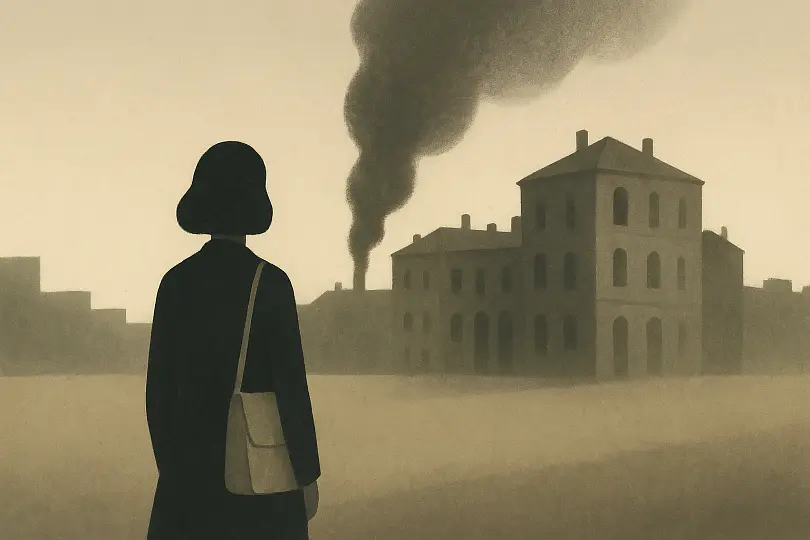
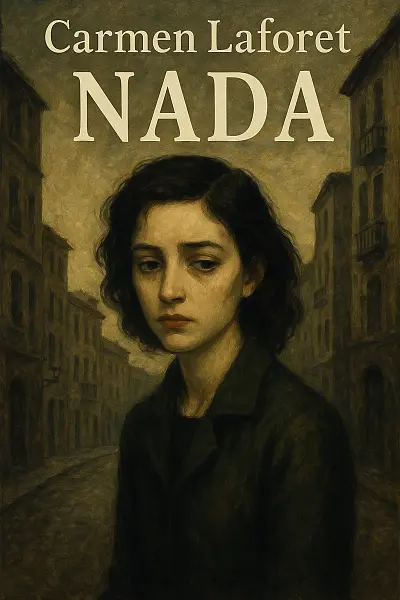
Haunted youth in postwar Barcelona—innocence lost amid crumbling dreams
What Readers Are Saying
Right for You If
If you love atmospheric, introspective novels that really let you soak in a character’s emotional landscape, Nada is totally your vibe. This one’s for readers who get swept up in coming-of-age stories, especially if you’re drawn to novels with a dark, moody edge—think lots of family drama, complicated relationships, and that sense of wandering through the foggy streets of postwar Barcelona.
If you’re into:
- Literary fiction with gorgeous, evocative writing
- Deep dives into identity, isolation, and survival
- Messy, dysfunctional families you love to hate
- Novels that capture a strong sense of place and era
Honestly, you’re gonna be all in. Laforet’s writing is spare but packs so much emotion, and Andrea, the main character, feels so real you’ll want to reach into the book and hug (or shake) her.
But, let’s be real: if you need fast-paced plots or big, dramatic twists, you might find this one a bit slow or even dreary. It’s not a plot-driven page-turner—it’s more about mood and character than action. If descriptions of emotional claustrophobia and subtle social tension don’t appeal, you might start glancing at your phone halfway through.
Also, if you want straightforward, hopeful endings or, honestly, a cast of lovable, relatable characters—well, this book might leave you cold. The family Andrea lives with is a hot mess, and the bleakness is part of the journey.
Bottom line: If you’re a fan of literary fiction with emotional depth, atmospheric settings, and characters you want to overanalyze—add this to your list. If you crave action, light reads, or uplifting family tales, maybe save this one for later.
What You're Getting Into
Nada by Carmen Laforet sweeps you into post-Civil War Barcelona, where young Andrea arrives to live with relatives she barely knows. Navigating a crumbling family home full of eccentric, troubled characters, she finds herself caught between dreams of independence and the suffocating pull of family secrets and poverty. The vibe is intensely atmospheric, mixing coming-of-age struggles with moody, almost Gothic drama—perfect for anyone who loves stories about survival, identity, and the bittersweet longing for freedom.
Characters You'll Meet
-
Andrea: The introspective young protagonist who arrives in Barcelona to attend university, she struggles to find herself amid her fractured family and the oppressive atmosphere of post-war Spain.
-
Angustias: Andrea’s domineering aunt whose strictness and religiosity create a stifling environment, often clashing with Andrea’s desire for autonomy.
-
Román: The enigmatic, manipulative uncle whose unpredictable moods and dark secrets cast a shadow over the household and deeply unsettle Andrea.
-
Gloria: Andrea’s vivacious but troubled aunt-in-law, who is caught in a toxic marriage and frequently tries to escape her dire circumstances, embodying both vulnerability and resilience.
-
Ena: Andrea’s charismatic university friend; her warmth and emotional openness provide Andrea with a glimpse of a different, more hopeful life beyond her oppressive family.
More Like This
Fans of The Bell Jar by Sylvia Plath will find themselves drawn into the insular, oppressive atmosphere that permeates Nada—much like Esther Greenwood’s suffocating world, Andrea’s Barcelona is painted in stark, sometimes claustrophobic strokes that echo a young woman’s fight for meaning amid darkness. If the bleak cityscape and tangled emotional turmoil of* The Catcher in the Rye spoke to you, Laforet’s sharp, intimate observations and raw coming-of-age perspective provide a similarly mesmerizing introspective journey, only this time shadowed by post–civil war anxieties.
On the cinematic front, Nada shares an undercurrent of tension and unresolved desperation reminiscent of Pedro Almodóvar’s “Volver,” where women navigate fractured families and haunted pasts. The crumbling apartment setting, secrets whispered through thin walls, and relentless push-pull between hope and despair bring to mind the layered emotional storytelling Almodóvar captures so well—not so much in plot, but in that spellbinding blend of the ordinary, the tragic, and the strangely magical.
Critic's Corner
What happens to innocence when it’s forced to grow in darkness and decay? Nada by Carmen Laforet asks if hope can sprout amid the ruins—moral, emotional, familial—of a world shattered by war. Through Andrea’s hungry gaze, the novel pulses with urgent questions: What does it mean to come of age when the very structure of your reality offers no guideposts, only ghosts? Laforet’s Barcelona isn’t just a city; it’s a fever dream of secrets and survival, where every kindness comes with a price.
Laforet’s prose, rendered with new freshness in Edith Grossman’s translation, is remarkably lucid yet charged with atmosphere. Her sentences oscillate between almost childlike clarity and searing poetic bursts—never overwrought, always grounded in Andrea’s troubled perceptions. The writing immerses the reader in a labyrinth of smells, sounds, and shadows, masterfully balancing sensory detail with psychological interiority. Narrative restraint is key: Laforet resists melodrama, letting tension simmer in the small cruelties and silent alliances of the household. There’s a cinematic quality to her descriptions—the peeling wallpaper, the oppressive heat, the way voices echo through sunless rooms—inviting the reader into a domestic gothic that’s both claustrophobic and hypnotic. The dialogue, often tinged with irony or veiled menace, further sharpens the sense of living on the edge of both violence and revelation. Laforet’s greatest gift is her unsparing empathy: she gazes deeply into her characters’ wounds without ever sentimentalizing their pain.
At its core, Nada is a meditation on nothingness and resilience. Andrea’s journey is a study in the corrosion of hope and the fragile power of self-assertion. The novel probes the effects of misogyny, poverty, and political trauma in postwar Spain, making the personal profoundly political. Laforet captures the paralysis of a country silenced by dictatorship—where even ordinary familial love feels suspect, dangerous, or suffocating. The recurring motif of hunger (physical, emotional, existential) powerfully mirrors a nation’s starvation for meaning and connection. Yet, against the odds, Andrea’s narrative refuses nihilism: she finds, in fleeting moments of beauty or autonomy, a kind of raw affirmation. The novel also quietly questions the allure and peril of escape—through wealthier friends, romantic fantasy, or artistic ambition—suggesting that both dread and hope are inescapably entangled.
Within the canon of bildungsroman and Spanish postwar literature, Nada stands out for its taut intimacy and the fierce honesty of its female perspective. Unlike the baroque pessimism of Camilo José Cela or the grand historical scope of Ana María Matute, Laforet insists on the small-scale devastations of everyday life. Her work anticipates the psychological acuity of later writers like Elena Ferrante, making it unusually modern in tone. For readers of lost-generation fiction or existential coming-of-age novels, Laforet’s achievement feels both singular and universal.
If the novel sometimes falters, it’s in repetitions of mood—moments where gloom verges on inertia, and ensemble characters blur together. Yet these are minor faults compared to its fierce clarity and emotional resonance. Nada matters now for its unsparing look at survival and hope; it’s a luminous, uncompromising classic that still stings, still sings.
Community Thoughts
I didn't sleep for hours thinking about Gloria, her wild unpredictability just gnawed at my brain. She lingered in the shadows of my thoughts, making me question every family dinner I've ever had. Laforet truly knows how to haunt a reader.
I couldn’t stop thinking about Angustias, her bitterness lingered long after I finished. She’s the shadow in every quiet room, the ache you can’t name. This book wrecked my nerves and made silence feel dangerous.
So Andrea’s hunger practically gnawed at my own stomach. That bleak Barcelona apartment felt like a trap. I kept thinking about Gloria’s secrets and how they stained everything. I stayed up late, unable to leave that suffocating world.
I still hear Román’s laughter echoing after midnight—how does Laforet make one character feel like a ghost in the walls? That ending left me staring at the ceiling, just waiting for the silence to crack.
when roman’s silhouette hovered in the hallway, I swear I felt the air change around me. his quiet intensity lingers long after the last page, like a ghost refusing to leave. can’t stop thinking about him.
Leave Your Review
Local Take
Why It Matters
Nada by Carmen Laforet strikes a deep chord with Spanish readers, especially those familiar with the shadow of the Spanish Civil War. The novel’s haunting atmosphere and depiction of postwar Barcelona echo parallel moments of anxiety, repression, and uncertainty that shaped local families for decades.
- The stark portrayal of generational conflict and crumbling family dynamics lines up with memories of a society in transition, where old values clashed dramatically with hopes for freedom—something so many Spanish households intimately understand.
- Laforet's exploration of female agency and youthful rebellion against suffocating norms challenges the machismo and authoritarian culture often ingrained in Spain’s past, resonating with readers who see themselves or their grandmothers in Andrea’s quiet resistance.
There’s a raw honesty in Laforet’s prose that clashes with the grandiosity of classical Spanish literature—more Galdós than Lorca—standing out in a landscape where emotional restraint and survival trump passion or heroism. It's no wonder so many Spanish readers see Nada as a mirror, both unsettling and deeply familiar.
Food for Thought
Did You Know?
Nada by Carmen Laforet won the inaugural Nadal Prize in 1944 and is celebrated for its powerful influence on postwar Spanish literature, marking a turning point for female authorship and realism in Spain.
Like what you see? Share it with other readers