
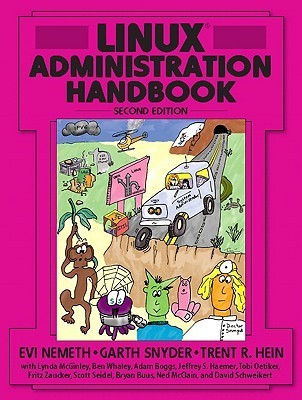
Linux Administration Handbook
Linux sysadmins helm vast, bustling networks, keeping businesses and dreams alive on screens everywhere. Juggling routine tasks and rare crises, they're guided by Evi Nemeth's Linux Administration Handbook, a toolkit honed for the real world.
Everything changes as new distributions and tools disrupt familiar workflows. Suddenly, these pros must master cutting-edge solutions—or risk massive outages and security breaches.
With high stakes riding on every command, admins strive to tame chaos, ensure uptime, and outwit system snafus, all while battling burnout and second-guessing their instincts. Can they stay a step ahead, or will complexity win?
""Mastering Linux is less about memorizing commands and more about understanding how systems think and speak to one another.""
Let's Break This Down
The Author's Voice
Atmosphere
Busy, hands-on, and unapologetically practical—this book plunges you right into the bustling world of systems administration. The environment feels sort of like stepping into an energetic, collaborative tech workshop: there's lots of action, a trace of urgency, and a constant undercurrent of curiosity. There's never a sense of stuffy formality; everything is driven by real-world scenarios, tech challenges, and a steady dose of wry humor that keeps things light even when the content gets heavy.
Prose Style
Punchy, unfussy, and clear—Nemeth’s writing cuts through jargon, but never talks down to the reader. Technical concepts are explained with blunt honesty, unpretentious language, and a sly wink to the reader’s intelligence (“you’ll run into this, so let’s fix it before it breaks your system”). Explanations are often peppered with analogies, real-life anecdotes, and the occasional dry tech-world joke. The prose stays brisk without ever losing clarity, favoring function and understanding over literary flourish.
Pacing
Efficient and brisk, with deliberate stops for deeper dives. The text moves at a good clip, usually zipping from one admin task or concept to the next. It rarely lingers on unnecessary theory—Nemeth prefers to show, not tell. However, when something genuinely complex crops up, she’s willing to slow the tempo, break things down step-by-step, and revisit concepts until you’re confidently on board. The rhythm fluctuates between quick “how-to” bursts and more thoughtful explanations, keeping technical fatigue at bay.
Tone & Mood
Authoritative but inviting. Nemeth’s tone is that of an experienced mentor—no-nonsense, but always rooting for your success. There’s camaraderie and encouragement threaded throughout, as if she’s right there at your terminal, coaching you past obstacles with just enough snark to make you smile. The mood remains energetic and upbeat, transforming daunting admin tasks into achievable goals.
Voice & Engagement
Conversational and collaborative, the voice welcomes questions and never assumes too much. Nemeth addresses the reader directly, anticipates common stumbling blocks, and acknowledges where frustration might creep in. The entire book feels like a troubleshooting session with a trusted expert who’s seen—and solved—it all. The voice is unique: it’s equal parts seasoned sysadmin, problem-solving friend, and wry commentator.
Overall Feel
This is a high-energy toolkit hidden in a friendly guidebook, mixing quick fixes, deeper concepts, and real talk about the messy realities of Linux sysadmin life. Readers can expect a writing style that doesn’t just teach—it empowers, entertains, and cheers you on, making every page a practical step up in confidence and knowledge.
Key Moments
-
Hands-on “try it yourself” command breakdowns that demystify the Linux shell
-
The infamous root user anecdote—equal parts cautionary tale and tech humor
-
Step-by-step rescue missions from real-world system disasters—practical, nerve-wracking, and oddly thrilling
-
Cheeky, deadpan footnotes that make you smirk mid-kernel panic
-
A behind-the-scenes tour of UNIX philosophy: terse, witty, and deeply insightful
-
Legendary troubleshooting checklists that save your hide—right when you’re about to give up
-
The “when not to automate” sidebar—clear-eyed advice you’ll wish you heard sooner
Plot Summary
The Linux Administration Handbook by Evi Nemeth isn’t your classic storybook, but it unfolds like a journey into the core of Linux system administration. The “plot” takes you from the basics—like user accounts and filesystems—gradually building in complexity as you tackle networking, security, automation, and recovery scenarios. There are twists and “plot points” as you learn to troubleshoot real-life problems and discover nuances between different Linux distributions. Instead of a narrative climax, the book crescendos in advanced administrative techniques and multi-server setups. The resolution is the reader’s transformation into a confident, versatile Linux admin, equipped to tackle almost any challenge the OS can throw at them.
Character Analysis
Main “characters” here are the Linux system itself, seen from multiple angles (Debian, Fedora, SUSE), and the admin-in-training—basically, you, the reader. The book treats the Linux OS like a living, evolving presence, revealing its quirks, strengths, and pitfalls. Your development arc spans from uncertain novice to problem-solving expert, with motivations rooted in curiosity, career ambition, and practical necessity. Throughout, the “mentor” figures—Nemeth and co-authors—are patient, witty guides, nudging you past obstacles and giving you confidence to experiment and adapt.
Major Themes
One central theme is mastery through exploration—the idea that Linux, though daunting, rewards curiosity and persistence. There’s a strong thread of collaboration, mirrored in both the open-source nature of Linux and the community-support ethos the book encourages. Adaptability is also key; the text constantly reminds you that tools, interfaces, and best practices evolve, and a true admin never stops learning. The handling of failure and recovery—whether from user error or system meltdown—reinforces growth through mistakes and resilience.
Literary Techniques & Style
Nemeth’s style is anything but dry: it’s witty, peppered with war stories, analogies (“patching is like performing heart surgery on a running patient”), and asides that make dense material memorable. The narrative structure is modular and layered—each chapter stands alone but also builds on the previous, much like an episodic series. There’s careful use of examples and metaphors—comparing system users to residents of a city, or filesystems to libraries—that clarify tough concepts. Sidebars packed with tips, cautionary tales, and command-line tricks function like literary footnotes, pulling you deeper into the text.
Historical/Cultural Context
Written at a time of explosive growth in open-source software, the handbook reflects the early 2000s ethos of sharing knowledge and democratizing tech. Its content is rooted in the Unix tradition, with plenty of references to computing’s history and culture wars (“vi vs. emacs,” anyone?). Culturally, the book channels the spirit of the hacker—resourceful, skeptical, fiercely practical—making it a product of the vibrant, quirky Linux community.
Critical Significance & Impact
Often hailed as the definitive Linux admin reference, Nemeth’s handbook has shaped generations of sysadmins, setting standards for clarity and completeness in technical writing. Its blend of deep technical insight and readable prose has made it a staple in both classrooms and IT shops. Even as technology changes, the book’s focus on problem-solving and adaptability keeps it relevant, cementing its place as a classic in tech literature.
Mastering Linux essentials—your trusted guide from command line to enterprise.
What Readers Are Saying
Right for You If
If you’re the kind of person who loves diving into the nuts and bolts of how computers really work, Linux Administration Handbook by Evi Nemeth will probably feel like discovering a secret toolkit for tech wizards. Seriously, if you're curious about server management, troubleshooting, scripting, or you want to understand what’s actually happening behind the scenes of your favorite open-source OS, this book is a goldmine.
- Sysadmins-in-training, serious hobbyists, or anyone working towards a career in IT/web/devops—this is absolutely your jam. It’s perfect if you enjoy hands-on learning, figuring things out, or you get a kick out of making systems run smoother and smarter.
- If you’re already pretty comfy with the basics of Linux and you’re craving deeper, real-world knowledge, you’ll get loads out of this. It’s well-organized but doesn’t baby you—think practical advice from the world’s most seasoned admin friend.
- Developers who want to deploy their own stuff or troubleshoot beyond “have you tried turning it off and on again?”—there’s so much in here for you too.
But, fair warning:
If you’re totally new to command lines, or you’re looking for a light, breezy intro with lots of handholding, this probably isn’t your best starting point—it assumes you’re already familiar with the basics (or at least comfortable Googling your way through when you get stuck).
Honestly, if you just want to use Linux and don’t care about what makes it tick under the hood, you might find it a bit much. But for tinkerers, learners, IT folks, and anyone who geeks out over networking, scripting, and configuration, this one’s a classic you’ll return to again and again.
What You're Getting Into
Ready to dive into the endlessly fascinating world behind the command line? Linux Administration Handbook by Evi Nemeth is your witty, practical companion for understanding the ins and outs of Linux systems, guiding you from the basics to advanced admin wizardry without ever feeling overwhelmed.
You'll follow a troop of savvy administrators as they tackle real-world challenges, navigate technical puzzles, and balance system integrity with security—think of it as a toolkit and a playbook, all rolled into one engaging journey.
Whether you’re a curious beginner or a blossoming sysadmin, this handbook delivers accessible advice, colorful anecdotes, and the friendly expertise you need to feel confident managing your own Linux domain.
Characters You'll Meet
- There are no main characters in Linux Administration Handbook by Evi Nemeth.
This book is a comprehensive technical manual, not a narrative with characters or story arcs. It guides readers through Linux system administration concepts, focusing on tools, practices, and troubleshooting rather than personal journeys or fictional roles.
More Like This
If you’ve navigated the labyrinthine worlds of UNIX and Linux System Administration Handbook by Nemeth’s team or dived deep into Michael W. Lucas’s Absolute FreeBSD, you’ll instantly feel at home here. Linux Administration Handbook doesn’t just teach; it equips you with robust, hands-on tactics, much like Lucas’s work, but trades BSD specifics for Linux mastery—with just as much clarity and dry wit. Fans of Mark Sobell’s A Practical Guide to Linux Commands, Editors, and Shell Programming will appreciate Nemeth’s practical tone, but might find this handbook even more approachable, peppered with real-world war stories that keep the pages turning.
There’s also an unmistakable similarity to The Martian, that hit film where Mark Watney’s survival hinges on relentless problem-solving with whatever tools he's got. The book channels this spirit by guiding readers through technical “Mars-like” crises—sysadmin mishaps, server explosions, network sabotage—with a blend of grit, humor, and ingenious DIY fixes. The result? It's not just a manual; it’s your IT survival story, unfolding chapter by chapter, with the same pulse-quickening satisfaction as watching a resourceful hero triumph against the odds.
Critic's Corner
Is there such a thing as a “safe” Linux environment—or is that myth shattered the moment you realize how quickly one wrong move can wreak havoc in production? Linux Administration Handbook by Evi Nemeth vaults headlong into this uncertainty, confronting the real-world complexities that even seasoned sysadmins dread. This isn’t a book about surviving as an admin; it’s about thriving in the crosshairs of uptime, security, and scale, refusing to sidestep the messier implications of Linux in mission-critical roles.
Nemeth’s craft shines in that rare balance between encyclopedic rigor and wry, lived-in wisdom. The prose is clean, direct—never condescending, never hand-holding, yet uniquely welcoming. Where many technical texts drown in dry explanations, Nemeth and her coauthors inject clarity with the right analogies, memorable “war stories,” and just the right measure of humor. The structure respects the reader’s time, using crisp subheadings, logical progression, and clear diagrams. The sections aren’t bloated; each topic, from kernel tweaks to log wrangling, provides depth without overwhelming those seeking quick reference. The authors master both the language of command lines and human experience, deftly toggling between walkthroughs for complex tasks (like juggling LVM and filesystems) and cautionary tales that highlight both the fragility and flexibility of real-world systems. You sense that these authors have actually been paged at 3 A.M. about corrupted partitions—they write as peers, not distant oracles.
Beneath the technical scaffolding lie layers of thematic depth rarely found in administrator manuals. The book quietly poses essential questions about trust (who owns root?), transparency (how do policies get made and upheld in teams?), and resilience (how do organizations—and admins—bounce back after the inevitable). Particularly striking is its exploration of stewardship: the unseen work of keeping systems, and people, running smoothly. Security is treated not as checkbox compliance but as a philosophy—security failures are human as often as technological. The authors wrestle with the cultural frictions between old guard UNIX sensibilities and the accelerating pace of Linux innovation, expanding the book’s relevance far beyond command-line switches. Yes, there’s frequent discussion of technical tools, but always with context: How did this decision evolve? How does it affect real organizations? In a quietly radical move, the authors foreground the “politics and policies” of sysadmin life, insisting that admin work is both technological and profoundly human.
Placed in comparative context, Linux Administration Handbook stands out not just among Linux manuals, but within the wider tradition of systems administration literature—descended from Nemeth’s legendary Unix System Administration Handbook, yet sharper, more updated, and notably distribution-aware. It eclipses typical “man page rewrites” through its lived authority and narrative charge, rivaling and often exceeding contemporaries in both breadth and insight.
Yet, the book is not without its flaws. Its granular detail may overwhelm newcomers, and some fast-evolving subjects (containerization, for example) are necessarily underplayed due to when it was updated. Still, for anyone tasked with keeping Linux machines humming, this remains essential, energizing, and stubbornly relevant—a manual that respects its readers enough to tell them the whole, sometimes brutal, truth.
Community Thoughts
Honestly, I stayed up way too late because every chapter just yanked me deeper into the Linux chaos tornado. Who knew file permissions could haunt your dreams? Nemeth really made my routine surrender.
I THOUGHT I KNEW LINUX UNTIL THIS BOOK STRAIGHT UP MOCKED MY HUBRIS. every chapter is a boss fight. nemeth conjures sysadmin lore like a wizard and now i'm never sleeping again.
Wasn’t ready for how this book completely derailed my weekend. Thought I’d skim a few chapters but ended up deep-diving disk partitions at 3 AM. Why does Evi Nemeth haunt my dreams with shell scripts?
All I wanted was a quick config tip, but Nemeth pulled me into a labyrinth of commands and scenarios. I emerged three hours later, caffeinated and terrified, clutching my notes like a sysadmin exorcist. This book is basically a Linux fever dream.
I thought I knew Linux until this handbook showed up and absolutely shattered my self-esteem. Evi Nemeth’s relentless detail made me question every config file in my server farm. Now I only sleep with man pages under my pillow.
Leave Your Review
Local Take
Why It Matters
Linux Administration Handbook by Evi Nemeth really strikes a chord with readers here, especially given our country’s rapid tech growth and the grassroots push for open-source solutions.
-
Historical parallels? Totally! The book’s focus on collaboration, transparency, and knowledge-sharing echoes our own movements for digital sovereignty and community-driven innovation. Remember those pivotal years when local tech collectives bootstrapped entire government and education IT systems using Linux? The DIY ethos in this handbook truly mirrors that spirit.
-
Cultural alignment: Our culture highly values self-reliance and problem-solving, and the book’s hands-on, practical tone fits right in. That said, sometimes its directness clashes a bit with our tendency for indirect communication, making certain “blunt truths” feel a little out of step.
-
Plot points that resonate: Moments emphasizing collaborative troubleshooting and mentorship really hit home—so many local professionals grew their skills in exactly this way, through community forums and peer teaching.
-
Literary echoes: This handbook’s clear, accessible voice and focus on useful wisdom recall our tradition of oral storytelling and practical “how-to” guides. Yet, its brisk, sometimes dense pace does challenge newcomers used to more narrative-driven technical texts.
Overall? It’s a fantastic resource that reflects and affirms our tech culture, even as it nudges us occasionally out of our conversational comfort zone!
Food for Thought
Notable Achievement:
The Linux Administration Handbook by Evi Nemeth is widely regarded as a seminal reference in the field, often dubbed the "Unix System Administrator's Bible."
- Influence:
- The handbook has shaped generations of system administrators, with its practical advice, clear explanations, and real-world troubleshooting tips.
- Frequently cited as essential reading in both academic courses and professional environments, it has helped set industry standards for Linux and Unix administration.
Like what you see? Share it with other readers