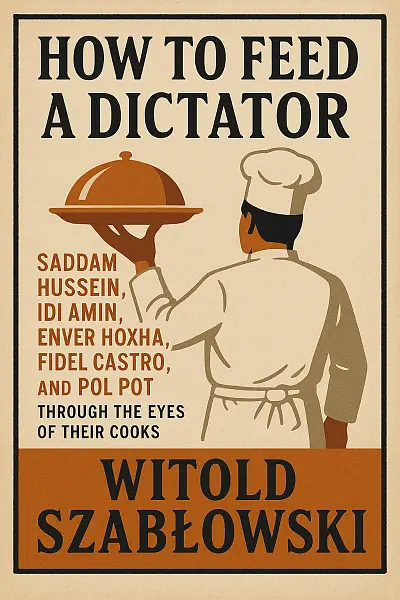
How to Feed a Dictator: Saddam Hussein, Idi Amin, Enver Hoxha, Fidel Castro, and Pol Pot Through the Eyes of Their Cooks
Witold Szabłowski crisscrosses war-torn countries to find the elusive personal cooks of five notorious dictators, driven by a burning curiosity: what did tyrants eat while their people suffered? As Szabłowski sits down over spicy soups and grilled meats, he coaxes out the raw, intimate stories behind Saddam’s dinners and Pol Pot’s rice bowls, pushing past fear and secrecy.
But with each conversation, he faces the chilling challenge—can anyone truly serve evil without becoming complicit? Immersed in these kitchens, Szabłowski must confront the uneasy truth about ordinary people surviving extraordinary regimes, asking us to consider: where does survival end and responsibility begin?
"To nourish a tyrant is to witness history simmer in a pot, where fear seasons every meal and silence is the price of survival."
Let's Break This Down
The Author's Voice
Atmosphere
-
Intriguingly intimate yet haunting
The mood is both voyeuristic and unsettling, immersing you in the claustrophobic worlds of notorious dictators while finding startling normalcy in the kitchens behind the regimes. There’s a tension that crackles beneath seemingly mundane conversations, pulling readers into the oppressive yet oddly domestic ambiance. -
Palpable dread laced with absurdity
Daily rituals and culinary routines shimmer with underlying threat, while flashes of dark humor and unexpected tenderness offer relief.
Prose Style
-
Journalistic yet artful
Szabłowski’s writing is brisk and accessible, peppered with lyrical moments that surprise and linger. Think sharp reportage meets literary flair—details are vivid, but the tone never feels heavy-handed. -
Conversational and confiding
The author’s voice is inviting, drawing readers closer to his subjects through empathetic questioning and present-tense immediacy. Anecdotes feel off-the-cuff, yet are skillfully chosen to paint a larger political picture. -
Unvarnished storytelling
Moments of horror and humanity are relayed with directness, placing facts before the reader without melodrama but with unmistakable emotional impact.
Pacing
-
Taut yet meandering in the best way
Episodes flow quickly, propelled by sharp scene cuts and brisk chapter lengths. The narrative doesn’t linger too long in one place, keeping up a sense of movement that mirrors the unpredictability of the cooks’ lives. -
Occasional detours for reflection
While predominantly fast-paced, Szabłowski allows himself digressions—brief pauses for cultural or historical context—which often enrich rather than distract, although some readers may find them sidetracking.
Overall Rhythm and Feel
-
A blend of suspense and empathy
The book keeps you on edge, hungry for each new revelation, while fostering genuine emotional connection to the unseen lives serving history’s most repressive leaders. -
Perfect for readers who crave narrative nonfiction with heart
Expect brisk chapters, a strong sense of place, and a tone that’s both probing and almost playfully dark, always conscious of the line between the personal and the political.
Key Moments
- Under-the-table secrets simmering in presidential kitchens
- One cook’s trembling hands as Saddam Hussein tastes the first bite
- Exquisite recipes colliding with crushing fear of execution
- Enver Hoxha’s paranoia turning a simple meal into a deadly ritual
- Intimate glimpses of power—palace gossip swapped over bubbling pots
- Fidel Castro’s unexpected fondness for ice cream, even as spies lurk behind every stove
- Mouthwatering dishes served with a side of moral ambiguity
Plot Summary
How to Feed a Dictator chronicles Polish journalist Witold Szabłowski’s fascinating journey as he seeks out and interviews the personal chefs of five infamous 20th-century dictators: Saddam Hussein, Idi Amin, Enver Hoxha, Fidel Castro, and Pol Pot. Through the candid memories and confessions of these cooks, Szabłowski reconstructs scenes from each regime, revealing what it was like to serve in the literal and figurative heat of power. We witness chilling moments—from preparing feasts amid purges and executions, to learning which dishes delighted or infuriated their bosses. As the stories unfold, the cooks gradually reveal their own survival strategies, complicity, and personal losses; some come to terms with their proximity to evil, while others stay haunted by guilt and regret. By the book’s end, Szabłowski has crafted a surprisingly personal, behind-the-scenes history of dictatorship, showing how ordinary people become both witnesses to and participants in historic horrors.
Character Analysis
The true “main characters” here are not the dictators themselves, but their chefs: people like Abu Ali (Saddam’s cook) and Otonde Odera (Idi Amin’s cook), whose personal stories are just as gripping as the political events that swirl around them. These chefs are typically portrayed as loyal and resourceful, but each deals with unique internal conflicts—some struggle with guilt over what they enabled, while others take a pragmatic or even defiant attitude, focusing on survival or professional pride. Over time, the cooks reveal layers of complexity, blending fear, guilt, and sometimes affinity for their masters. Their development is subtle; rather than dramatic transformations, most slowly acknowledge the heavy costs of their proximity to power and the ways they rationalized their roles.
Major Themes
One major theme is the banality of evil: Szabłowski underscores how monstrous events can take place alongside mundane routines like meal preparation, suggesting that evil often survives by appearing ordinary. Morality and complicity pervade every story, as the cooks must grapple with where their responsibility lies—are they just doing their jobs, or are they enablers? The book also delves into the power of food: meals become symbols of control, rebellion, and intimacy, highlighting both the humanity and brutality of the dictators served. Finally, truth and survival thread through the book, as each chef confronts the compromises and fictions necessary to stay alive under unimaginable regimes.
Literary Techniques & Style
Szabłowski’s writing blends journalistic investigation with creative non-fiction flair—he uses vivid, sensory details (the crackle of a frying pan, the tension of a banquet) to pull readers into each kitchen. By structuring the book as separate profiles, each with a distinct voice and cultural flavor, he provides variety while maintaining thematic unity. Symbolism (like poisoned meals or forbidden ingredients) and metaphors (food as diplomacy, kitchens as battlefields) add rich layers to the narrative. The author often inserts himself into the story, utilizing first-person interludes that make the tale feel immediate and personal.
Historical/Cultural Context
Set across multiple decades and countries—from Iraq’s palaces to Cuba’s revolutionary headquarters—the book explores the darkest chapters of 20th-century dictatorship. The background includes Cold War politics, the terror of purges, and shifting global alliances. Each story is shaped by its local culture and cuisine, revealing how food reflects both national identity and the peculiar tastes of each tyrant.
Critical Significance & Impact
How to Feed a Dictator stands out for its original approach, using the seemingly trivial act of cooking to probe the complex realities of dictatorship and personal morality. Widely praised for making history intimate and accessible, the book has sparked discussions about complicity and the small, everyday ways ordinary people become entwined with evil. Its continued relevance lies in its reminder that shocking history often unfolds offstage, in kitchens and corridors, as much as in grand halls of power.
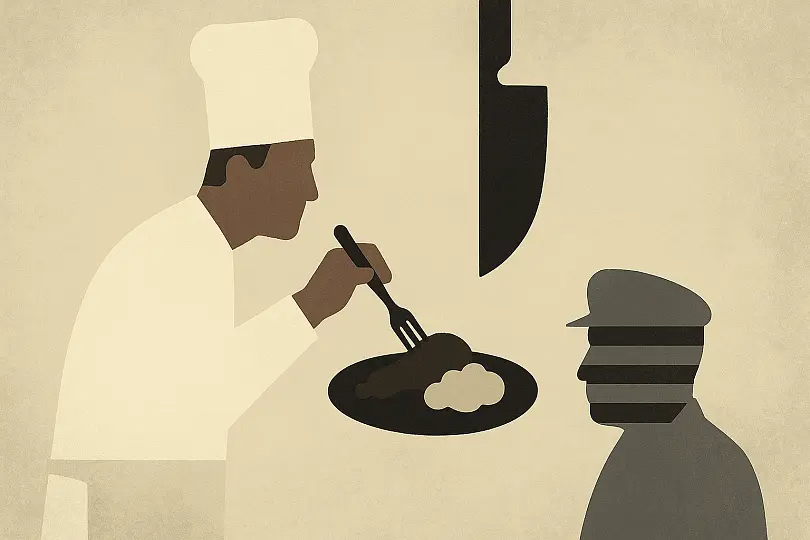
Dictators’ secrets revealed—history served from the cooks’ kitchen.
What Readers Are Saying
Right for You If
If you love sinking your teeth into true stories that are totally different from the usual, you're going to have fun with this one. Seriously, How to Feed a Dictator is perfect for:
- History buffs who can’t get enough of the “behind closed doors” kind of stuff—especially if you want the weird, human side of powerful people you usually just hear about in headlines.
- Anyone obsessed with stories about food—this book is not a recipe collection, but it’s packed with fascinating tales about what ends up on the plates of infamous dictators, and what it says about them.
- Fans of unconventional biographies or those Netflix docuseries that tell dark stories through unexpected perspectives. If you enjoyed The Dictator’s Handbook or Midnight in Chernobyl, this will probably be your vibe.
- Readers who appreciate a mix of dark humor, gravitas, and strange real-life situations—the cooks’ experiences are wild, sometimes grim, sometimes strangely touching.
On the other hand, you might want to skip this one if:
- You’re hoping for a straight-up political history—there’s background, but it’s all from the kitchens’ point of view. Pure policy wonks, this might not scratch that itch for in-depth analysis.
- You get squeamish with stories that involve harsh realities, war zones, or some pretty graphic moments. These dictators weren’t exactly nice guys, and the book doesn’t sugarcoat the rough stuff.
- You want a fast-paced thriller or a tightly plotted novel—this is more episodic and anecdotal, meandering from one life to the next.
Bottom line: If quirky, unsettling, and deeply human true stories sound like your thing, or if you want dinner table tales on a whole new level, get this book. But if you’re looking for something light, or super academic, you’ll probably want to pass.
What You're Getting Into
Ever wondered what goes on in the kitchens of history's most infamous dictators? How to Feed a Dictator invites you into the secretive, high-stakes world of five personal cooks who served Saddam Hussein, Idi Amin, Enver Hoxha, Fidel Castro, and Pol Pot—sharing their intimate, untold stories about life behind palace doors. Through their eyes, you'll taste the eerie blend of fear, loyalty, and survival that comes from serving power—and get a flavorful peek at how food reflects both cruelty and humanity in the shadow of tyranny.
Characters You'll Meet
-
Saddam Hussein’s Cook, Abu Ali: Loyal chef who masters surviving the dangerous whims of a paranoid dictator. His adaptability and insight reveal the everyday tension and moral compromises required to serve a tyrant.
-
Idi Amin’s Cook, Otonde Odera: Quick-thinking survivor whose culinary skills keep him alive amid Amin’s capricious brutality. He navigates terror and absurdity with wit, providing a close-up look at Amin's unpredictability.
-
Enver Hoxha’s Cook, Mr. Koka: Dedicated professional who endures decades in the secretive Albanian regime. His story highlights repression, isolation, and the peculiar loyalty demanded under a watchful dictator.
-
Fidel Castro’s Cook, Flores: Resourceful and passionate, he feeds Castro through food shortages and political upheaval. Flores’s creativity brings warmth and humanity to the cold machinery of Cuban politics.
-
Pol Pot’s Cook, Pong: Reluctant participant haunted by the regime’s cruelty, forced to prepare meals amid violence and deprivation. Pong's journey is a testament to the resilience and guilt felt by ordinary people trapped in horrific circumstances.
More Like This
If you found yourself utterly absorbed by Kitchen Confidential by Anthony Bourdain, you’ll be fascinated by How to Feed a Dictator. Both books peer behind the kitchen doors to expose the often chaotic, secretive world of high-stakes cooking, but Szabłowski’s narrative adds a layer of dark political intrigue, giving voice to culinary artisans caught in the orbit of history’s most infamous autocrats. Like Bourdain’s candid confessions, the stories here are raw and brimming with uneasy truths—but instead of restaurant drama, the stakes are nothing short of life and death.
Readers who devoured The Dictator’s Handbook by Bruce Bueno de Mesquita and Alastair Smith will recognize the chilling realpolitik at play, but Szabłowski humanizes these regimes by focusing on the intimate, overlooked experience of feeding those in power. Where The Dictator’s Handbook analyzes the mechanics of authoritarian control, How to Feed a Dictator puts a human face on the cost, showing the private fears and tiny daily rebellions of those tasked with sustaining tyrants.
For a cinematic parallel, the book channels the intricate psychological tension and personal peril found in shows like The Americans. There’s an ever-present danger simmering beneath the surface, as the cooks must navigate shifting allegiances, secrecy, and the fear of being caught in the crossfire of political storms. Each chapter unfolds with the suspense of an undercover operation, blending personal revelation with a palpable sense of dread that fans of espionage dramas will immediately recognize and savor.
Critic's Corner
What does the taste of power reveal about the monsters who rule—and the ordinary people who feed them? Witold Szabłowski’s How to Feed a Dictator invites us straight into the kitchens of history’s most infamous autocrats, asking us to reconsider the meaning of complicity, survival, and appetite—not from the palace gates, but from the pantry and prep table. It’s an audacious move: to chase big political questions through small, intimate flavors, making the reader chew on both the food and the moral quandaries behind it.
Szabłowski’s craft is compulsively readable—his journalism background shows in his keen ear for dialogue, masterful pacing, and eagle-eyed detail. The narrative zips across time zones and decades, each chef’s recollections woven together with irresistible immediacy. His prose, sparing yet evocative, balances the grotesque and the ordinary: descriptions of delicacies share space with the everyday rituals of a kitchen, infusing horror with surprising mundanity. He resists the temptation to sensationalize; instead, he leans into the ambiguities, letting cooks’ testimonies simmer rather than boil over. The result is an arrestingly personal voice—neither judgmental nor naïve, but always probing. Readers never lose track of Szabłowski’s presence, guiding us gently yet insistently through rum-soaked conversations and haunting memory, his sly humor flickering at just the right moments.
Thematically, the book excels by digging beneath the surface of food as sustenance. Each dictator’s diet becomes a metaphor for their regime: Pol Pot’s ascetic rations, Castro’s bovine obsession, Amin’s carnivorous bravado. But this isn’t just trivia for history buffs—the real substance lies in the cooks’ conflicted roles as witnesses, enablers, and survivors. Szabłowski asks: Can feeding power ever be innocent? These cooks are not faceless cogs; their stories expose the daily negotiations, tiny rebellions, and crushing compromises that define life under tyranny. The book resonates in a world still grappling with authoritarianism and the ethics of survival. It asks us to look behind the curtain of grand evil and consider its banality—and the complex humanity of those who stand in its shadow.
Within literary non-fiction, How to Feed a Dictator stands out as a kind of culinary Kapuściński with Bourdain’s nose for the absurd, but minus the self-indulgence. Szabłowski’s ability to blend travel writing, oral history, and psychological investigation is rare. While there are passing similarities to other food memoirs, few books stitch together tastes, trauma, and politics with such nimble grace.
Yet the book’s strength—its anecdotal, interview-driven structure—is also a minor weakness. Some stories feel tantalizingly incomplete, raising more questions than they answer. Occasionally, the brevity with which each regime is covered can leave historical contexts slightly undercooked for readers unfamiliar with global 20th-century autocracy.
Ultimately, Szabłowski delivers a chilling, unforgettable feast—one that challenges, entertains, and lingers far longer than any meal. Brisk, insightful, and unsettlingly relevant, this is food writing with teeth and a conscience.
Community Thoughts
i picked up this book for a quick read and ended up haunted by Enver Hoxha’s cook. her devotion and fear seeped into every recipe. i kept thinking about her hands shaking over the soup, even after i closed the book.
i still can't shake the scene with Pol Pot’s cook nervously testing food for poison, eyes darting, hands shaking. the tension of survival disguised as service completely rewired my idea of fear in the kitchen.
this book had me up at 3am googling what Enver Hoxha liked for breakfast and why I suddenly care about the smell of soup in a paranoid regime. my dreams are now haunted by kitchen knives and whispered secrets.
I still hear the echo of that chef nervously listing the menu for Pol Pot, as if each dish could be a death sentence. Szabłowski makes your stomach twist with every page. Disturbingly unforgettable.
I CAN'T STOP THINKING ABOUT ENVER HOXHA'S COOK, tiptoeing between fear and routine, chopping onions while dictators decide fates. This book is a wild ride through bizarre kitchens and darker histories. Why does food taste so different now?
Leave Your Review
Local Take
Why It Matters
Absolutely! But I need to know which country or cultural context you want me to focus on for this analysis. Could you specify the country or region?
Food for Thought
Notable Achievement:
How to Feed a Dictator has captivated international readers with its unique blend of culinary memoir and political history, sparking major cross-cultural discussions about the personal lives of infamous dictators. The book achieved widespread acclaim, being translated into over 20 languages and longlisted for the 2020 Baillie Gifford Prize for Non-Fiction, highlighting its growing impact and recognition in the global literary community.
Like what you see? Share it with other readers