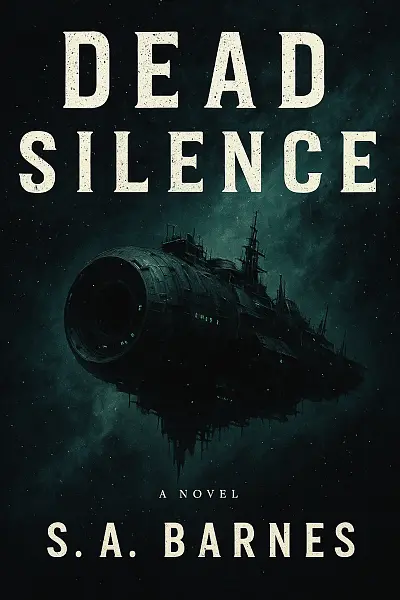
Dead Silence
by: S.A. Barnes
Claire Kovalik, minutes from joblessness on a lonely salvage route, floats through her final mission, numb and untethered from Earth. When her crew intercepts a mysterious distress call, they stumble onto the lost luxury liner Aurora—a jackpot find that could change everything.
But stepping aboard releases chills, not just riches. Strange whispers, bloodied messages, and shadowy figures turn the ship’s golden promise into a waking nightmare.
As Claire fights creeping dread and doubts her sanity, she’s haunted by the Aurora’s secrets. Will she keep her crew—and herself—alive, or become just another ghost among the stars? The tension is deliciously claustrophobic.
"“In the silence between heartbeats, we discover if our greatest fear is the dark outside—or the darkness within.”"
Let's Break This Down
The Author's Voice
Atmosphere
Think bone-deep dread and chilling, claustrophobic tension. Dead Silence absolutely oozes unnerving atmosphere—Barnes ropes you into an abandoned luxury spaceship and never lets you forget the creeping sense of isolation, psychological unease, and haunting silence that surrounds every character. There’s a heavy, cinematic weight to each scene, as if the air itself is thick with the ghosts of something terrible waiting just on the fringe of vision.
Prose Style
Direct, immersive, and deliciously vivid. Barnes’ writing leans modern and accessible, but she’s got a knack for slipping in sensory details that really make each corridor and scream stick in your mind. Dialogue feels authentic and unforced, while her description balances the gruesome and the mysterious without ever getting bogged down. Expect chapters that are easy to devour, packed with atmospheric details rather than literary flourishes.
Pacing
Propulsive but deliberately tense. The story kicks off quick and stays on a tight leash, building suspense with rising stakes and well-timed reveals. Barnes is skilled at alternating between hair-raising action and introspective moments, which makes the slower, psychological stretches feel weighty instead of dull. Be ready for a rhythm that mirrors a heartbeat—sometimes racing, sometimes holding its breath, but always dragging you forward.
Character Development
Flawed, human, and authentically unsettled. Characters, especially the protagonist, carry obvious trauma and deeply personal motivations. Barnes foregrounds their vulnerabilities, mistakes, and lingering fears, which makes them feel all the more real. While some secondary characters tread familiar territory for the horror genre, the emotional arcs are raw enough to make you care about who survives.
Themes
Isolation, trauma, and the harrowing cost of survival. There’s a running exploration of what it means to be psychologically haunted, both by the past and by very literal, maybe-not-so-dead presences. Barnes layers classic horror motifs with genuine questions about identity, guilt, and teamwork under pressure.
Overall Feel
If you love your sci-fi horror with a heavy dose of mind games and a dash of classic ghost ship terror, Dead Silence delivers the goods—eerie, compulsively readable, and so full of creeping dread that you’ll be double-checking your airlocks.
Key Moments
-
Ghostly SOS transmissions spark a chilling interstellar rescue
-
Virgil's abandoned luxury cruiser becomes a claustrophobic, haunted house in space
-
Gripping flashbacks reveal Claire's fractured psyche and unreliable memories
-
Sinister whispers slither through the static—are they supernatural or signs of madness?
-
Crew secrets unravel in zero gravity, amping up the paranoia to eleven
-
A gut-punch twist in the final act reshapes everything you thought you knew
-
Relentlessly bleak, atmospheric prose—like if Alien met The Shining in deep space
Plot Summary
Picture this: Claire Kovalik and her tiny crew, who maintain communication beacons at the edge of known space, stumble across the long-lost luxury space liner Aurora, missing for over twenty years. Against their better judgment, they board the ship, hoping for a hefty salvage reward—but soon find themselves haunted by horrifying visions, spectral noises, and psychological breakdowns. They slowly uncover that the once-glamorous Aurora became a techno-gothic tomb after a failed experiment with a cutting-edge entertainment system triggered mass insanity and brutality among the passengers. As Claire battles both real and imagined threats (while confronting her own dark past), she’s forced into a fight for survival—only to realize the true terror isn’t what lurks in the shadows, but the memories and guilt she carries. The climax sees Claire exposing the company’s cover-up and barely escaping with her life, finally refusing to let her traumatic past define her future.
Character Analysis
Claire Kovalik is a classic damaged heroine—haunted by childhood trauma from a doomed Mars colony and plagued with self-doubt, but she’s also fiercely loyal and determined. Over the course of the novel, she transforms from a leader quietly doubting her sanity to someone willing to confront both external horrors and her internal demons head-on. Her crew, especially communications specialist Lourdes and engineer Voller, act as foils: Lourdes is pragmatic and skeptical, while Voller sinks quickly into paranoia, highlighting different coping mechanisms under stress. The antagonists are less defined as individuals, but the real “villain”—the deranged Aurora and the corporation's indifference—push the characters to their limits and force crucial growth, particularly for Claire.
Major Themes
One major theme is trauma and memory: Claire’s flashbacks and unreliable narration show how the past can haunt the present, blurring reality and hallucination. The story grapples with corporate malfeasance—the cost of profit-driven decisions and cover-ups that sacrifice human lives, symbolized by the Aurora’s fate and the secrecy surrounding it. There’s also a strong thread about isolation and trust: the crew’s paranoia and breakdown strain relationships, making trust an act of survival. Finally, technology gone wrong looms large—the ship’s neural entertainment system, intended as a marvel, instead becomes a weapon, raising questions about unchecked innovation.
Literary Techniques & Style
S.A. Barnes uses tight, cinematic prose that keeps tension high and atmosphere suffocating—perfect for a sci-fi horror tale. The narrative is mostly first-person, letting readers experience Claire’s disorientation firsthand and making her flashbacks blurry and nightmarish. Symbolism is key: the Aurora itself stands as a rotting monument to lost innocence and hubris, while recurring motifs like mirrors and distorted reflections reinforce the theme of fractured identity. The author blends ghost-ship tropes with psychological thriller elements (think unreliable narrator and blurred realities), using jump scares and horror imagery to great effect, but sometimes at the cost of deeper philosophical exploration.
Historical/Cultural Context
Dead Silence is set in a far-future, corporate-controlled galaxy, echoing sci-fi classics like Alien and Event Horizon in both style and theme. The backdrop of corporate greed, technological excess, and post-human anxieties situates the novel squarely in modern anxieties about capitalism and dehumanization. Rooted in both the horror and science fiction traditions, the book also speaks to contemporary fears of being lost or forgotten in a vast, impersonal universe—making its emotional stakes feel timely.
Critical Significance & Impact
Dead Silence has been praised for its genre-bending mashup of horror and science fiction, winning over fans of both haunted house and lost-in-space stories. It stands out for its strong, troubled female lead and atmospheric, immersive setting. While some critics note it leans heavily on familiar tropes, its blend of psychological depth and page-turning thrills makes it a stand-out recent entry in speculative fiction, sparking ongoing discussions about trauma, memory, and the dangers of unchecked progress.
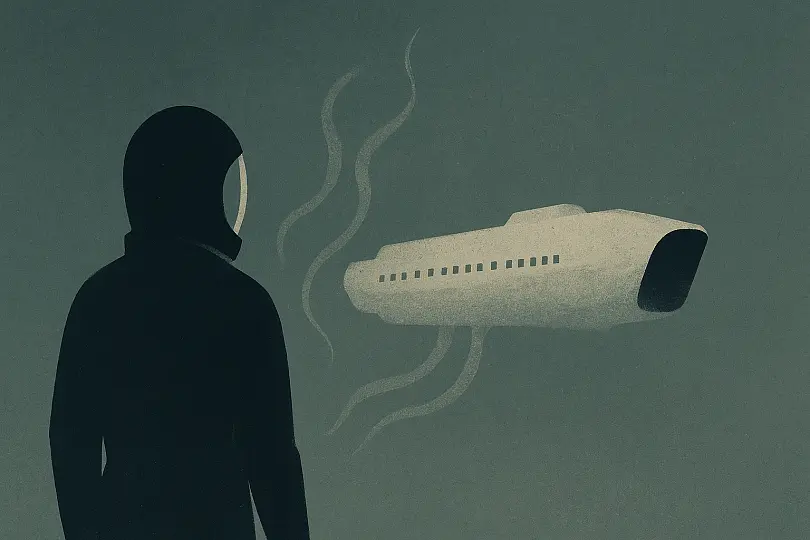
In space, sinister echoes haunt the living—and the dead won’t stay silent.
What Readers Are Saying
Right for You If
If you love spooky sci-fi with a dash of haunted house vibes, Dead Silence is totally your jam. Seriously, if Alien or Event Horizon are your comfort movies (weird flex but I see you), you're going to eat this up. The book is dripping in creepy atmosphere and there's a claustrophobic, chilling sense of dread that’s perfect for fans who enjoy getting their heart racing.
- If you love:
- Sci-fi horror
- Creepy abandoned ships
- Unreliable narrators
- Ragtag crews with lots of secrets
- Slow-building tension capped off with some real scares
…then just go ahead and bump this one to the top of your TBR.
But hey, if you’re not super into atmospheric horror or get frustrated with slower pacing at the start, this might not be the best pick for you. The first half really leans into the “creep around in the dark and investigate weirdness” kind of vibe, so if you’re looking for non-stop action or super in-depth world-building, you might find yourself checking your watch. Also, if you prefer characters who are totally stable and straight-shooting, the main character’s mental state might be a bit much for you—it’s intentionally a little disorienting!
Bottom line: If you want eerie haunted ship vibes in space and don’t mind a slow burn that gets under your skin, you’re in for a treat. If you’re more of a hard sci-fi or straightforward thriller reader, or if horror just isn’t your thing, you might want to skip this one.
What You're Getting Into
Out on the edge of space, a small salvage crew stumbles upon the long-lost luxury liner, the Aurora, and hopes their discovery will bring them fame and fortune.
But as team leader Claire and her crew explore the eerie, abandoned ship, unease turns quickly to terror when they realize they aren’t alone—and what’s waiting in the shadows is far more sinister than old ghosts.
With chilling tension and claustrophobic vibes, "Dead Silence" blends sci-fi survival with haunting psychological horror, promising a spine-tingling descent into the unknown.
Characters You'll Meet
-
🛠️ Claire Kovalik: The haunted, resilient team leader whose traumatic past and determination anchor the story. Her psychological unraveling drives much of the suspense and emotional depth.
-
🔎 Laurel Harlan: Claire’s calm, methodical communications officer, often acting as the group's voice of reason. Her loyalty and skepticism add balance to Claire’s intensity.
-
💡 Kane: The pragmatic engineer whose logical approach provides practical solutions in chaos. His growing paranoia and tension with Claire escalate the group’s internal conflict.
-
🎯 Voller: The abrasive security officer whose suspicion and assertiveness create friction. His distrust fuels the story’s interpersonal drama and raises the stakes.
-
📚 Lourdes: The medic with a gentle, empathetic nature, often soothing tensions and providing emotional support. Her vulnerability highlights the crew's fragile humanity amid terror.
More Like This
If you've ever shivered your way through The Shining by Stephen King, you'll spot the same deliciously creeping sense of isolation and psychological unraveling in Dead Silence. Both stories masterfully blend the supernatural with very real human fears, leaving you questioning what's real and what's just a trick of the mind. There's also a strong thread of Annihilation by Jeff VanderMeer running through Barnes's work—the way both narratives trap their protagonists in inescapable, hallucinatory environments that feel almost alive, bending reality with every revelation.
On the screen side, Dead Silence conjures some seriously Alien-esque vibes, especially in how it marries claustrophobic sci-fi settings with primal horror. The haunted, derelict ship floating silently in space instantly calls to mind the tension and quiet dread of the Nostromo, where the real terror is as much about what lurks in the darkness as it is about the haunting thoughts in the crew’s minds. The result is a reading experience that’s at once cinematic and chilling, a must for fans of edge-of-your-seat storytelling.
Critic's Corner
What lingers in the void between stars—the echoes of our ambition, or the ghosts of our mistakes? Dead Silence by S.A. Barnes launches this unsettling quandary like a flare into deep space, crafting a tale that asks not just what horror dwells out there, but what darkness haunts within. In a world where progress leaves humans both empowered and expendable, Barnes probes the fragility of the mind and the cost of chasing lost dreams—for solace or for profit.
Barnes’s prose hums with claustrophobic energy: crisp, lean sentences evoke the stark brutality of a decaying starship, while sensory details amplify the chilling isolation aboard the Aurora. By opting for a tight third-person perspective, the novel keeps us anchored in Claire’s unraveling psyche, blurring the boundaries between reality and hallucination with unnerving finesse. Dialogue, especially between the salvage crew, snaps with believable banter, grounding the cast in lived experience rather than genre archetype. The pacing judiciously alternates languid dread with sudden violence, wielding tension like a scalpel—every chapter deepens the suffocating atmosphere without overstaying its welcome. Barnes is especially skilled at deploying horror’s small moments: a flicker at the screen’s edge, a whispered word left unexplained, the emptiness of a lavishly deserted ballroom made intimately terrifying.
At its core, Dead Silence tackles themes both timeless and crushingly modern: corporate indifference, the commodification of disaster, and the psychological toll of isolation. Claire’s unreliable grip on reality parallels the manipulative narratives built by powerful institutions—a sharp cultural nod to our current distrust of authority and the mental health crisis shadowing our era. The specter of obsession—clinging to the past, to memory, to a sense of purpose—is dissected with empathy and horror alike. Barnes doesn’t just scare; she interrogates the machinery of fear, asking why some horrors are so seductive, so unshakeable. Through the Aurora, the text questions what happens when luxury and leisure mask—and magnify—trauma, a metaphor as resonant for cruise ships as for closing offices in late-stage capitalism.
Within the mosaic of sci-fi horror, Barnes embraces the haunted house in space tradition made famous by Alien and Event Horizon, while carving out a distinctly personal, psychological niche. Like those works, Dead Silence leverages confined spaces not just as backdrops for terror, but as stages for intimate collapse. Yet where much science fiction is fixated on grand spectacle or technical marvels, Barnes’s strength is in the intimate—her horror is felt in the marrow, not just the mind. Readers of Silvia Moreno-Garcia or Paul Tremblay will find kindred spirits here, though Barnes’s crisp, commercial pacing sets her apart.
Weaknesses? At times, the novel leans a bit too heavily on genre conventions—the jump scares and familiar ghostly tropes occasionally undermine the slow-burn dread. Some secondary characters remain underdeveloped, serving functional rather than emotional roles.
Verdict: Still, Dead Silence stands as a chilling, timely mash-up of ghost story and space thriller. It matters now because it captures our collective anxieties in a form both utterly fantastical and deeply, unnervingly real. If you crave nerve-shredding horror and existential bite, Barnes absolutely delivers.
Community Thoughts
i swear the scene with the intercom static nearly made me throw my kindle across the room. who knew a creepy voice in the dark could mess with my head for days? dead silence is nightmare fuel, i'm still checking shadows.
Okay, so I THOUGHT I was just getting a haunted spaceship story but then Claire’s unraveling mind absolutely hijacked my brain. That one scene where she’s alone in the comms room? I swear I heard whispers in my own apartment.
okay but WHY did the ghosts have to be that relentless? I couldn't close my eyes after reading about Claire on that ship. sleep? what’s that? thanks, Barnes, now I’m checking shadows every night.
i literally had to turn on every light after reading that scene where the voices echoed down the empty ship corridor. what is it with abandoned ships and making me lose sleep? i’m convinced ghosts live in my vents now.
I was not okay after reading that scene in the ballroom, the ghosts swirling and the tension snapping. Barnes made me check my own shadows for days. Sleep? Absolutely ruined.
Leave Your Review
Local Take
Why It Matters
Dead Silence by S.A. Barnes clicks with readers here in fascinating ways, especially given our cultural love-hate relationship with technological progress and haunted pasts.
- Those eerie themes of isolation and lost communication? Totally resonate, echoing moments in our history where technology both connected and alienated us (think: sudden tech booms, the urban loneliness phenomenon).
- The book’s deep dive into trauma and collective denial feels super relevant, mirroring local conversations about mental health stigma and unfinished historical business.
- That persistent sense of suspicion toward authority? Readers here totally get it, thanks to our own scandals and public mistrust—a parallel in how Barnes’ characters distrust official narratives.
- Genre-wise, Barnes mashes up horror and sci-fi, which challenges our local tradition of keeping supernatural and tech stories separate. It’s a bold move, shaking up expectations and inviting more cross-genre experimentation.
Overall, Dead Silence plays with fears and anxieties that feel super close to home, making its chills hit especially hard for us!
Food for Thought
Notable Achievement:
Dead Silence by S.A. Barnes has been widely lauded for blending sci-fi horror and thriller elements, earning a spot as a finalist for the Goodreads Choice Award for Horror in 2022. Its atmospheric homage to classics like Alien and Event Horizon has sparked enthusiastic buzz among genre fans, cementing its reputation as a standout entry in modern horror science fiction.
Like what you see? Share it with other readers